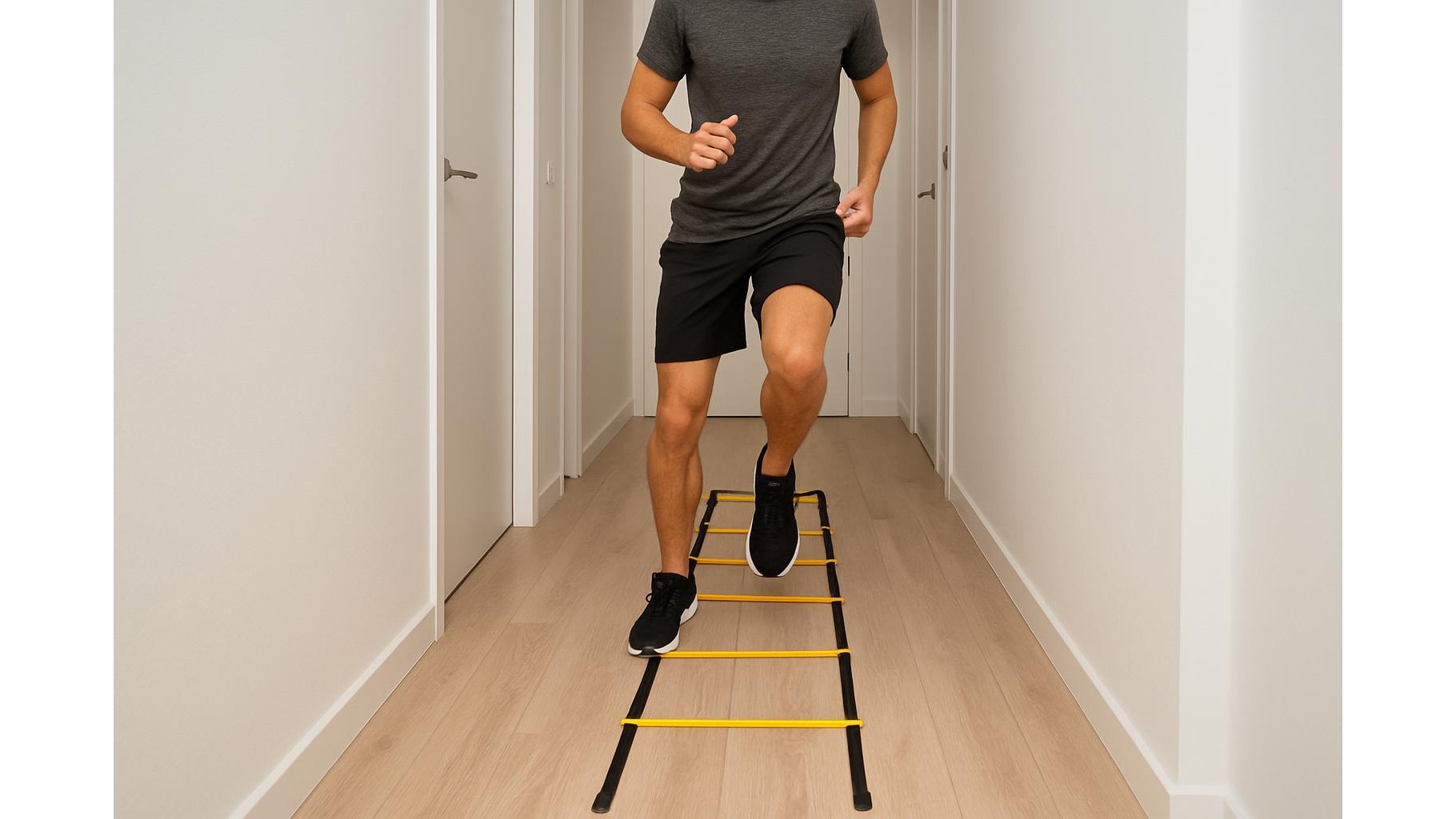
When you think about home cardio, you might picture bulky treadmills or noisy exercise bikes. But a simple agility ladder on the floor can deliver intense, low-impact conditioning in even the smallest space. With smart drill selection and a bit of planning, you can turn your hallway, garage, or living room into a compact cardio ladder station that builds coordination, speed and endurance without disturbing the neighbours.
Why agility ladders work for home cardio
An agility ladder is essentially a flat series of “rungs” you place on the floor, creating narrow boxes to step in and out of. Because the ladder lies flat, it’s joint-friendly and quiet, making it ideal for low-impact cardio at home. Instead of pounding jumps, you use quick footwork drills to elevate your heart rate. The constant need to coordinate your feet with each square also trains balance, agility and cognitive focus, turning every session into a blend of cardio and skill practice that fits easily into a compact home gym.
Setting up in tight spaces: hallways, garages and living rooms
The key to using an agility ladder at home is smart placement. In a narrow hallway, position the ladder lengthwise and focus on drills that keep your body mostly facing forward, such as quick steps, in-and-out hops and marching patterns. In a garage, you usually have more length, so you can use slightly longer ladders and add shuffles and lateral runs. In a living room, roll the ladder out between the sofa and TV or coffee table, then pick low, quiet movements like high-knee steps and side-steps. Always clear the area of obstacles, ensure the surface is non-slip, and use a compact ladder that you can roll up and store in a drawer when you’re done.
Beginner-friendly low-impact ladder drills
If you’re new to agility training, start with low-impact patterns that keep at least one foot on the ground. Begin with a single-step march, placing one foot in each square as you walk the length of the ladder, then turn and walk back. Progress to high-knee runs where you move faster but maintain control. Add in-out steps: step both feet inside a square, then both feet outside to one side, moving down the ladder. You can also perform lateral walks, facing sideways and stepping one foot, then the other, into each square. Focus on posture, quiet landings and consistent rhythm rather than pure speed; this keeps the workout joint-friendly while still driving your heart rate up.
Programming short, effective cardio sessions
To turn your ladder drills into a full cardio workout, structure them into intervals. A simple approach is to choose 3–5 drills and perform each for 30–40 seconds, followed by 20–30 seconds of rest. Complete 3–4 rounds for a 15–20 minute session. For example: high-knee runs through the ladder, in-out steps, lateral walks, and a quick forward-and-back shuffle pattern. On days when you’re short on time, use the ladder as a finisher after strength training: 5 minutes of continuous, low-impact steps will boost your conditioning and calorie burn. Adjust the work-to-rest ratio based on your fitness level; beginners can use longer rests, while advanced users can shorten rest periods for a tougher challenge.
Safety tips and progression in small home gyms
Because you’re working in tight spaces, safety and control are essential. Make sure the ladder lies flat and doesn’t slide; on smooth floors, consider placing it on a rug or mat with grip. Keep your movements compact, especially in hallways, and avoid high, explosive jumps if ceiling height is limited. Start slow to engrain each pattern, then gradually increase speed as your coordination improves. As you progress, you can add direction changes, combine upper-body movements like light dumbbell presses or band pulls, or extend the duration of your intervals. By consistently practicing these drills 2–3 times per week, your cardio fitness, foot speed and body control will all improve, without needing bulky equipment.
In summary, a simple agility ladder can be a powerful, space-saving tool for home cardio conditioning. With thoughtful placement in hallways, garages or living rooms, low-impact footwork drills and smart interval programming, you can build endurance, agility and coordination in just a few square metres. Choose compact, easy-to-store ladders, prioritise control and safety, and progress gradually. In a short time, your floor ladder will feel like a complete mini cardio studio right in your home.