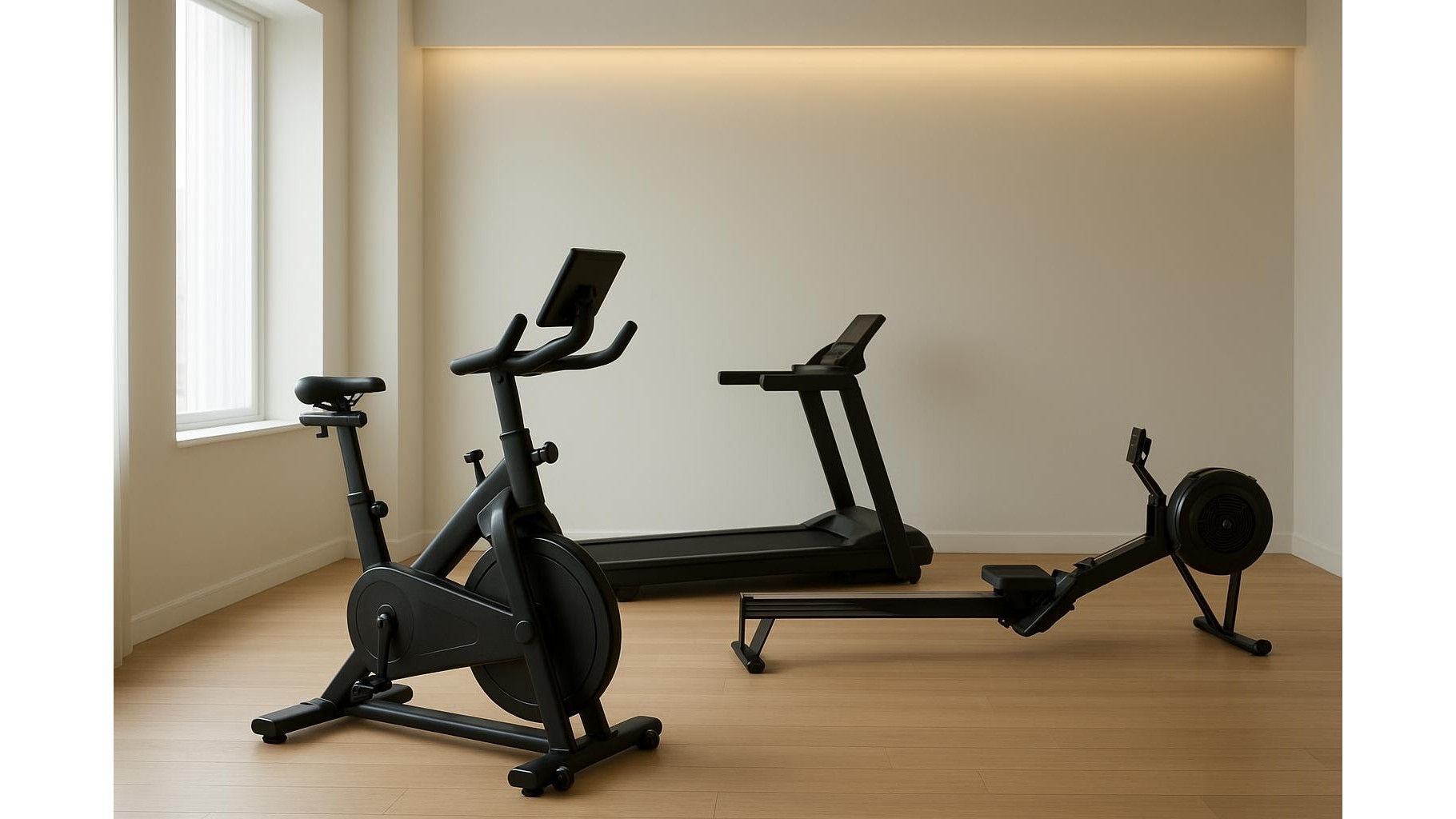
Feeling dizzy or nauseous on cardio machines can turn home training into a nightmare. If you’re motion-sensitive, the wrong equipment or setup can trigger headaches, vertigo or full-on sickness. The good news: by choosing the right home cardio machines and adjusting how you use them, you can still build your fitness without upsetting your balance system.
Understanding motion sensitivity on cardio machines
Motion sickness on treadmills, bikes, ellipticals and rowing machines usually comes from a combination of repetitive movement, visual conflict (what your eyes see vs what your body feels) and impact or vibration. For motion-sensitive people, machines that create strong up-and-down bouncing or a fast moving visual scene are the most triggering. This is why many trainees struggle more with running belts than with cycling or rowing. To reduce dizziness, you need equipment that offers smooth, predictable motion, minimal vertical impact, and a setup that keeps your head and eyes stable.
Treadmills: when walking is better than running
If you love walking but get dizzy on high-speed belts, focus on slow, steady treadmill workouts. A compact folding model with good deck cushioning and a stable frame will help reduce vibrations and jolts. Keep the speed low, use a slight incline instead of running, and avoid staring at fast-moving stats on the console – instead, fix your gaze on a stable point ahead or a wall. Place the treadmill away from bright windows or busy TV screens, which can overload your visual system. Short 5–10 minute walks with plenty of breaks can slowly train your balance without overwhelming it.
Exercise bikes: the most motion-friendly option
For many motion-sensitive trainees, an upright exercise bike is the easiest machine to tolerate. Your head stays relatively still, there’s no bouncing, and the lower body does most of the work. Look for a bike with smooth magnetic resistance, a heavy, well-balanced flywheel and a stable base to minimise wobble. Adjust the saddle so your hips do not rock, and keep your upper body relaxed with a gentle grip on the handlebars. Start with low resistance and a moderate cadence to avoid a “spinning” sensation in your legs. Because the movement is so controlled, bikes are ideal for building cardio fitness while keeping dizziness to a minimum.
Ellipticals: smooth but visually confusing
Elliptical trainers offer low-impact, joint-friendly motion, but they can still challenge motion-sensitive people. The circular stride and arm swing may feel unusual at first, and the floating sensation can be disorienting. Choose an elliptical with a short-to-moderate stride length and a solid, non-wobbly frame so that the motion feels grounded rather than bouncy. Skip the moving handlebars at the beginning; hold the fixed handles to keep your upper body and head steady. Keep resistance light and cadence slow, focusing your gaze straight ahead rather than down at your feet or the console. If you still feel off, use the elliptical for very short bouts between bike or walking intervals.
Rowing machines: controlled, rhythmic, but posture-dependent
Rowers can work well for some motion-sensitive users because the motion is rhythmic and your field of view stays relatively stable. However, if you round your back, snap your body too fast, or stare at the sliding seat, dizziness can creep in. A rower with magnetic or water resistance and a smooth rail helps keep the stroke predictable and quiet. Sit tall, hinge from the hips, and drive with the legs while keeping your head in line with your spine and eyes focused on a point at eye level. Start with short, low-intensity intervals, and avoid jerky, powerful strokes until your body has adapted to the pattern.
Setup tweaks to reduce dizziness and nausea
Whatever home cardio machine you choose, your environment and habits matter. Position your equipment so you face a simple, non-flickering surface – a plain wall is better than a busy TV or window. Use soft, indirect lighting and keep the room cool. Begin each session with a few minutes of gentle warm-up and end with a slow cool-down to avoid sudden blood pressure shifts. Sip water in small amounts rather than chugging before you start. Most importantly, experiment with very short sessions: 5 minutes on an exercise bike or 3 minutes on a rower may be enough at first. Over time, gradually extend duration but keep intensity moderate so your balance system can adapt without triggering nausea.
For motion-sensitive people, effective cardio at home is about choosing low-impact, smooth machines and setting them up intelligently. Treadmills are usually best for slow, incline walking; exercise bikes are often the most comfortable overall; ellipticals and rowers can work well if you prioritise posture and controlled pace. Combine smart equipment choices with careful positioning, stable visual focus and progressive training, and you can build your fitness without feeling dizzy or sick after every workout.