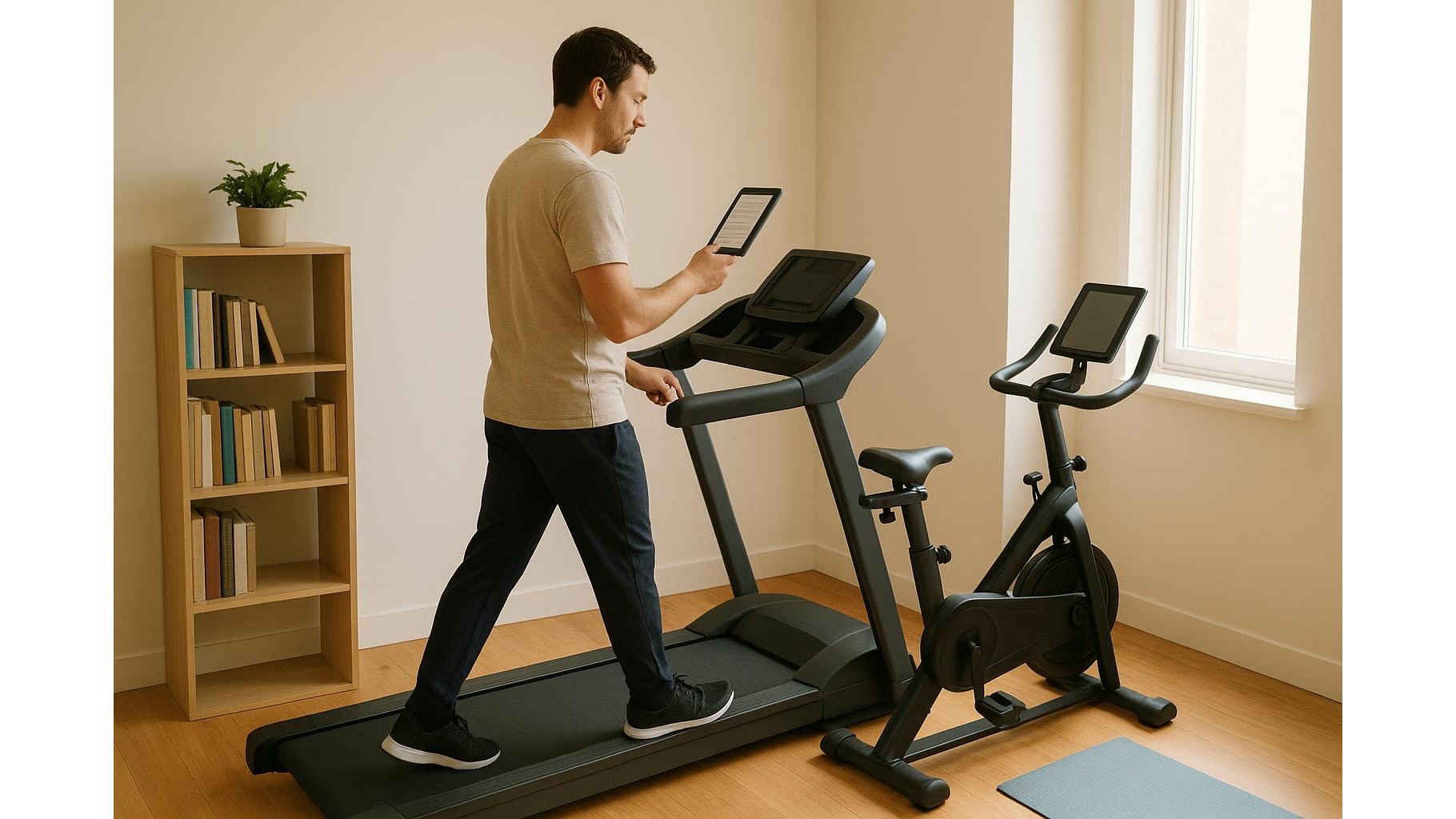
Blending steady-state cardio with your favourite novels is a smart way to make workouts feel effortless. With the right setup, you can safely read physical books or e-readers on a home treadmill or exercise bike without straining your neck, back or eyes. The key is to create a stable, ergonomic reading station that keeps your posture aligned while your legs do the work.
Choosing the right cardio machine for reading
For low-intensity cardio and reading, comfort and stability matter more than max speed. A basic treadmill with a wide, sturdy console or a flat crossbar works well because you can rest a book or e-reader safely. Upright and recumbent exercise bikes are often even better for long reading sessions: your hands are freer, and your body naturally stays more stable. When choosing, look for a quiet motor (for treadmills) or smooth magnetic resistance (for bikes) so noise doesn’t distract you, and make sure the machine has enough space on the console for a stand or holder.
Setting up book and e-reader holders safely
A secure reading surface is essential so you’re not constantly gripping your book. Instead of balancing it loosely, add a simple stand or clamp-on holder to your treadmill or bike console. Prioritise non-slip bases, adjustable viewing angles and strong clips for paperbacks. For e-readers and tablets, choose holders with grippy arms and a lip at the bottom, so the device cannot slide off while you move. Keep everything within the footprint of the console to avoid interfering with the machine’s moving parts, and always test stability at a slow pace before extending your reading sessions.
Ergonomic posture to avoid neck and back pain
Reading while moving can easily turn into a slouch-fest if you’re not careful. Aim to keep your spine neutral, shoulders relaxed and gaze slightly downward, not sharply bent at the neck. Adjust the holder so the centre of the page or screen sits just below eye level when you’re standing or seated in your normal workout position. If you’re on a treadmill, keep a light grip or no grip at all on the front rails so your arms swing naturally; holding on too tightly can twist your posture. On a bike, adjust saddle height so your knees are slightly bent at the bottom of the pedal stroke, then fine-tune the handlebar height to stop you from hunching over your book.
Dialling in intensity, speed and session length
Reading-friendly cardio should stay solidly in the low-intensity zone. On a treadmill, this usually means a walking pace where you can maintain a smooth stride and still focus on text—often between 3–5 km/h for most people, but adjust to your fitness and balance. Steeper inclines or fast speeds make page turning and posture control difficult, so keep settings modest. On a bike, use light to moderate resistance that elevates your heart rate without forcing you to tense your upper body. Start with 15–20 minute sessions and gradually build towards 40–60 minutes, listening to your body for signs of neck tightness, eye strain or lower-back fatigue.
Lighting, screen settings and practical reading tips
Good lighting reduces eye strain and helps maintain comfortable posture. Position a soft, indirect light so it illuminates the page or screen without glare; avoid bright overhead spots that make you crane your neck. With e-readers or tablets, lower the brightness, use warm colour tones and enable larger fonts to make text easier to read while moving. Choose books that are engaging but not too dense—light fiction, non-fiction with short chapters or articles work best. Finally, use bookmarks or digital highlights instead of trying to take detailed notes mid-workout; the goal is to keep your reading flow relaxed while your cardio stays steady and sustainable.
Setting up a reading-friendly cardio corner at home turns steady-state workouts into something you genuinely look forward to. By choosing a comfortable treadmill or bike, adding stable holders for books and e-readers, prioritising ergonomic posture and carefully controlling intensity, you can protect your neck and back while logging more movement and pages every week. Treat this as a low-pressure habit-builder: keep the effort easy, the reading enjoyable and the environment calm, and your home gym will quickly become the best library you’ve ever trained in.