Balance boards and slackline-style trainers are usually seen as tools for rehab or ankle stability, but they can also double as surprisingly effective low-impact cardio machines in your home gym. By combining continuous movement, smart progressions and simple intervals, you can turn a small piece of instability equipment into a full-body conditioning session that spares your joints while challenging your muscles and coordination.
Why balance boards work for low‑impact cardio
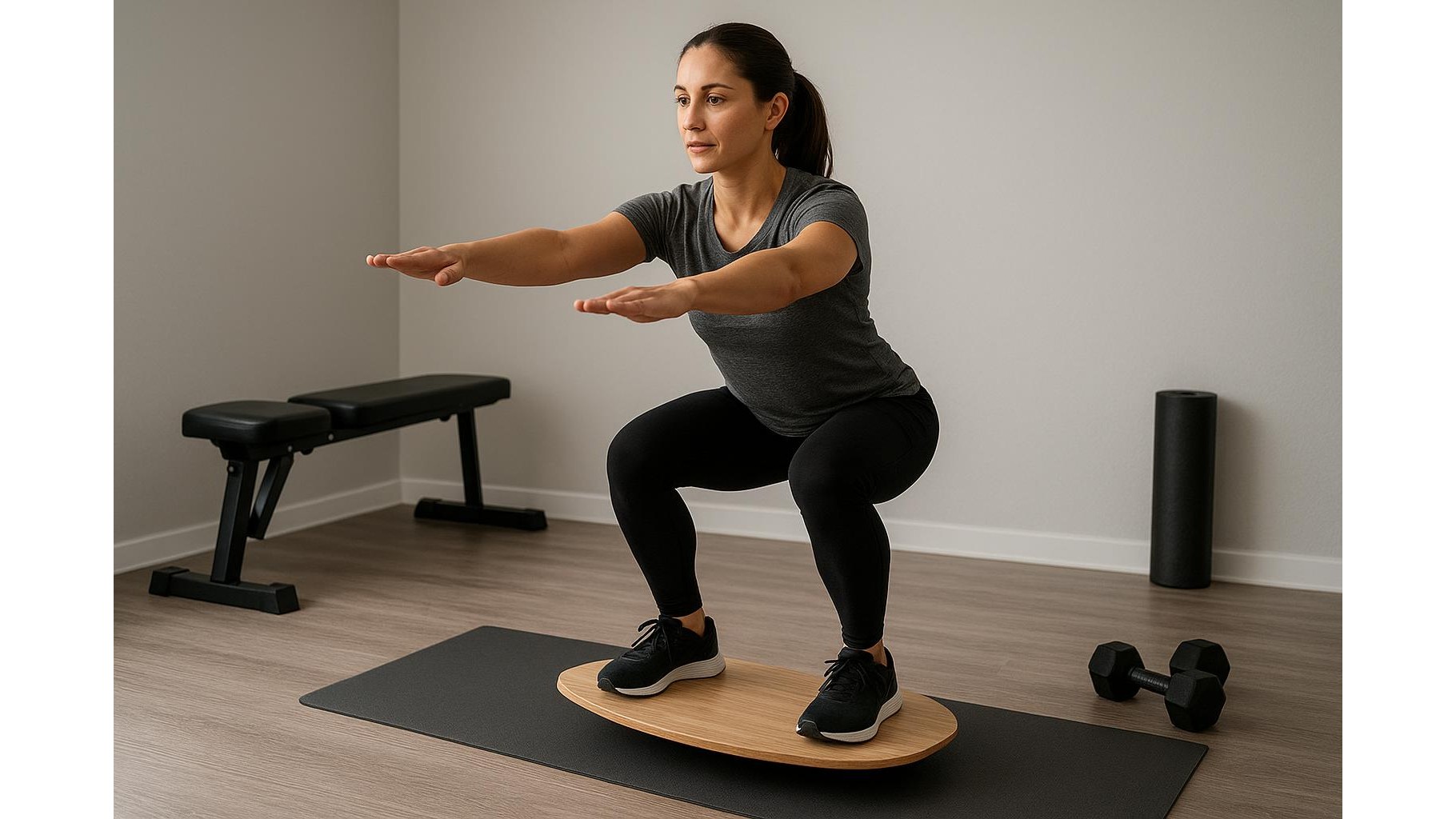
Unlike traditional steady-state cardio, balance board training forces constant micro-adjustments in your feet, ankles, hips and core. When you keep those adjustments going for several minutes, heart rate climbs while impact stays minimal. A classic wooden wobble board or roller-style board demands continuous engagement of the core, glutes and stabilising muscles, so even simple movements like gentle rocking or small squats turn into metabolic work. Because there is no heavy heel strike, this style of low-impact cardio is joint-friendly for many people who cannot tolerate running or jumping at home.
Choosing the right board for home conditioning
For cardio-style work, you want a balance trainer that is stable enough to allow repetitive movement, yet unstable enough to keep the muscles firing. Classic wobble boards with a rounded base work well for beginners and intermediate users, letting you perform circles, tilts and mini-squats without taking up much space. Slackline-style kits, usually consisting of a flat webbing line tensioned between two fixed points, challenge balance in a different, more dynamic way and are ideal once you have basic stability. When shopping, prioritise a non-slip surface, a weight rating that comfortably exceeds your bodyweight, and, for home use, a board that is compact and easy to store so you are more likely to use it for short, frequent conditioning sessions.
Sample low‑impact balance board cardio routine
To turn your balance board into a cardio machine, think in terms of intervals. After a 3–5 minute warm-up of marching in place and ankle circles, try 6–10 rounds of 30–40 seconds of work followed by 20–30 seconds of rest. Example exercises include gentle front-to-back rocking, side-to-side rocking, slow continuous circles, and small controlled squats on the board. On a slackline-style setup at home, you might alternate 20–30 second bouts of walking up and down the line with standing balance holds and shallow lunges with support from a wall or rail. Finish with a few minutes of easy rocking and deep breathing. Aim for a total of 15–20 minutes to start, two to four times per week, and focus on smooth, continuous movement rather than speed.
Safety tips and smart progressions
Because instability increases fall risk, safety is non-negotiable when you use a balance board for cardio. Start next to a sturdy support like a wall, counter or squat rack so you can lightly hold on while you learn the feel of the board. Use the board on a flat, non-slippery surface and keep the area clear of clutter. Beginners should begin with shoes on for extra grip and ankle support, limiting sessions to short bouts while fatigue is low. As your control improves, you can progress by increasing interval duration, reducing hand support, or adding light movements such as arm raises or gentle turns. If you experience sharp pain, dizziness or loss of control, step off immediately and reset rather than trying to push through a round.
Who benefits most from this style of training
Using balance boards for home conditioning is especially useful for people who need joint-friendly cardio, such as older adults, desk workers with stiff hips and ankles, or strength athletes wanting to build capacity without extra impact. Runners and field-sport athletes can use short sessions on the board or slackline to improve proprioception while also elevating heart rate on recovery days. Busy home exercisers who lack space for a treadmill or bike will appreciate that a small wobble board can live under the sofa yet deliver a meaningful cardiovascular and core workout. This style of training is also mentally engaging: focusing on staying centred makes sessions feel more like a game than monotonous cardio, which can improve consistency over time.
In summary, treating balance boards as cardio machines is an efficient way to blend stability training, core work and low-impact conditioning in a compact home setup. By choosing a suitable board or slackline-style trainer, following basic safety guidelines and using simple interval structures, you can turn short bouts of balance practice into a full-body home workout that supports joint health, coordination and cardiovascular fitness without needing bulky equipment.