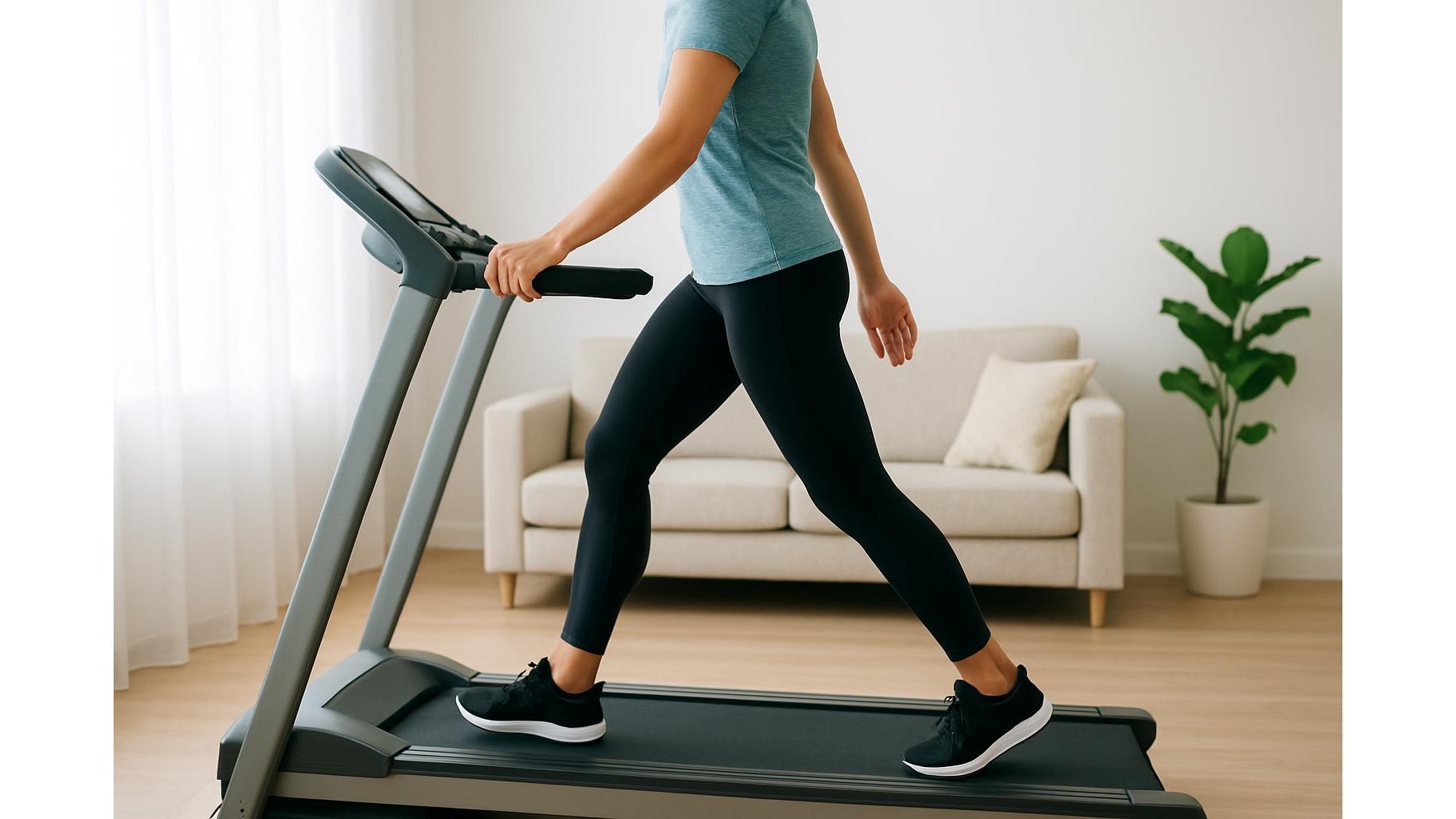
Adding backward walking on a home treadmill is a smart way to train your knees and glutes with less joint stress than traditional forward walking or running. By reversing the movement pattern, you shift the load to different muscles, improve knee stability, and challenge coordination. In this guide, you’ll learn exactly how to integrate safe backward intervals into your home treadmill workouts, how to set the right speed and incline, and which safety rules you must respect to protect your joints.
Why backward walking is kinder to your knees
When you walk backward on a treadmill, the knee joint tends to stay in a more flexed, controlled position. This reduces the impact forces on the kneecap and can decrease discomfort for those who feel pain when walking or running forward. Backward strides place more emphasis on the quadriceps and glute muscles, helping you build strength around the knee, which in turn improves joint stability. For many people with mild anterior knee pain, this can be a joint-friendly way to stay active. However, if you have a history of knee surgery, ligament tears or severe arthritis, you should always consult a healthcare professional before starting any new training method.
How to set up your home treadmill for safe backward walking
To start, make sure your home treadmill has a stable frame, reliable handrails and an easy-to-reach emergency stop key. Position the treadmill so there is at least one metre of free space behind it, in case you lose balance. Begin each session by standing on the side rails, facing the console, and carefully turning around so you are facing the rear of the treadmill. Hold the handrails with both hands, start at the lowest speed (usually 0.5–1 km/h) and only then step backward onto the belt. Keep your feet within the centre of the belt, avoid sudden changes of direction, and never attempt backward walking if children or pets can access the area while you train.
Technique tips to activate glutes without straining joints
Proper technique is essential to get the most from backward treadmill walking. Keep your torso tall, your chest open and your gaze straight ahead (toward the treadmill console or a point on the wall), not down at your feet. Maintain a light hold on the handrails to help balance, but avoid hanging your bodyweight on your arms. Focus on short, controlled steps, landing softly on the front of the foot and gently rolling toward the heel as the belt moves under you. Slightly squeeze your glutes as you push the belt away with each stride; you should feel your buttocks and thighs working more than your calves or lower back. If you notice any pinching or sharp pain in the knee, reduce speed and step length, or stop the session.
Sample beginner interval plan for knees and glutes
For most home users, the safest approach is to add short backward intervals inside an otherwise easy forward walking session. After 5 minutes of warm-up walking forward, turn around carefully and perform 30–60 seconds of backward walking at a very low speed, then turn forward again and recover for 2–3 minutes. Repeat this pattern for 4–6 total intervals. Over several weeks, you can gradually increase each backward interval up to 2–3 minutes and reduce the recovery periods, as long as your knee comfort remains good and your breathing stays under control. Avoid adding incline at first; once you feel confident with the coordination, a gentle incline of 2–3% can boost glute activation without drastically increasing impact.
Safety rules and when to avoid backward treadmill walking
Backward treadmill walking is not for everyone. If you suffer from poor balance, frequent dizziness, serious vision issues or are in post-surgical recovery, skip this technique or perform it only under professional supervision. Even if you are healthy, never run backward or use high speeds; this method is meant to be controlled and low-impact. Always keep the emergency stop clip attached to your clothing, and practice stepping off the belt quickly if you feel unstable. Limit sessions to two or three times per week, giving your muscles and joints time to adapt. Used with respect and patience, backward walking can become a powerful tool to strengthen knees and glutes safely and effectively at home.
Backward walking on a home treadmill offers a unique way to build leg strength, improve knee stability and wake up your glutes while keeping impact low. By starting slowly, focusing on clean technique and following basic safety guidelines, you can integrate short backward intervals into your regular workouts to make them more joint-friendly and varied. Listen to your body, progress gradually, and this simple tweak to your treadmill routine can help you train smarter, not harder, in your home gym.