
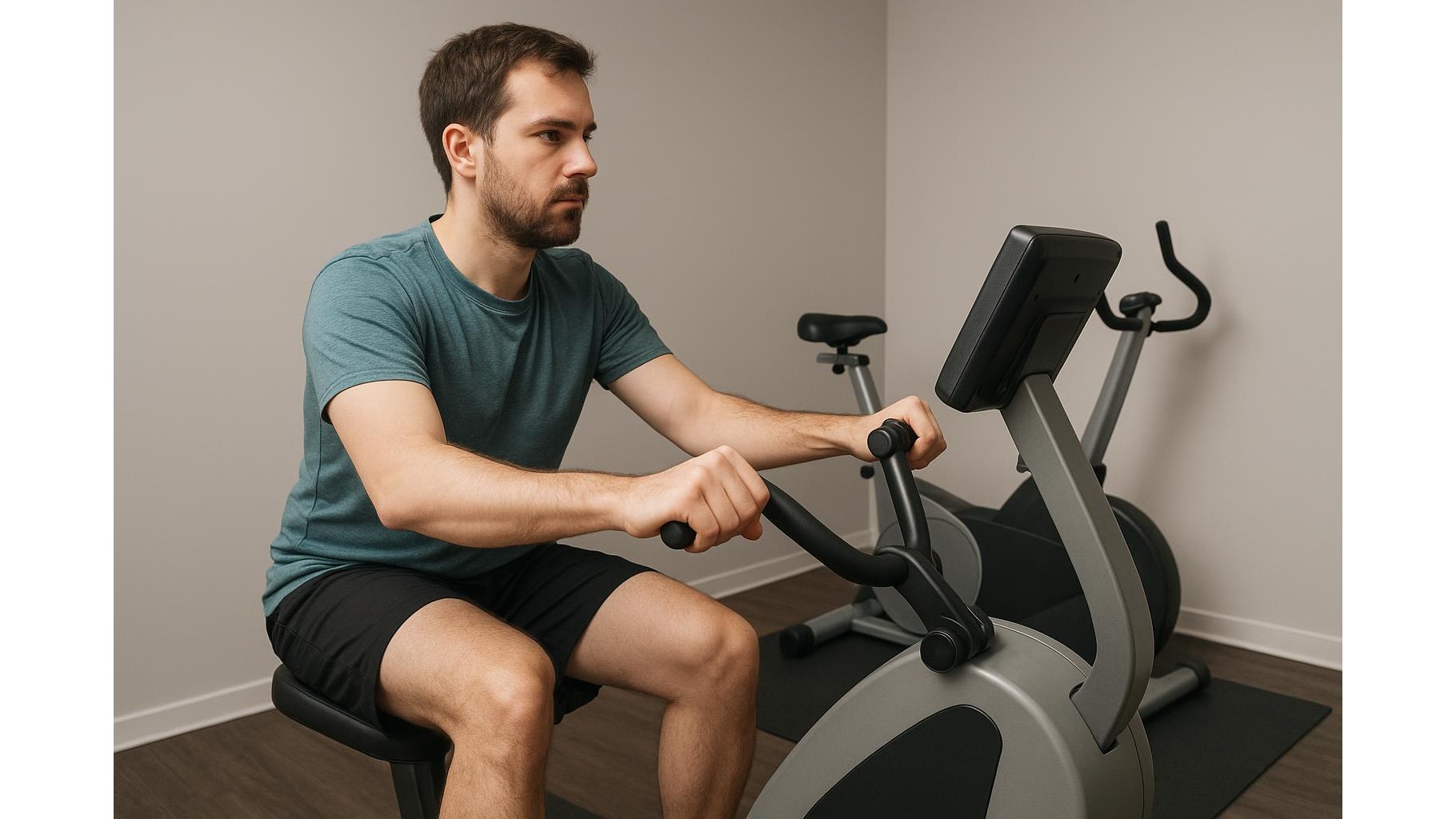
When lower-body training is limited by pain, injury or mobility issues, classic exercise bikes and treadmills can become frustrating. This is where upper-body cardio machines, especially the upper-body ergometer (UBE) and arm bikes, offer a powerful alternative. By shifting the workload to the shoulders, arms and upper back, they let you stay consistent with your cardio at home without aggravating sensitive knees, hips or ankles.
What is an upper-body ergometer and how does it work?
An upper-body ergometer is essentially a bike for your arms. Instead of pedalling with your legs, you rotate handles or cranks with your hands, either seated or standing. Resistance can be adjusted just like on a normal exercise bike, so you can move from gentle rehab-style spinning to intense intervals. Compared with a standard bike, a UBE shifts the cardiovascular load to the shoulders, chest, back and arms, while still engaging the core. For home users recovering from lower-limb surgery, dealing with knee osteoarthritis or managing chronic foot pain, this can mean the difference between giving up cardio or keeping a regular training habit alive.
Who benefits most when arms replace legs for cardio?
Arm-focused cardio machines are particularly valuable if you have lower-body injuries, joint replacements, or conditions like plantar fasciitis and Achilles tendinopathy that flare up with impact or repetitive cycling. They are also useful for older adults who struggle to mount a bike or maintain balance on a treadmill. Office workers with tight hips and backs often find that offloading the legs for a few weeks and using an upper-body bike helps them keep up their fitness while addressing mobility issues separately. Even athletes can benefit: using a UBE during rehab preserves aerobic capacity and mental routine while the lower body recovers.
Key features to look for in a home upper-body cardio machine
When choosing an arm-focused machine for your home gym, prioritise adjustable resistance that ranges from very light to challenging, so you can use the same unit for rehab and conditioning. A compact footprint is important if you train in a living room or small office. Look for a stable base, smooth crank motion and comfortable hand grips to reduce wrist strain. A clear display that shows time, speed, distance and calories makes it easier to structure sessions and track progress. Finally, consider whether you need a fully seated unit, one that can be used on a table for standing work, or a versatile design that can be used for both upper- and lower-body pedalling to maximise value.
How to integrate upper-body cardio when legs are limited
If leg work is painful, you can still follow a structured cardio training plan using an upper-body ergometer. Start with 10–15 minutes at an easy pace, focusing on relaxed shoulders and controlled breathing. Gradually build to 20–30 minutes, three to five times per week. Interval formats, such as 1 minute harder / 1–2 minutes easy, provide a potent cardio stimulus without overloading your joints. You can combine short UBE sessions with gentle mobility drills for hips and ankles, or alternate days of arm-focused cardio with light walking, depending on pain levels. The key is to think of the UBE as your primary engine for aerobic fitness maintenance while your lower body slowly returns to full capacity.
When an upper-body ergometer can beat a classic bike
There are situations where an upper-body ergometer is not just a substitute, but actually a better choice than a classic bike. If every pedal stroke aggravates your knees, you will never accumulate enough safe volume to improve fitness. Arm-based cardio removes that barrier, making it easier to be consistent. It also introduces a unique upper-body endurance challenge that a standard bike cannot provide, strengthening the shoulders and upper back that often lag behind in traditional home workouts. For many users with chronic lower-limb issues, that combination of comfort, consistency and upper-body development means an arm-focused machine can deliver more effective and sustainable home cardio than a traditional exercise bike.
In summary, arm-focused cardio machines offer a practical, joint-friendly solution when the lower body cannot handle conventional cycling or running. By allowing you to train the heart and lungs through the upper body, an upper-body ergometer helps preserve fitness, routine and motivation during injury, flare-ups or long-term mobility issues. Choosing a compact, adjustable unit and integrating it into a simple weekly plan lets you stay active at home now, and makes it easier to transition back to full-body training when your legs are ready again.









