
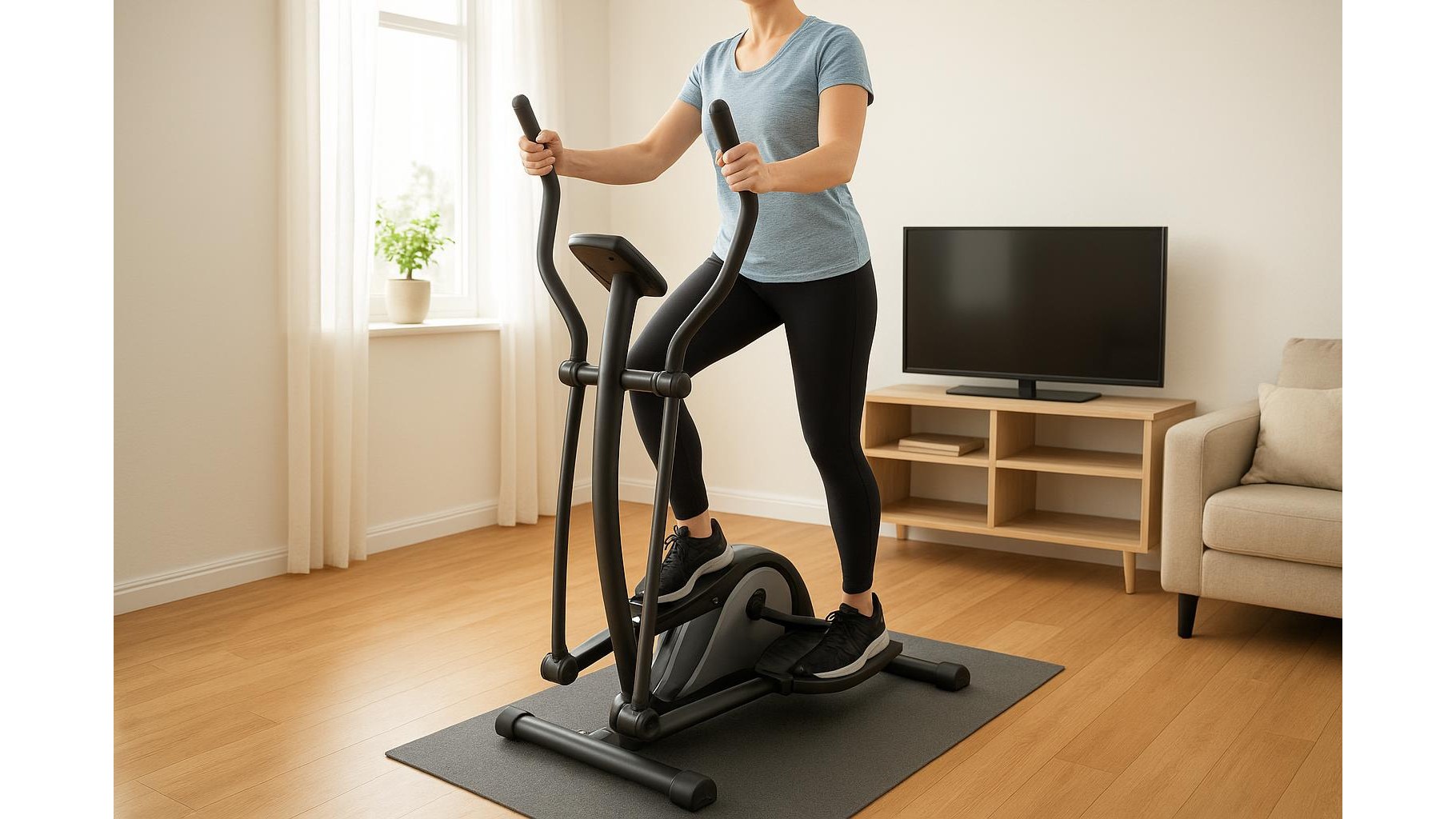
Compact air walker machines for home promise low-impact cardio in a small footprint, making them attractive for flats and multipurpose rooms. Unlike bulky treadmills or noisy exercise bikes, air walkers use a gliding motion to simulate walking or light jogging without pounding your joints. Understanding how they work, who they really suit, and what to check before buying is crucial if you want smooth movement instead of a wobbly, squeaky mistake.
How a home air walker actually works
A typical air walker is a freestanding frame with two long pedals and upright handles. As you move, your feet glide forward and back in a fixed arc, while your arms swing in sync, creating a full-body motion. There is usually no motor and often no heavy flywheel; your body weight and momentum drive the movement. This makes air walkers much lighter than traditional ellipticals and easier to move around. However, it also means build quality is critical: poor frames flex, joints loosen, and you get side-to-side wobble. A good air walker should feel stable when you step on, with smooth, consistent motion, no grinding, and minimal lateral sway even at a brisk pace.
Who air walkers suit (and who should skip them)
Air walker machines for home are ideal for beginners, older users, and anyone needing low-impact cardio. The gliding action is gentle on knees, hips, and ankles, making them useful if you are easing back into exercise after a break or managing mild joint issues. They also suit smaller spaces, thanks to compact footprints and often foldable frames. On the other hand, they are not the best choice if you want heavy resistance, sprint-style training, or serious muscle building: most models offer limited resistance adjustment and focus instead on steady-state cardio. Very tall or heavy users should pay extra attention to maximum user weight and stride length; shorter, ultra-cheap units can feel cramped and unstable for larger bodies.
Key features to check before buying
To avoid a noisy, wobbly disappointment, focus on a few core features. First, look at weight capacity: a higher max user weight usually signals a stronger, more stable frame. Next, consider stride length; if it is too short, your movement feels choppy and unnatural. Also check whether the machine folds and how securely it locks when open and closed. A simple monitor console that tracks time, estimated calories, and step count is enough for most people, but ensure the display is readable. Finally, pay attention to noise levels in user reviews—excessive squeaking or rattling often comes from poor bushings or loose joints. While true air resistance is rare on compact models, any adjustable tension system should change the effort noticeably, not just on paper.
Build quality, comfort, and noise control
On a home air walker, build quality shows up in how solid the unit feels when you push it. A wider base and cross-bracing help stability, while decent welds and thicker tubing reduce flex. For comfort, look for non-slip, cushioned pedals with enough surface area so your feet feel secure, plus handles placed at a comfortable height for your reach. Smooth, consistent motion depends on good joints and pivot points; if the frame is too light or the joints are poorly finished, you will feel jerky movement. Noise is another key factor in flats: quieter machines rely on proper lubrication and tighter tolerances. Plan to check bolts periodically and use a silicone lubricant on moving parts to keep the motion silent over time.
Space, storage, and usability at home
One of the main reasons people choose air walker machines for home is space. Many models have a compact footprint and can fold nearly flat. Measure your available area and compare it to the machine’s in-use and folded dimensions, including handlebar height. Consider ceiling height too, especially if you are tall; you will not rise as high as on a stepper, but you still need comfortable clearance. Transport wheels make it far easier to move the unit between rooms. Also think about how easy it is to get on and off: a low step-in height and stable base are important for older users. Finally, ask whether the air walker fits your routine—can you use it while watching TV or between work calls? If setup or unfolding is fiddly, you are less likely to use it consistently.
Making the right choice for long-term use
A well-chosen air walker machine for home can provide accessible, joint-friendly cardio in a small space, but only if you choose carefully. Focus on stability, stride length, user weight rating, and real-world noise rather than flashy marketing claims. Think honestly about your fitness level: air walkers shine for light to moderate, low-impact sessions rather than all-out power training. If you match the machine to your body size, goals, and living space, you will be far more likely to use it regularly—and enjoy smooth, quiet workouts instead of fighting a flimsy frame that ends up gathering dust.









