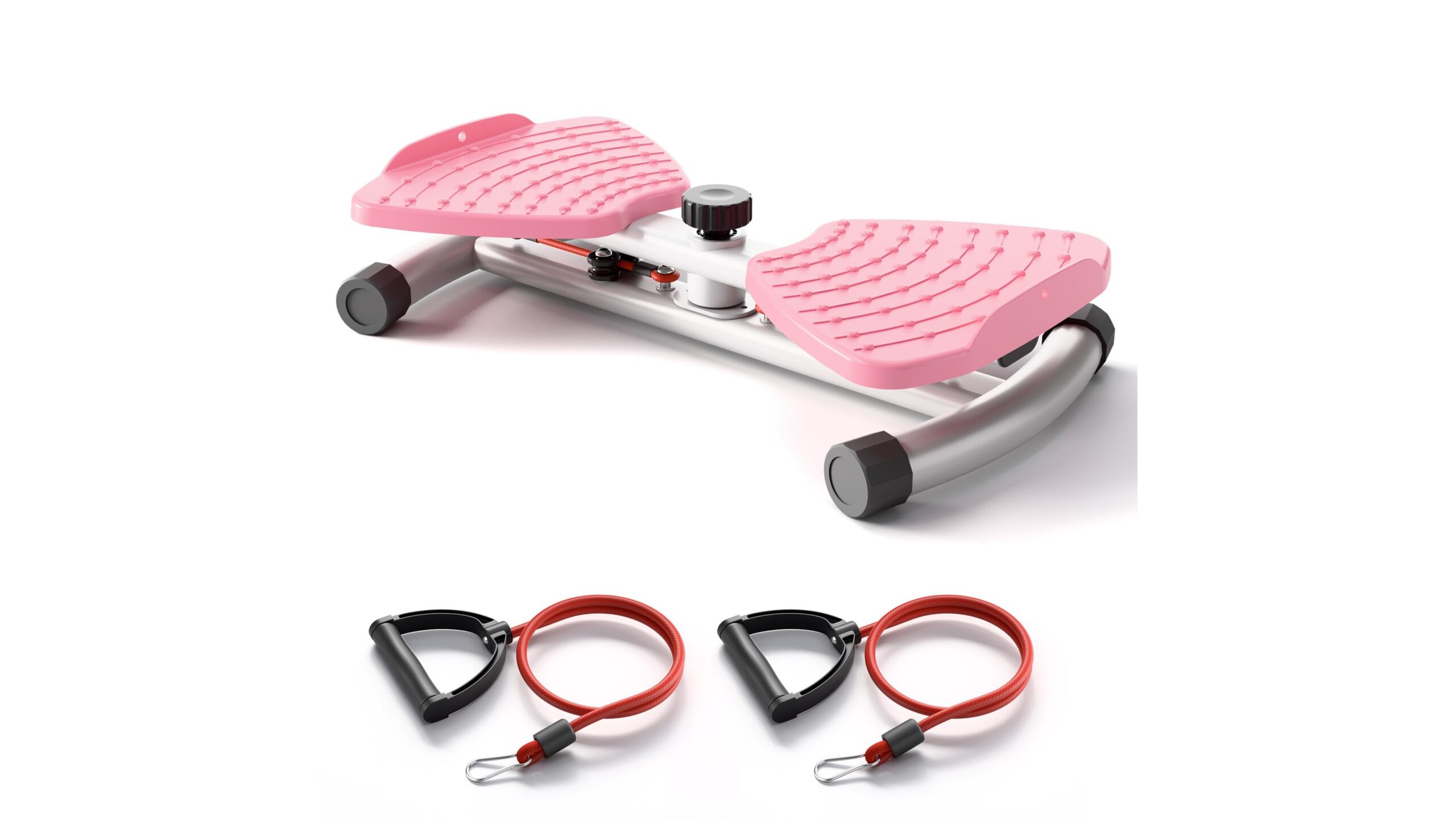
Mini stair steppers are one of the most compact ways to get low‑impact home cardio, but the type of resistance they use dramatically changes how they feel and sound. The two main systems on the market are air resistance and magnetic resistance. Understanding how each works will help you choose the right mini stepper for your fitness level, your space and your training style.
Table of contents
How air resistance mini steppers work and feel
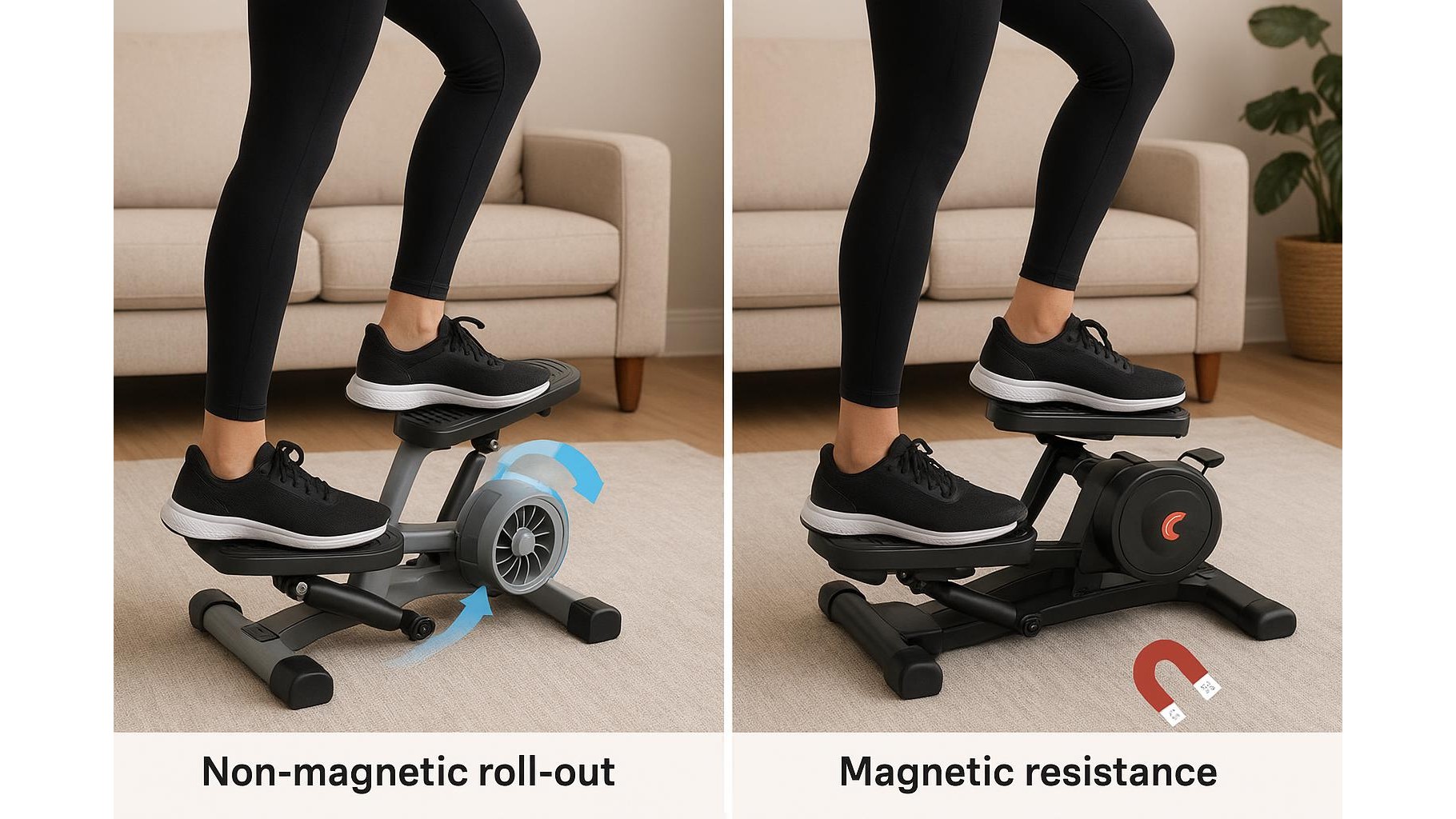
On an air resistance mini stair stepper, your steps drive a small internal fan or flywheel with vents. As you push harder, the fan spins faster and the air drag increases, naturally creating more resistance. The result is a distinctly dynamic, springy pedal feel that responds instantly to how powerfully you step. At lower effort it feels light and easy for gentle low‑impact cardio; when you accelerate, resistance ramps up smoothly without needing to touch a dial. Many users appreciate this “self‑regulating” character because it mimics climbing stairs outdoors where each stronger push simply feels harder.
Noise, footprint and maintenance of air systems
The biggest trade‑off with air resistance steppers is noise. The spinning fan creates a steady whooshing sound, which grows as you pick up pace. In a basement gym this is rarely an issue, but in small flats or late‑night workouts it can bother housemates. On the plus side, air systems are mechanically simple: fewer parts, no magnets and often very low maintenance beyond occasionally wiping dust from vents and checking moving joints. If you like real‑time feedback from sound and feel, and train when noise is not a problem, an air stepper can be a durable, straightforward choice.
How magnetic resistance mini steppers work and feel
A magnetic resistance mini stair stepper uses a metal flywheel and fixed magnets placed around it. Turning a knob or using built‑in levels moves the magnets closer or further from the flywheel. Closer magnets mean stronger magnetic drag and therefore higher resistance. The key advantage is consistency: resistance levels are clearly defined, so you can repeat the same workout easily. The pedal motion tends to be smoother and more controlled, ideal for steady‑state cardio and longer sessions. Beginners and those focused on joint‑friendly exercise often prefer this predictable, gliding feel.
Noise, maintenance and workout styles with magnetic systems
Because the magnets never touch the flywheel, magnetic mini steppers are typically much quieter than air models. You mainly hear the soft whirr of the internal mechanism and the pedals moving, which makes them excellent for apartment cardio, early mornings or watching TV while you train. The trade‑off is that you must deliberately adjust the resistance level using a dial or console rather than relying on self‑regulating air drag. In return, you get easy progress tracking (for example, repeating intervals at level 6 every week) and a system that usually needs only periodic checks of the drive belt and moving joints. For structured interval training and quiet, consistent workouts, magnetic resistance shines.
Which resistance is best for your home and goals?
Choosing between air vs magnetic resistance on mini stair steppers comes down to your priorities. If you value a responsive, outdoor‑like feel, enjoy pushing intensity through effort alone and are not worried about noise, air resistance offers a lively, engaging experience. If you live in a flat, need near‑silent operation, or want precise control over intensity for progression and rehab, magnetic resistance is usually the better fit. Both types preserve the core benefits of a mini stepper: compact size, low‑impact movement and the ability to slot quick, effective home cardio into a busy day.
In summary, air resistance brings natural, effort‑based challenge with more sound and less complexity, while magnetic resistance delivers quiet, smooth and repeatable workouts with clearly defined levels. Match the resistance system to your living situation, your preferred workout style and how important noise is in your home. By understanding these differences, you can confidently choose a mini stair stepper that keeps you consistent, comfortable and motivated on your low‑impact cardio journey.