Setting up a home rowing machine is one of the smartest ways to build a powerful, low‑impact cardio routine. But before you hit “buy now”, you need to decide between two main resistance types: air rowers and magnetic rowers. Each system feels different, sounds different and supports different training goals, from long steady rows to intense HIIT sprints. Understanding how they work will help you choose the right rower for your space, neighbours and fitness ambitions.
Table of contents
How air and magnetic resistance actually work
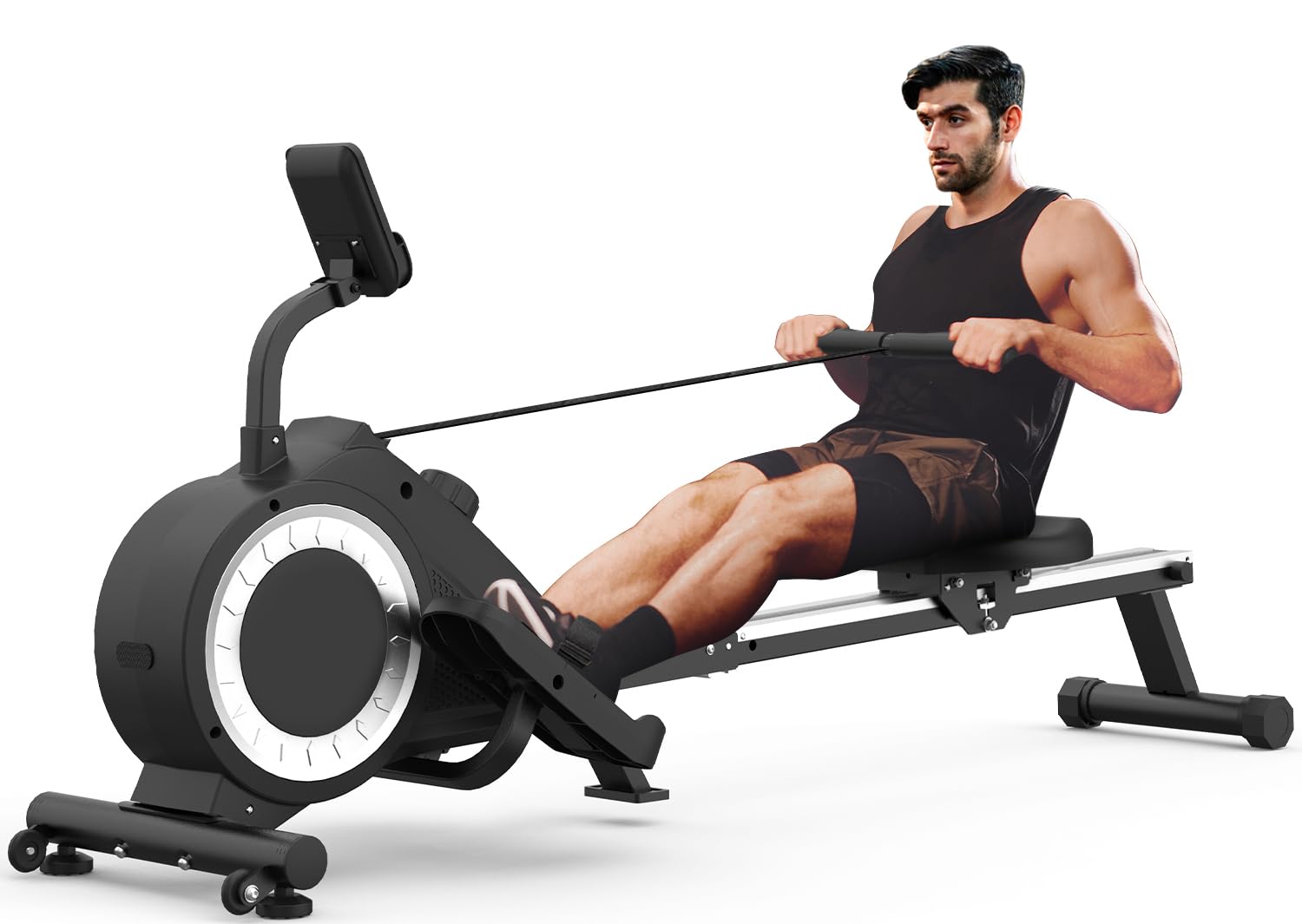
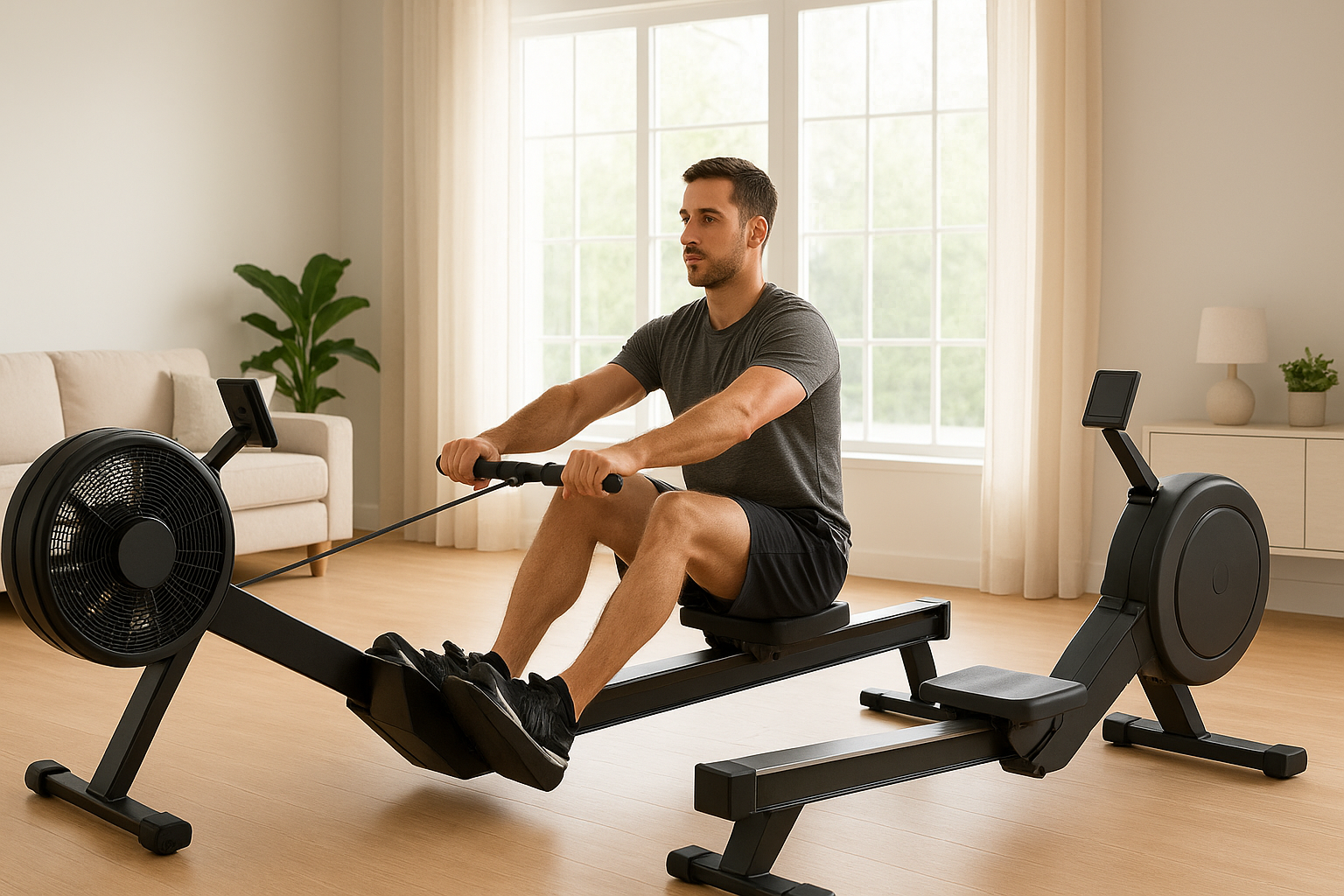
Air rowing machines use a fan flywheel: when you pull the handle, the fan spins and pushes against the air. The harder and faster you row, the more resistance you feel, in a smooth, naturally rising curve. There is usually a damper lever to fine‑tune airflow, but the core principle is simple: row harder, get more resistance. Magnetic rowing machines, instead, use a magnet moving closer to or further from a metal flywheel. You adjust resistance via a dial or digital controls, and the system applies a consistent braking force regardless of how fast you pull. This makes the stroke feel more uniform and predictable, with clear “levels” you can repeat workout after workout.
Noise levels and home‑friendly factors
One of the biggest differences is noise. An air rower inevitably produces a whooshing fan sound that increases with stroke power. For many users, this is an energising, motivating feedback loop, but it can be a problem in flats, late‑night sessions or shared living spaces. Magnetic rowers are much quieter: the magnetic brake does not rely on airflow, so you mostly hear the seat gliding on the rail and the chain or belt. If you plan to watch TV without cranking the volume, train early in the morning, or avoid disturbing kids and neighbours, a magnetic rower generally fits the home environment better.
Training style: endurance, HIIT or gentle low‑impact cardio?
If your main goal is endurance training or simulating outdoor rowing, an air rower’s resistance profile feels very “alive”. Because resistance scales instantly with your effort, it is perfect for intervals and HIIT: sprint harder, and the fan responds immediately, then back off for recovery without touching any settings. This dynamic feel also encourages proper power application through the drive. Magnetic rowers shine for steady‑state cardio and low‑impact sessions, where you want consistent drag and clear resistance levels. You can dial in a moderate load, lock it in, and focus on technique, heart rate zones or active recovery days without big fluctuations in stroke feel.
Comfort, feel and progression over time
From a comfort standpoint, both systems can deliver a smooth stroke if the frame and rail are well designed. However, the subjective feel is different. Air resistance tends to feel more fluid and responsive to acceleration, rewarding powerful leg drive and strong finishes. This makes it popular with athletes and serious rowers. Magnetic resistance can feel slightly more linear and controlled, which some beginners find reassuring, especially when learning technique at slower paces. For long‑term progression, air rowers let you measure improvement by pace and stroke rate, while magnetic machines make it easy to track progress by resistance level plus time or distance, similar to a spin bike.
Space, budget and which rower to pick for your goals
For home gym use, consider size, storage and price. Both air and magnetic rowers often fold or store vertically, but air models typically have a larger fan housing that takes up more footprint. Magnetic rowers are often more compact and lighter, which can help in smaller rooms. In terms of budget, both types range from entry‑level to premium, but very high‑end performance rowers are more often air‑based. If your priority is performance, HIIT and sport‑style rowing, an air rower is usually the better fit. If you want quiet, low‑impact, steady cardio that will not disturb anyone and still scales well as you get fitter, a magnetic rower is hard to beat.
Choosing between an air rower and a magnetic rower ultimately comes down to your cardio goals, living situation and training preferences. Air resistance delivers a responsive, realistic feel and excels for HIIT and performance‑oriented workouts, at the cost of more noise and space. Magnetic resistance offers whisper‑quiet operation, smooth and consistent drag, and easy progression for steady‑state and low‑impact training. Match the resistance system to how you actually like to train at home, and you will get far more value—and motivation—from every stroke you take.