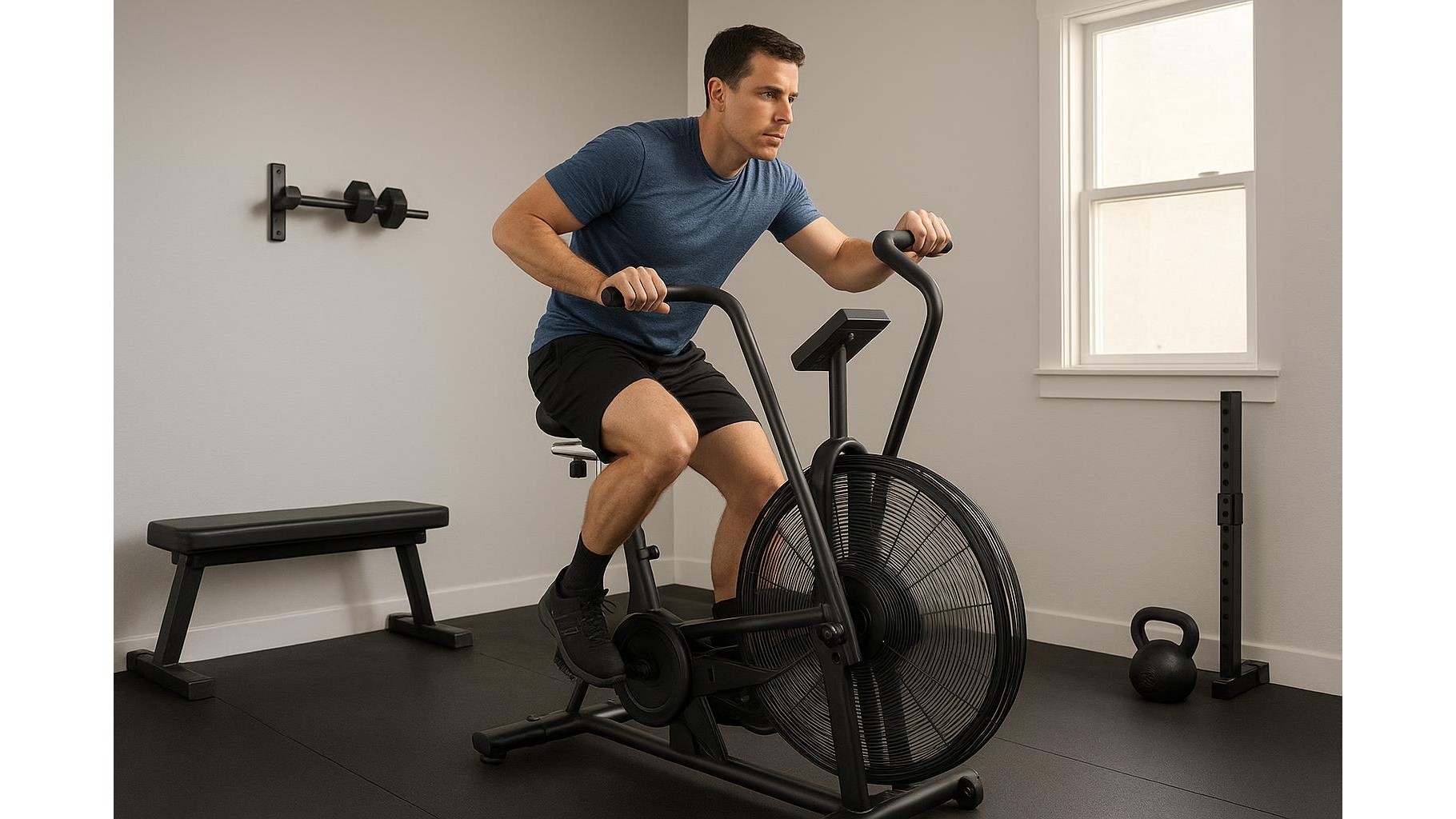
When running is off the table because of joint pain, injuries or limited space, the humble air bike becomes a powerful ally. Its fan-driven resistance automatically scales with your effort, letting you perform intense interval training without the pounding that comes with road running or treadmill sprints. With a bit of structure, you can create joint-friendly conditioning workouts that build aerobic capacity, power and mental toughness right in your home gym.
Why the air bike is ideal when you cannot run
The air bike distributes work through your arms and legs, placing far less impact on knees, ankles and hips than running. Because resistance increases with speed, you can move from gentle recovery rides to all-out sprints simply by pushing harder. This makes the air bike perfect for rehabbing runners, lifters needing low-impact cardio, or anyone training in a small space. The fixed, supported position also improves stability, which can be reassuring if you are returning from injury or dealing with balance issues. For many, this combination of safety and intensity is the missing link in their home conditioning.
Key safety cues and setup for joint-friendly riding
Good technique keeps low-impact cardio truly joint-friendly. Start by adjusting the seat so that your knee is slightly bent (about 25–30 degrees) at the bottom of the pedal stroke; over-reaching stresses the knees and hips. Sit tall with a neutral spine, chest gently lifted and shoulders relaxed, gripping the handles lightly to avoid upper-back tension. Drive with the legs first, then add a strong but smooth push–pull with the arms rather than yanking. Keep your cadence controlled on the first few sessions and use a quiet nasal or relaxed-mouth breathing pattern to avoid early fatigue. If you feel sharp pain in joints, dial back intensity immediately or shorten intervals instead of grinding through discomfort.
Beginner-friendly intervals to build your base
For newcomers or those returning from injury, start with tempo intervals that emphasise consistency over speed. A simple structure is 5–8 rounds of 1 minute easy, 1 minute moderate. During the easy minute, pedal and push the handles at a conversational pace; during the moderate minute, imagine a brisk uphill walk—challenging but sustainable. Aim to keep your breathing controlled and your technique smooth. Over a few weeks, progress to 2 minutes moderate, 1 minute easy, and gradually extend the total session from 10 to 20 minutes. These workouts strengthen your heart and lungs, improve tolerance to effort, and prepare you for more aggressive air bike intervals later on.
Joint-friendly sprint and power intervals
Once you have a base, you can introduce short, sharp air bike sprints without compromising your joints. A classic structure is 10–12 rounds of 10–15 seconds hard, followed by 45–60 seconds very easy pedalling. During the sprint phase, focus on fast but controlled leg drive and powerful arm action, keeping your torso stable and eyes forward. Avoid holding your breath; instead, take a deep inhale before the interval and exhale forcefully as you work. Keep intensity high but stop each sprint before your form falls apart. Because the bike has no fixed top resistance, you control the load entirely with your effort, making these intervals safer than all-out treadmill sprints while still delivering a serious conditioning stimulus.
Using recovery rides and weekly structure
Low-intensity recovery rides on the air bike help circulation and promote joint health between harder sessions. On these days, ride 15–25 minutes at an easy pace where conversation feels natural and breathing is calm. Combine 1–2 recovery rides each week with 1–3 interval days depending on your experience and other training. A balanced weekly plan might include one base-building tempo session, one sprint-interval day and one recovery ride. Always leave at least 24 hours between intense sessions, and listen to early signs of fatigue such as lingering joint stiffness or trouble sleeping. With thoughtful programming and attention to safety cues, the home air bike becomes a long-term, sustainable solution for powerful, low-impact cardio.
In summary, a well-planned air bike program can replace or supplement running by offering scalable resistance, minimal impact and versatile interval structures. By prioritising proper setup, smooth technique and clear intensity zones—easy recovery, steady tempo and short sprints—you can build impressive conditioning without beating up your joints. Whether you are rehabbing, preserving longevity or simply looking for efficient home workouts, integrating structured air bike intervals gives you a reliable, joint-friendly path to better fitness.