
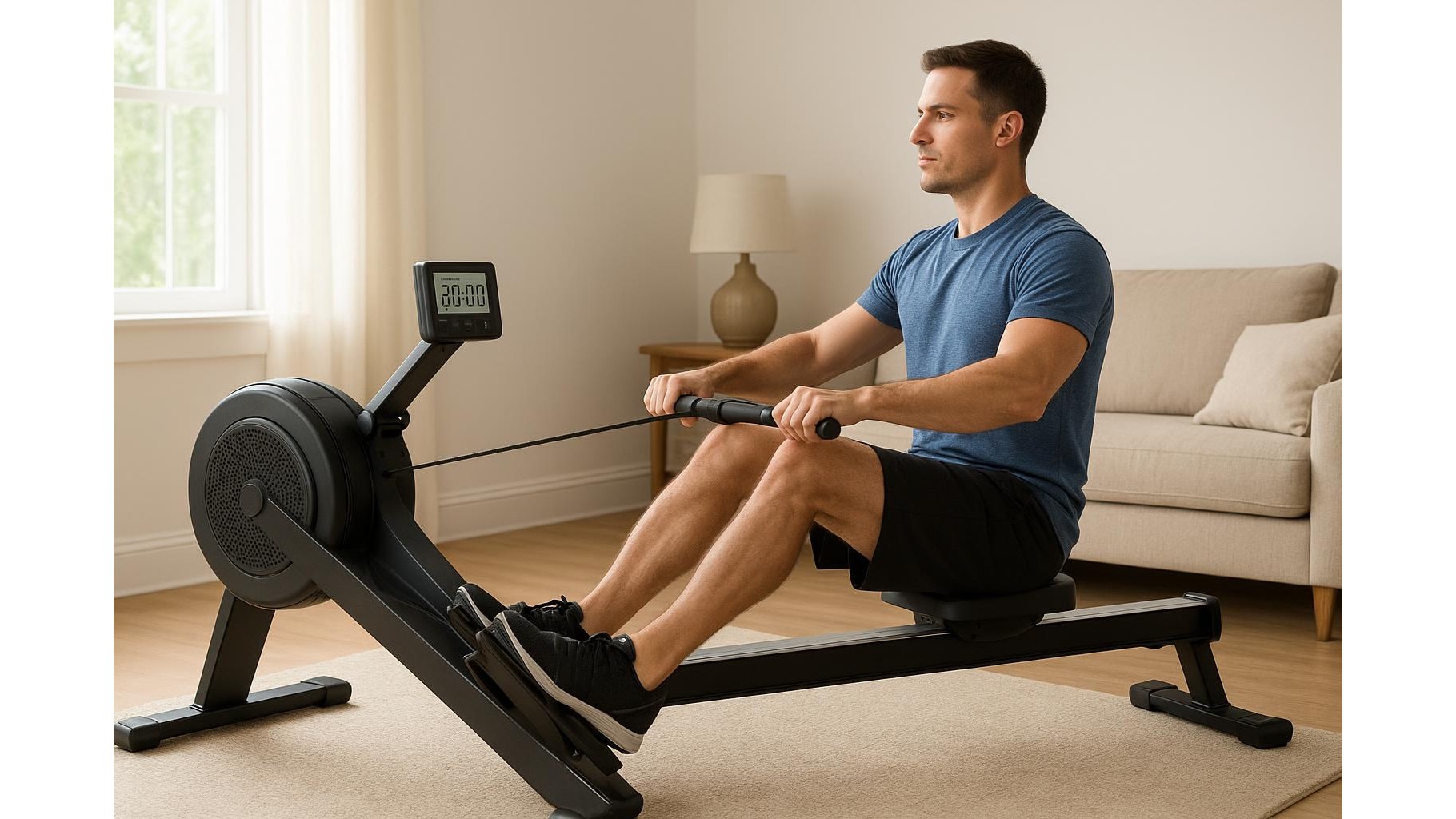
If you have a home rowing machine and you’re not sure how to start, an 8-week structured plan can turn random, tiring rows into steady progress. This beginner-friendly schedule will guide you from short 5-minute rowing workouts to confident 30-minute sessions, using simple pacing cues, clear stroke-rate targets and smart recovery so you avoid burnout and joint pain while building a sustainable fitness habit.
Setting up your home rowing base
Before following any beginner rowing plan, take a week to get comfortable with your machine and basic technique. Aim for 3 short rows of 5–8 minutes at an easy pace where you can still talk. Focus on sitting tall, driving through your legs, hinging slightly from the hips and finishing with your hands just below the ribs. Keep stroke rate around 18–22 strokes per minute (spm). If your rower has a damper, start at a moderate setting rather than the maximum; high drag can overload your lower back when you are new. This early phase is about learning smooth, consistent strokes, not chasing speed or distance.
Weeks 1–2: From 5 to 10 minutes
During weeks 1–2, row 3 times per week. Each session starts with 2 minutes of very easy rowing, then moves into simple intervals. For example: 4 × 1 minute easy, 1 minute rest on the machine, then finish with 2 minutes gentle rowing to cool down. Keep the pace at a comfortable, “all-day” effort—your breathing should be slightly elevated but under control. Target 20–22 spm and focus on long, relaxed strokes rather than pulling harder. If you feel fresh at the end of week 2, extend the work intervals to 90 seconds while shortening the rests. On non-rowing days, add light mobility for hips, hamstrings and upper back to support better posture on the rower.
Weeks 3–4: Building to 15–20 minutes
In weeks 3–4, the goal is to reach 15–20 total minutes of rowing without feeling crushed. Try 3 weekly sessions built around 3-minute blocks. A sample session: 5 minutes easy warm-up, then 3 × 3 minutes at a steady pace with 90 seconds very easy rowing between, finishing with 3 minutes cool-down. Maintain 20–24 spm; if your heart rate or breathing climbs too high, slightly slow the stroke rate and lighten your handle pull. One session per week can be a “ladder”: 2–3–4–3–2 minutes at steady pace with 1 minute easy between each. You should finish each workout feeling you could do a little more—that reserve is what protects you from burnout as the plan progresses.
Weeks 5–6: Consolidating 20–25 minutes
By weeks 5–6, you are ready for longer continuous rows. Aim for 3–4 weekly sessions. Two sessions focus on steady endurance: warm up 5 minutes, then row 12–15 minutes continuously at a moderate pace, followed by a 5-minute cool-down. Keep stroke rate around 22–24 spm and think “smooth and efficient” rather than “hard and fast.” For variety, one weekly session can use slightly quicker segments, such as 6 × 2 minutes at a brisk but controlled pace with 1 minute easy rowing between. Use a simple breathing cue—two strokes inhale, two strokes exhale—to stay relaxed. Pay special attention to recovery: get enough sleep, hydrate well, and include at least one full rest day from all intense exercise each week.
Weeks 7–8: Solid 30‑minute workouts
In the final phase, the aim is to complete 30-minute rowing workouts while still feeling in control. Start week 7 with 3 × 8-minute blocks at a steady effort and 2 minutes easy rowing between, for a total of 30 minutes including breaks. In the second half of week 7, try 20 minutes continuous rowing at 22–24 spm. By week 8, progress to 25–30 minutes continuous rowing once or twice per week, surrounded by one shorter technique-focused session and one optional interval session (for example, 10 × 1 minute strong, 1 minute easy). If fatigue or soreness spikes, back off for a few days—reducing duration is smarter than forcing intensity. This way, you finish the 8 weeks feeling fitter, not exhausted.
Across these 8 weeks, you will gradually transform from a complete novice into a confident home rower capable of consistent 30-minute sessions. Stick to gentle progressions in time, keep stroke rate under control and prioritise good form over speed. Combine your rowing with simple mobility work and sensible rest, and you’ll build a durable cardio base without burnout—ready for more advanced intervals, longer distances or complementing strength training in your home gym.









