Training at home means your hands take a beating from dumbbells, pull‑up bars and resistance bands, while your leggings, sofas and door frames risk scuffs and snags. The right combination of workout gloves and grip pads can protect your skin, improve grip and still stay gentle on fabrics and furniture. Here is how to choose the best options for a home gym setting.
Why hand protection matters in a home gym
Unlike a commercial gym, a home training environment is full of delicate surfaces: sofa fabric, painted walls, wooden tables and soft leggings. Barehand training on pull‑up bars and knurled adjustable dumbbells quickly leads to calluses and torn skin, which can interrupt your routine for days. At the same time, rough or sticky grips can catch on clothing and mark upholstery. Choosing padded gloves or soft grip pads allows you to maintain strong contact with bars while creating a smooth interface between metal and textile, reducing both hand fatigue and the risk of snagging seams when you rest weights on your lap or floor.
Full‑finger vs half‑finger gloves for home workouts
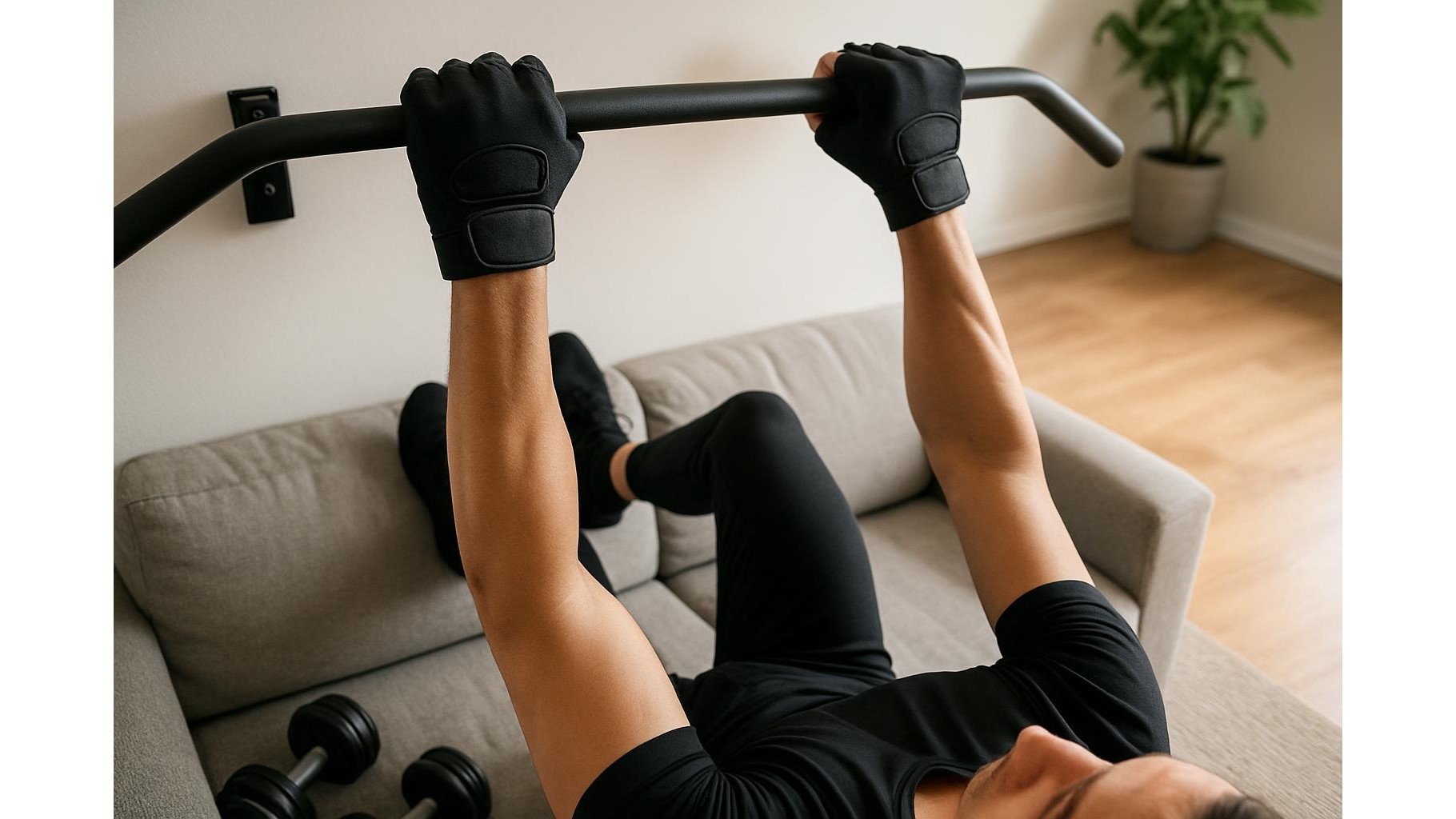
When selecting workout gloves, the first decision is between full‑finger and half‑finger designs. Half‑finger gloves expose the fingertips, which improves ventilation and touch sensitivity for adjusting resistance bands or fitness apps on your phone. They are usually enough for dumbbell training, kettlebell swings and light pull‑up work. Full‑finger options provide more complete coverage, useful if you also cycle outdoors or use textured pull‑up bars that can scrape the backs of your fingers. For a living‑room gym, prioritise gloves with smooth, non‑abrasive palms made from synthetic leather or silicone‑printed fabric: this type of surface grips metal but glides across leggings, sofa arms and yoga mats without pilling or scratching.
Grip pads: minimalist protection that spares fabrics
Grip pads and lifting grips are a smart alternative if you dislike wearing full gloves. These small pads sit between your palm and the bar, often with finger loops to keep them in place. Because they cover only the contact zone, they feel cooler and less restrictive than gloves, yet still prevent calluses and blisters during heavy rows, deadlifts and pull‑ups. For home use, look for pads with a flat, rounded edge rather than sharp corners; this reduces the chance of catching on clothing as you rack weights on your thighs. Soft neoprene or layered foam with a rubberised outer surface gives reliable grip on steel while compressing gently against sofas, benches or wooden chairs that double as workout stations.
Choosing materials that are kind to skin, leggings and furniture
The material of your gloves and grips makes a big difference in a home setting. Traditional thick leather can be durable but may feel stiff, trap sweat and sometimes stick to smooth fabrics. Modern synthetic leather, neoprene and elasticated polyester blends are lighter, machine‑washable and usually smoother on textiles. Prioritise designs with low‑profile stitching on the palm to avoid raised seams that might imprint on faux‑leather sofas or snag mesh leggings. Breathable back panels help your hands stay dry, which also protects fabrics from sweat marks. If you often train on the couch or against a wall, avoid aggressive rubber ridges or metal hooks; instead choose flat silicone patterns that enhance grip on bars without scratching painted or polished surfaces.
Practical tips for safe, fabric‑friendly home training
To get the most from your workout gloves or grip pads at home, focus on fit and maintenance. A snug but not tight fit keeps the palm padding in the right place, reducing the need to readjust during sets and lowering the risk of rubbing against seams on your clothes. After each session, let gloves air‑dry and wash them regularly according to the label to avoid odours transferring to cushions or carpets. When resting dumbbells on your lap, place a folded towel or yoga mat under them so metal edges never touch your leggings or sofa fabric directly. Combine this with smooth, cushioned grips and you can push your pull‑ups, rows and presses harder while keeping both your hands and your home surfaces in excellent condition.
In summary, protecting your hands during home workouts does not have to come at the expense of your leggings, furniture or floors. By selecting soft, well‑padded gloves or minimalist grip pads with smooth contact surfaces, and by paying attention to fit, material and care, you can enjoy a secure hold on dumbbells and pull‑up bars while preserving the fabrics and finishes around your home gym space.