When you set up an at-home pilates or reformer-style routine, what you wear can make the difference between flowing through each movement and constantly stopping to adjust your outfit. The right pilates clothing should feel like a second skin: it needs enough support to keep everything in place, great stretch so you can move through a full range of motion, and reliable grip so you don’t slip during planks, lunges or footwork on a sliding surface. Below, we break down how to dress from head to toe for safe, comfortable and focused home sessions.
Choosing leggings that move with you
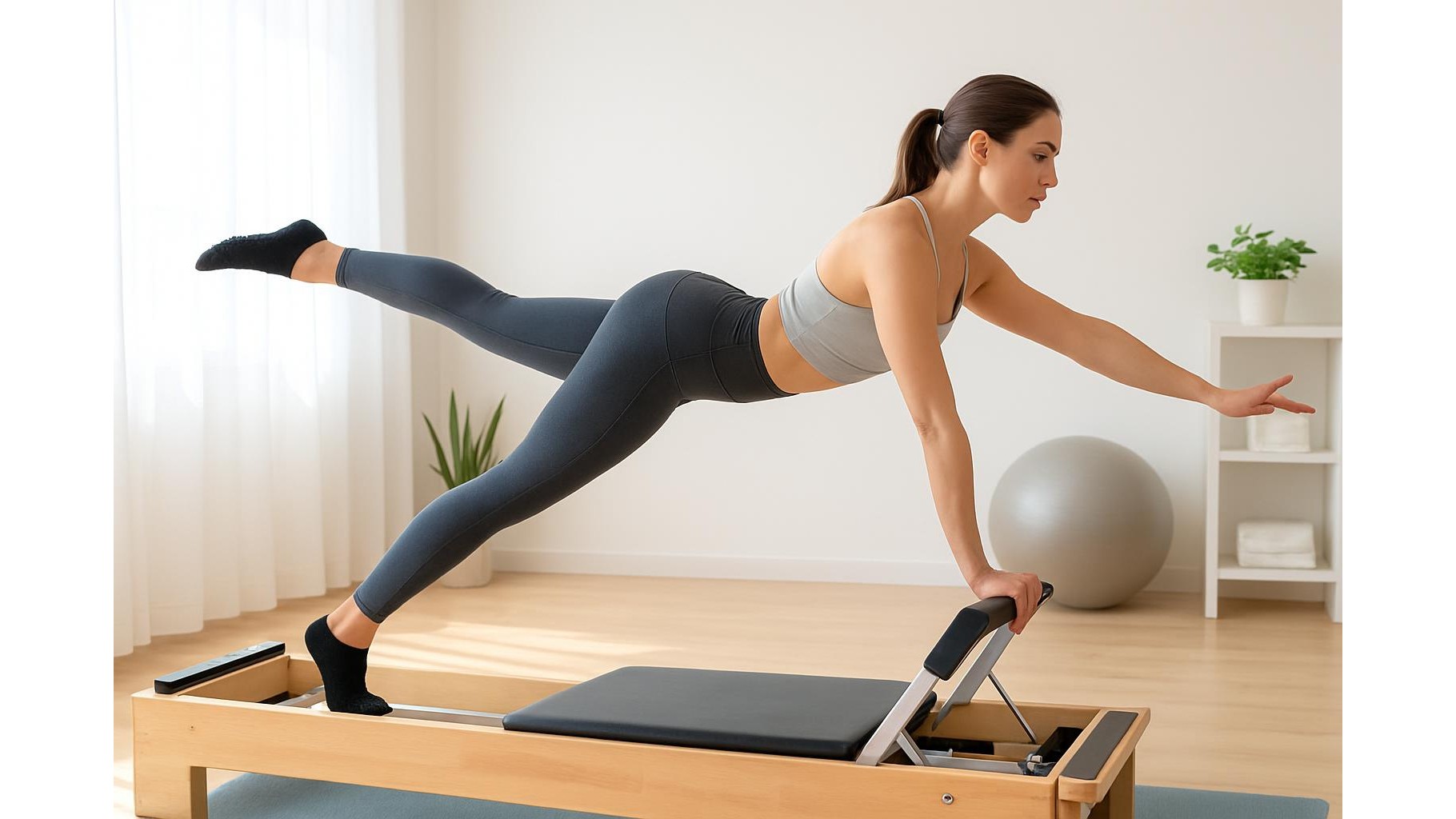
For lower-body comfort, a pair of high-waisted, full-length leggings in a soft, stretchy fabric is ideal. Look for a blend with plenty of elastane so the material hugs your body without digging in when you curl, twist or stretch. A wide, compressive waistband helps you feel supported around the core, especially during roll-downs and teaser variations where regular leisure leggings might slip. Opt for matte, non‑see‑through fabrics so you stay covered in deep hip hinges, and avoid bulky seams or zips that could press into your back when lying on the mat. For reformer-style work on a slider or gliding discs, streamlined leggings reduce friction and let your legs glide smoothly in and out.
Light support bras for low‑impact control
Pilates and reformer-style training are typically low impact, but you still need a light support sports bra that keeps you comfortable as you rotate, side-bend and hold planks. Prioritise soft, breathable materials and wide straps that stay put without digging into your shoulders. Long-line bras with a deeper underband can double as a crop top, pairing neatly with high-waist leggings and giving you a secure, streamlined fit around the ribcage. Removable cups are useful if you want a smoother silhouette under fitted tops, while racerback or cross-back designs free up your shoulder blades for overhead arm work. Avoid rigid, heavily padded bras that restrict expansion through the ribcage when you practise deep diaphragmatic breathing.
Tops that stay in place during every roll‑up
A good pilates top should let you move freely without riding up every time you roll down or invert. Slim-fit tanks or short-sleeve tees in four‑way stretch fabrics are ideal: they follow your shape through curls, twists and arm arcs, so instructors (or you in a mirror) can still see your alignment. Slightly cropped tops that meet the waistband of your leggings prevent bunching around the hips, while longer styles with a subtle elastic hem help keep everything anchored when you lift your hips for bridges. Look for moisture‑wicking materials if your sessions are intense or you combine pilates with strength intervals, and choose minimal seams for comfort when lying supine or prone on a firm home mat.
Barefoot, grippy and sock options
Many people prefer to practise pilates barefoot at home for maximum feel and control, but having a pair of grip socks on hand is a smart idea, especially if you’re working on tiles, wood floors or a smooth reformer-style board. Choose socks with non‑slip rubberised dots across the sole and around the heel so you feel secure in lunges, pikes and standing balance work. Open-toe or Mary Jane designs help maintain ground contact and toe spread, while full-coverage styles keep feet warmer on cold floors. If you like a little extra hygiene protection, grippy ankle socks give you traction without losing the barefoot feel that makes pilates footwork and articulation so effective.
Fabrics, fit and layering for home comfort
Because you control the temperature at home, you can fine-tune your outfit with smart fabric and layer choices. Start with lightweight, quick‑drying base layers—leggings, bra and top—so you stay comfortable if the session heats up. Add a soft, stretchy long‑sleeve layer or wrap cardi that’s easy to remove once you’re warm, avoiding bulky hoods or zips that get in the way when you lie down. Prioritise tag‑free designs and flat seams so there’s nothing to rub during repeated spinal articulation. Finally, choose neutral, versatile colours if you mix pilates with yoga or mobility work, and keep a dedicated set of pilates clothes ready so getting dressed never becomes a barrier to stepping onto your mat or sliding platform.
Dialling in your pilates wardrobe is about more than looking the part: it’s about feeling supported, unrestricted and secure in every move. With soft, high-stretch leggings, a breathable light support bra, a fitted top that stays put and the right barefoot or grip sock setup, you can focus less on adjusting your outfit and more on your form, breathing and control. Build a small rotation of pieces that you love to wear, and your at-home pilates and reformer-style workouts will feel smoother, safer and far more enjoyable session after session.