
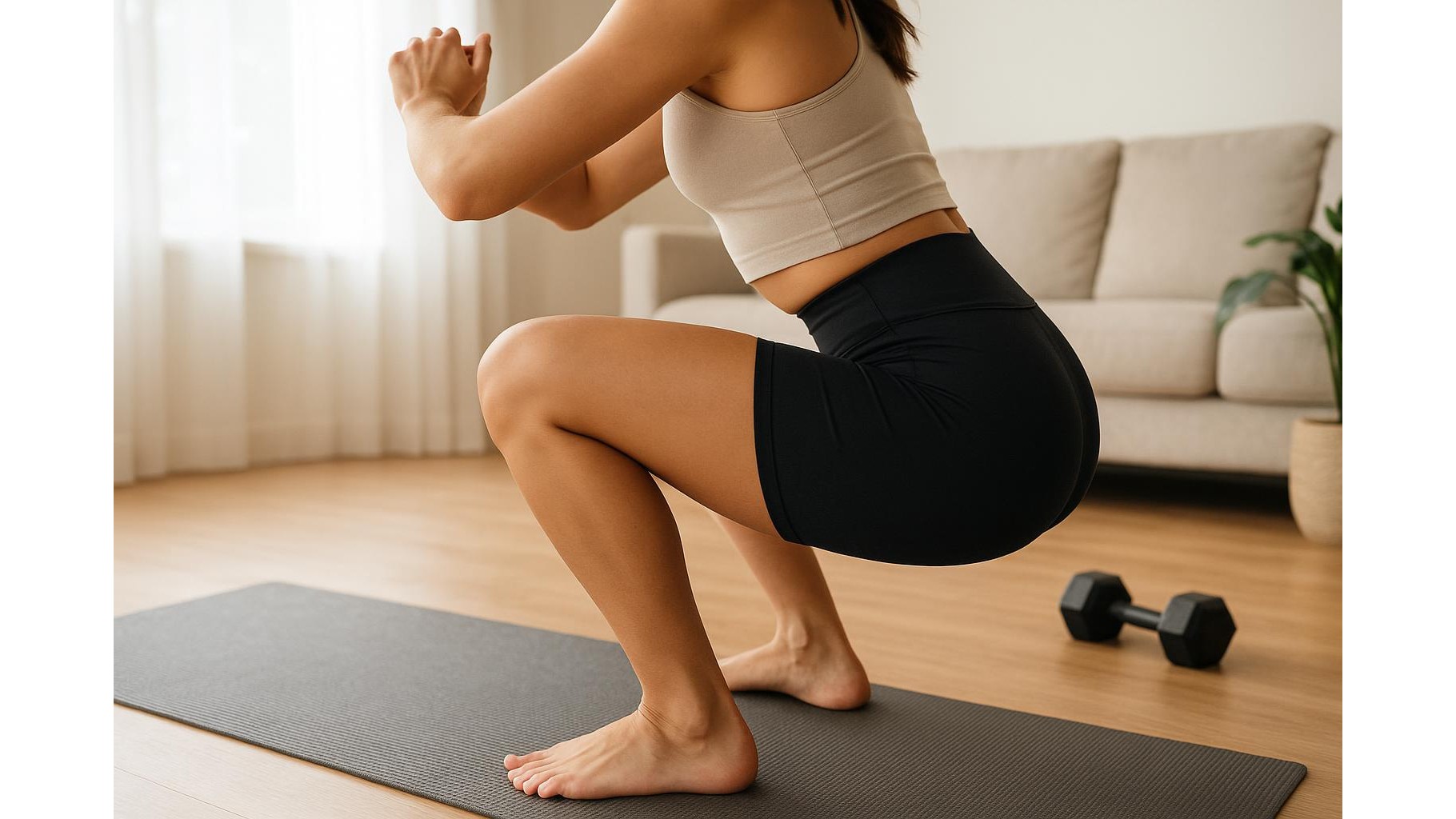
Building a home gym means you can train whenever you want, but it also exposes weaknesses in your outfit. A pair of workout shorts that go see-through in a deep squat or ride up during lunges can ruin your focus and confidence, even if you are only in your living room. Choosing truly squat-proof shorts is about more than colour or trend: it comes down to fabrics, seams, rise and length that keep you covered and comfortable through every rep.
Choosing fabrics that stay opaque in every squat
The foundation of squat-proof home workout shorts is the fabric. Look for a high percentage of nylon or polyester blended with elastane (spandex) for stretch that snaps back instead of thinning out. Thicker, double-knit performance materials maintain opacity under tension, unlike flimsy cotton blends that can turn sheer as soon as you hinge at the hips. Matte finishes are usually safer than ultra-shiny ones, which tend to highlight lines and underwear. When shopping online, focus on descriptions that mention non see-through, four-way stretch and moisture-wicking. At home, do the bend test in front of a bright window: if you can clearly see your underwear pattern, the shorts are not truly squat-proof.
Rise and waistband: keeping everything in place
The rise of your shorts is just as important as the fabric. A high-rise or mid-high waistband that sits comfortably above the hips helps prevent gaping and slipping when you drop into deep squats or forward lunges. Look for a wide, double-layer waistband with enough compression to hug the torso without digging in. Avoid very low-rise cuts for strength work: they tend to creep down at the back exactly when you hinge or deadlift. For home workouts where you move between floor exercises and standing patterns, a stable waistband means you spend less time adjusting and more time focusing on your form.
Length and leg openings to prevent ride-up
Ride-up is one of the most annoying issues with home workout shorts, especially during lunges, step-ups and glute bridges. To minimise this, pay attention to both inseam length and the construction of the leg openings. A mid-thigh inseam is a good sweet spot for most people, offering enough coverage to stay put without feeling heavy. Very short shorts or loose, flared hems tend to bunch and roll. Instead, look for fitted legs with a slightly grippy band or a firm but flexible hem. If you train on a yoga mat in your living room, test by doing repeated bodyweight squats and mountain climbers: well-designed shorts will return to place instead of creeping higher with each rep.
Seams, gussets and comfort for floor work
Deep squats and core sessions on the floor put stress on the seams of your shorts. Flatlock or flat seams reduce chafing and help maintain a smooth, opaque surface when the fabric stretches. A gusseted crotch (a small diamond or triangular panel between the legs) allows more freedom of movement, supporting deep hip flexion without stressing a single seam line that might become see-through. For home workout routines heavy on Pilates, glute work and yoga, this detail is crucial. Avoid bulky inner seams or visible front centre seams that can cut into the fabric and create both discomfort and unwanted lines when you move on carpet or hard floors.
Fit, sizing and at-home testing tips
Even the best technical shorts will fail if the fit is off. If you are between sizes, going slightly up often improves opacity, as overstretched fabric is more likely to go sheer. When your order arrives, run a full at-home test: do 10 slow bodyweight squats, 10 reverse lunges per leg and a 30-second plank in front of a mirror or your phone camera. Check for sheerness at the back, waistband slippage and hem roll. Move under bright lighting similar to daylight, since this exposes transparency issues fast. When you find a brand and size that stay non see-through and resist ride-up through an entire circuit, consider buying a couple of pairs so your living room gym wardrobe is always ready.
Choosing the right squat-proof home workout shorts comes down to paying attention to fabric quality, rise, length, seams and overall fit. By prioritising opaque technical materials, stable waistbands, mid-thigh coverage and smart seam placement, you can train confidently in your living room without worrying about transparency or constant adjustments. A quick at-home test session before you commit ensures your shorts will keep up with deep squats, lunges and floor work, so you can focus entirely on getting stronger and more consistent with your workouts.









