At-home training has made many people rethink what they wear on their feet. Split-toe socks and full toe-separation socks promise better balance, cleaner movement patterns and improved grip across everything from yoga and Pilates to strength and cardio circuits. But not every design is equal. Understanding when toe-separation really helps – and what to look for in materials, cushioning and grip patterns – is key if you want your socks to support, rather than sabotage, your sessions.
What are split-toe and toe-separation training socks?
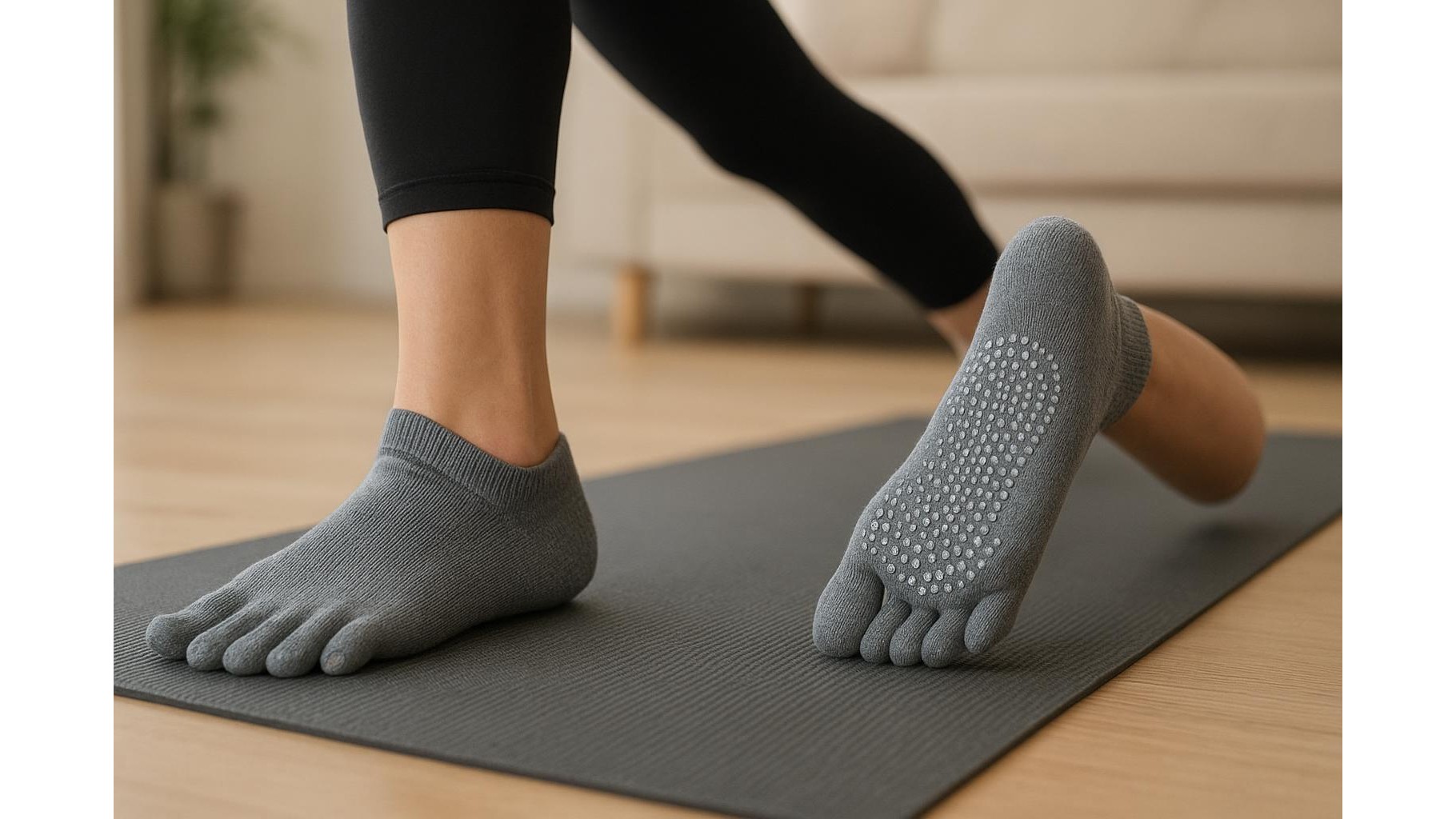
Split-toe socks separate the big toe from the rest, creating a Tabi-style design that can improve foot alignment and allow slightly more independent big-toe movement. Full toe-separation socks, often used in yoga and Pilates, create a sleeve for each toe to maximise ground contact and proprioception (your sense of where your body is in space). For home workouts on hardwood or tiles, this extra contact can translate into more confident balance in single-leg drills, lunges and downward dogs. The trade-off is that poorly designed models can feel fiddly to put on or too tight between the toes, so design details matter.
[h1_placeholder type=”cta” id=”telegram”/]
Balance benefits: when toe-separation really helps
The big selling point of toe-separation socks is improved stability. By allowing your toes to splay, these socks create a wider base of support, which is especially useful in single-leg balance drills, yoga poses and slow strength work. Split-toe models help drive the big toe down into the floor, enhancing grip during lunges, split squats and standing Pilates sequences. In dynamic cardio, they can reduce the tendency for your foot to slide forward inside the sock. However, if your home workouts are mostly seated cycling, stretching or machine-based work, the stability boost will be less noticeable. In those cases, a conventional cushioned training sock may be enough.
Grip patterns for yoga, Pilates and strength at home
Grip is where training socks live or die. Look for silicone grip patterns that cover the forefoot and heel, and ideally wrap slightly up the sides of the sock. This layout helps in yoga flows and Pilates where you are transitioning from plank to downward dog, or stepping through into lunges on smooth floors. For strength work, a flatter, denser pattern keeps your feet planted during squats, hip hinges and loaded carries. Avoid designs where the grip is limited to a few dots under the arch: they look minimal but often fail when you start to sweat and move laterally. For mixed home training, a hybrid pattern with full forefoot coverage and reinforced heel traction is usually the most versatile choice.
Choosing materials and cushioning for home training
The right fabric blend determines whether toe-separation socks feel like performance gear or a distraction. Breathable cotton blends with added synthetic fibres balance comfort and moisture management for low- to moderate-intensity sessions. For hotter environments or high-intensity cardio workouts, prioritise moisture-wicking synthetics to reduce slippage inside the sock. Light cushioning under the heel can ease impact during jump squats or burpees, while a thinner forefoot improves floor feedback in yoga and Pilates. Excessive padding between the toes is a red flag; it can crowd the foot and undermine the very separation you’re paying for.
Fit, sizing and potential drawbacks
Fit is critical with split-toe socks. A too-small pair will dig painfully between toes and restrict circulation, while an oversized pair bunches up and causes blisters. Check size charts carefully and, if in doubt, opt for the larger size in full toe-separation socks. Be aware of the cons: these socks take longer to put on, and some people never fully adapt to the sensation of fabric between each toe. If you have bunions or very wide forefeet, start with a more forgiving split-toe design instead of full toe sleeves. Wash care also matters; high heat can shrink the toe pockets and distort the fit, so stick to gentle, low-temperature cycles to preserve performance.
When used thoughtfully, split-toe and toe-separation training socks can be a real asset to your home workouts, boosting grip, balance and foot awareness in ways regular socks can’t match. Focus on well-designed grip patterns, breathable materials, appropriate cushioning and a precise fit to get the benefits without the drawbacks. If your routine leans heavily on yoga, Pilates and bodyweight strength, toe-separation designs are worth experimenting with; for more cardio-heavy sessions, a hybrid split-toe option may offer the sweet spot between control and comfort.