
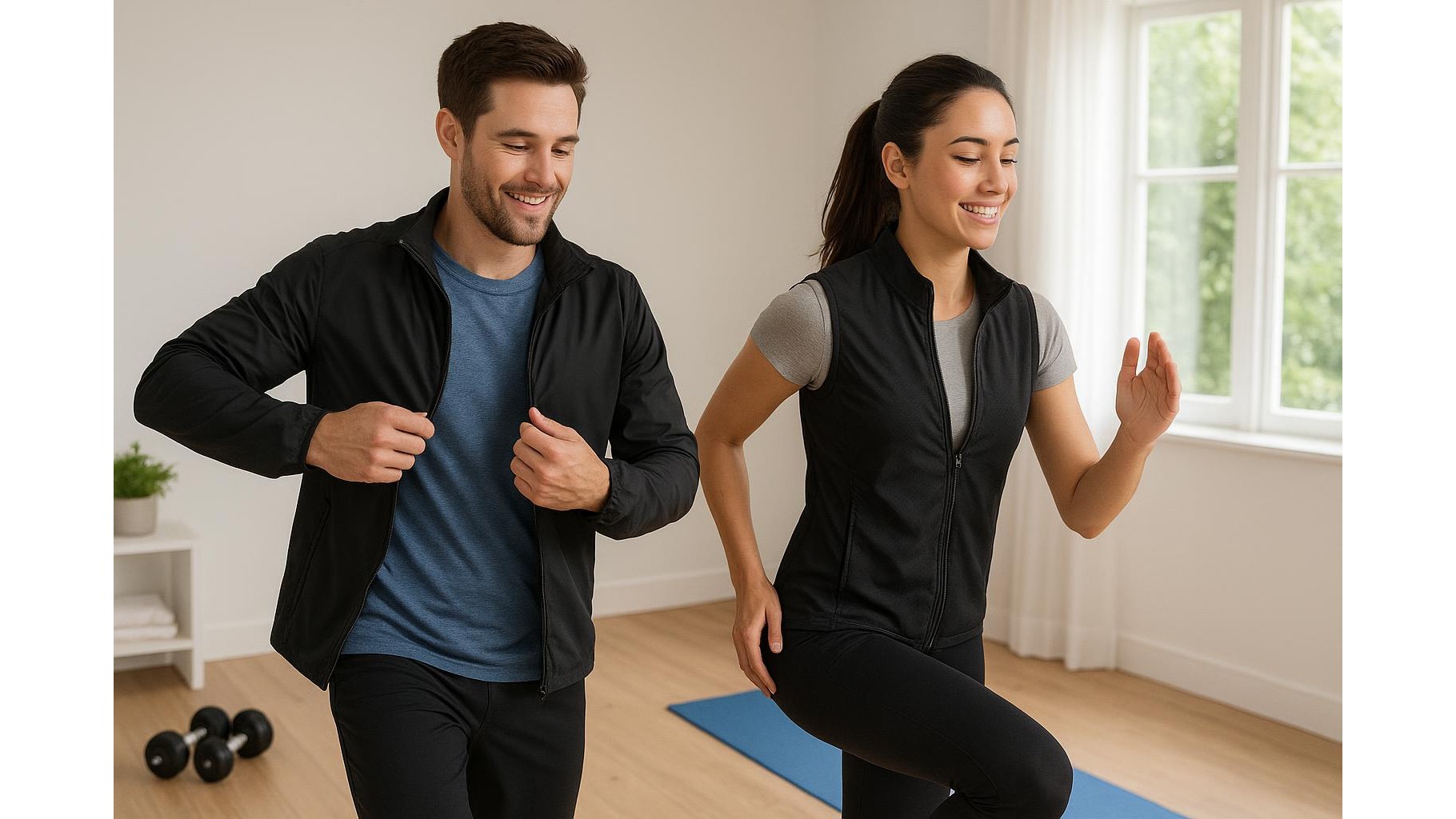
When you train in a home gym, temperatures can swing fast: a cool spare room when you start, a warm, humid space after a few intense sets. That is where lightweight zip-off training jackets shine. They add just enough insulation for your warm-up, then convert quickly so you do not overheat. In this guide, we look at what matters most – fabric, ventilation and layering – and suggest the type of jackets that work best over your usual home gym outfit.
Why zip-off jackets suit home workouts
Unlike a standard hoodie, a zip-off training jacket is built for fast adaptation. Full front zips let you open up when your body temperature rises, while light fabrics prevent that heavy, damp feeling as you sweat. For home workouts, this means you can start your session warm, then unzip or even remove sleeves without leaving the room or interrupting your flow. Look for jackets described as lightweight training tops or running jackets with quick-release zips, as they tend to be cut close to the body and move well during squats, presses and cardio intervals.
Fabrics that keep you warm without overheating
The best home workout training jackets balance light warmth with breathability. Prioritise synthetic performance fabrics such as polyester or nylon blends with elastane, marketed as moisture-wicking or quick-dry. These materials pull sweat away from the skin and dry fast between circuits. Avoid heavy cotton, which traps moisture and leaves you chilled once you stop moving. For cooler rooms, a thin brushed interior or microfleece panels can add comfort without bulk, as long as the jacket still feels airy and flexible across your shoulders and elbows.
Ventilation, zip features and ease of removal
Effective ventilation is crucial when you are transitioning from cool to warm conditions. Look for jackets with mesh panels under the arms or across the back to release heat, plus a full-length front zip you can operate one-handed mid-set. Zip garages at the neck avoid rubbing during push-ups or bench work. If you favour zip-off sleeves, check that the zips are smooth and covered so they do not dig into your upper arm during presses or rows. Thumbholes can be useful for warmth at the start of your session, but make sure cuffs stretch easily so you can slide the jacket off quickly once you are fully warmed up.
Layering over your usual home gym outfit
Think of your zip-off training jacket as the top layer of a simple home workout layering system. Underneath, wear a breathable training T-shirt or vest that you are comfortable in once the jacket comes off. The jacket should fit close enough that it does not flap during burpees or kettlebell swings, yet roomy enough to glide over short sleeves without clinging. A slightly longer back hem helps keep your lower back covered during deadlifts or hip hinges. Neutral colours pair easily with most gym outfits, but reflective details are a bonus if you also use the jacket for outdoor runs or warm-ups in low light.
Choosing the right fit and practical details
Fit can make or break a lightweight training jacket. Check that you can comfortably raise your arms overhead and rotate at the torso without the hem riding up. Raglan or articulated sleeves tend to track better with pressing and rowing movements. Practical extras – like small zip pockets for a locker key or earbuds – are useful but should not add much weight. For home use, a jacket that packs down small is ideal: you can hang it on a nearby hook or fold it on a bench without taking up valuable space. Prioritise simple designs with durable zips and easy-care fabrics you can wash and dry quickly between sessions.
Choosing the right lightweight zip-off training jacket for home workouts is about balance: just enough warmth for cold rooms, with fabrics and vents that stop you overheating when the session ramps up. Focus on breathable synthetics, smart ventilation, a close but mobile fit and compatibility with your regular training tops. With the right piece in your kit, you can transition smoothly from warm-up to hard work, staying comfortable and focused on your performance rather than the room temperature.









