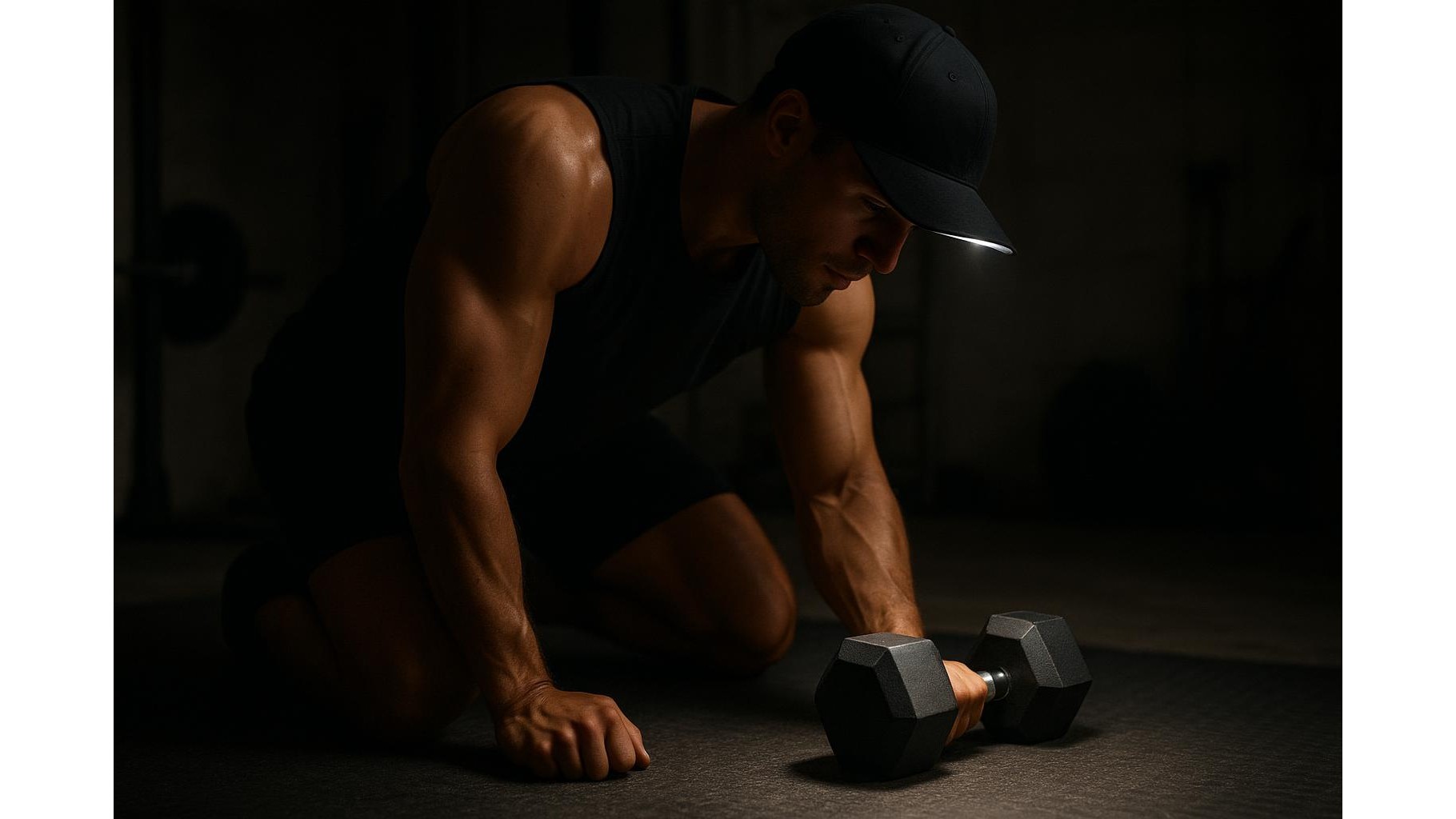
Training in a dim garage or basement can be a grind, especially when you are trying to keep your form clean during early‑morning or late‑night sessions. LED training caps – caps with a built‑in light in the brim – promise to solve the problem by putting a small headlamp exactly where you look. For home gym athletes, they can boost visibility without installing extra fixtures, but only if you understand their strengths, limits and how to use them safely.
Table of contents
Why LED caps appeal in garage and basement gyms
Many home gyms live in garages, sheds or basements with poor overhead lighting. A cap with integrated LED light throws a focused beam right onto the barbell, kettlebell or pedals you are using, without lighting up the whole room. That can be helpful if you share the house and do not want to wake others, or if your power outlet layout makes extra lamps awkward. Unlike a handheld torch, an LED cap keeps your hands free for lifting, and compared with a chest‑mounted light it tends to follow your gaze more naturally, which is ideal for dumbbell work, bench setups and checking your foot placement on steps or plyo boxes.
Key features: brightness, beam pattern and controls
When choosing an LED cap for training, pay attention to brightness levels and how adjustable they are. For most home workouts, caps in the 80–150 lumen range with two or three modes are sufficient; more than that can cause harsh glare from mirrors, metal plates and glossy rubber flooring. A wide beam is better for bodyweight circuits and mobility flows, while a slightly tighter beam helps when you need to see bar markings or rack pins. Simple, glove‑friendly controls are crucial: a single front button that cycles low–medium–high lets you tweak brightness between movements without breaking focus, and a memory function that remembers your last setting is a real advantage in regular, pre‑dawn training routines.
Comfort, fit and sweat management during workouts
A training cap with LED has extra weight in the brim compared with a normal cap, so fit is critical. Look for a wide, adjustable strap that keeps the hat stable during jumping jacks, skipping, or kettlebell swings, and avoid stiff brims that bounce with every landing. Breathable cotton or performance polyester with a sweatband will reduce irritation during long strength or cycling sessions, especially in low‑ventilation garages. If you train on a stationary bike or treadmill, test whether the cap causes hot spots on your forehead as your body temperature rises. Ideally, you should be able to forget you are wearing the cap after a few minutes, with no pinching, slipping or pressure from the light module.
Battery options, charging routines and overheating concerns
Most modern LED caps use USB‑rechargeable batteries integrated into a removable light module. For home gyms, this is more convenient and cheaper than swapping disposable cells; you can simply plug the module into a power strip or USB hub near your rack between sessions. Check run‑time on the lowest setting – anything above 3 hours is more than enough for typical workouts. Overheating is rarely a problem at these power levels, but you should avoid covering the light with tape or fabric that could trap heat, and give the module a quick touch test after long use. If it ever feels uncomfortably warm, switch it off and let it cool. Keeping the LED on a lower setting inside very small rooms not only protects comfort, it also reduces eye strain and battery stress.
When LED caps make sense – and when they do not
LED training caps are most useful for focused strength work, cardio on a bike or rower, and mobility sessions in generally dark spaces where you still need precise visibility of equipment and foot placement. They make less sense for heavy overhead lifts or dynamic barbell work where the beam might move unpredictably and become distracting, and they should not replace proper room lighting if you are handling maximal loads. If you already have a well‑lit rack and platform, consider an LED cap more as a backup for power cuts or very early sessions. Used intelligently, they are a neat, low‑cost accessory that improves safety and comfort in under‑lit corners of your home gym without cluttering the floor with extra lamps and cables.
In summary, a LED training cap can be a smart addition to a home gym in dark garages or basements, offering targeted visibility, hands‑free convenience and adaptable brightness in a compact package. By prioritising comfortable fit, sensible lumen levels and reliable USB recharging, you can avoid overheating, glare and distraction, and keep your attention where it belongs: on your form, breathing and progression. They will not replace good overhead lighting for serious lifting, but in the right context they make those early‑morning or late‑night workouts safer and more enjoyable.