Keeping your sports bras in good condition is essential if you train regularly in your home gym. The right care routine helps them keep their support, shape and comfort for far longer, so you can focus on your workouts instead of on straps digging in or cups collapsing. With a few smart washing, drying and storage habits you can dramatically extend the life of your favourite bras and avoid wasting money on constant replacements.
Choose the right washing routine
Every time you work out, sweat, body oils and deodorant build up in the fabric and elastic of your sports bra. Left there, they break down fibres and reduce compression support. Aim to wash a bra after every intense workout, or at least every second session for lighter activity. Turn bras inside out to protect the outer fabric, close any hooks and place them in a mesh laundry bag if possible to reduce twisting and stretching in the machine. Select a gentle cycle with cold or 30°C water; hot water weakens elastic, especially in high-impact bras designed for running or HIIT.
Detergents and what to avoid
Choose a mild liquid detergent without bleach or optical brighteners, which can damage technical fabrics and elastic. Powders sometimes leave residue that irritates skin in tight band areas, so liquids are usually safer. Never use fabric softener on sports bras: it coats fibres, reducing moisture-wicking performance and causing the material to lose its bounce and support more quickly. If your bras smell even after washing, pre-soak them for 15–20 minutes in cool water with a small amount of detergent before the main wash instead of increasing temperature or adding harsh chemicals.
Drying methods that protect support
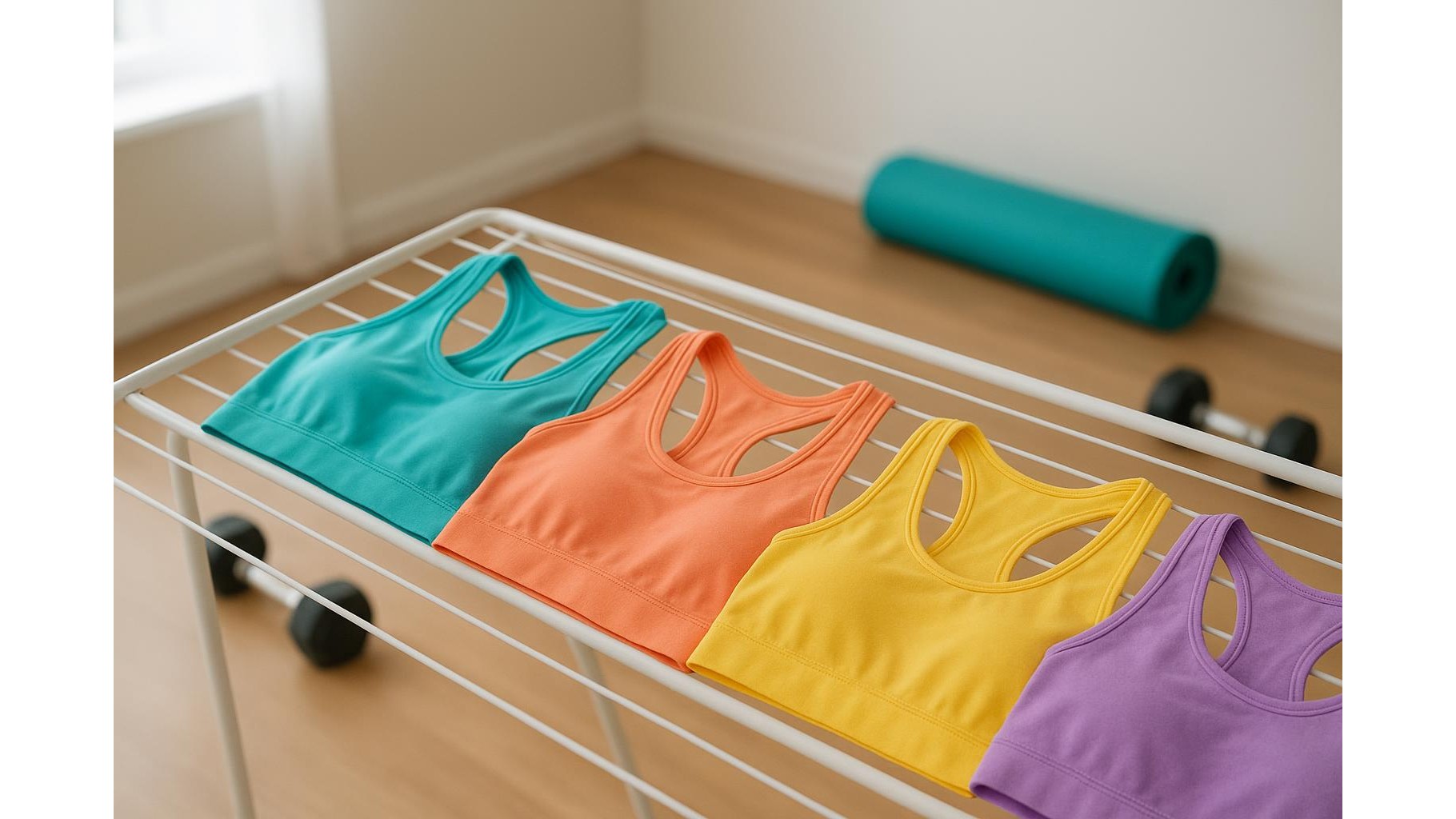
Heat is the enemy of elastic support, so avoid the tumble dryer as much as possible. After washing, gently press excess water out of the bra with a towel; do not wring or twist the band or straps, as this can deform the structure. Lay the bra flat on a drying rack or hang it by the centre gore or band, not by the straps, to prevent stretching. Keep bras out of direct sunlight and away from radiators or heaters. Air-drying might take a little longer, but it significantly extends the life of both the elastic and any moulded cups, keeping your sports bra support consistent over time.
Smart storage to maintain shape
How you store sports bras also affects their longevity, especially for padded or encapsulation styles. For bras with moulded cups, stack them one behind another rather than folding one cup into the other, which can cause creases and permanent dents that affect fit. Keep them in a dedicated drawer or box so bands do not get tangled with other clothing and overstretched. Rotate between several bras during the week so each one has time to fully dry and recover its elasticity between workouts. This simple rotation can make a big difference if you train frequently in your home gym.
How to tell when support is gone
Even with perfect care, every sports bra eventually loses its support. Signs it is time to replace include a band that rides up your back, straps you constantly tighten, or cups that wrinkle and no longer hug the breast evenly. If you notice more bouncing or discomfort in movements that used to feel stable, support has likely degraded. Compare an older bra to a newer one: if the old band stretches far more easily or the fabric feels thin and tired, it will not protect you effectively during home workouts. Replacing worn-out bras helps keep your training comfortable, reduces strain on breast tissue and supports better posture during exercise.
By establishing a consistent routine of gentle washing, air-drying, careful storage and regular fit checks, you can keep your sports bras performing at their best for many months of home training. These small habits protect fabric and elastic from premature damage, ensuring your bras continue to provide the support you need for safe and enjoyable workouts.