If you train regularly at home, you know how quickly leggings, workout tops and shorts start to show wear: tiny holes, thinning fabric, loose seams and pilling. Instead of binning them and buying new, you can extend their life with a few simple clothing repair tricks and some creative upcycling. Here’s how to keep your home workout wardrobe going for longer and reduce waste at the same time.
Quick fixes for small holes and snags
Small holes in stretch fabrics like gym leggings and compression tops are often caused by snagging on rough surfaces or accidental nicks from shoes and zips. For tiny holes, start by gently pulling the surrounding fabric together so the knit closes up, then use a fine needle and matching polyester thread to make very small, neat stitches around the edge of the hole. Avoid cotton thread on synthetic sports fabrics, as it has less give and can snap under tension. If the hole is a little bigger, cut a small oval patch from a piece of similar stretch fabric (for example from another worn‑out garment), tuck the raw edges under, and hand‑stitch it on the inside of the leggings. This spreads the tension over a wider area so the repair holds up through squats, lunges and yoga flows.
Reinforcing thinning fabric in high‑friction zones
High‑friction zones like inner thighs, seat and underarm panels often develop thinning fabric long before it actually tears. Catching this early is key. Turn the garment inside out and inspect under strong light; if you can see your hand clearly through the fabric, it is time to reinforce. Cut a thin, stretchy insert from an old pair of sports leggings in a similar colour and shape it to match the worn area. Pin it carefully, making sure the grain and stretch direction match. Sew the insert with a zigzag or stretch stitch, which allows the fabric to move during your workouts. For extra durability on shorts used for barbell work or cycling, you can add a second layer only in the critical friction line (for example, along the saddle contact area). This kind of reinforcement can easily give you months of extra use from a favourite piece of kit.
Fixing loose seams, waistbands and straps
Loose seams and unravelled stitching are some of the easiest home workout clothes repairs. When you see a seam starting to open, resist the urge to just pull the loose thread, as this can unzip a whole panel. Instead, knot the loose end and trim it. Then resew the opened section, overlapping the existing stitching by about 1 cm at each end. On leggings and sports bras, always use a stretch stitch or small zigzag so the seam can move with your body. For slipping waistbands, unpick a few centimetres of the seam, thread in a piece of elastic cut to your waist measurement minus 2–3 cm for tension, then sew the ends of the elastic together and close the opening. This simple repair can transform a constantly‑sliding pair of leggings into a secure, squat‑proof essential for your home gym sessions.
Upcycling old gym clothes into accessories and protectors
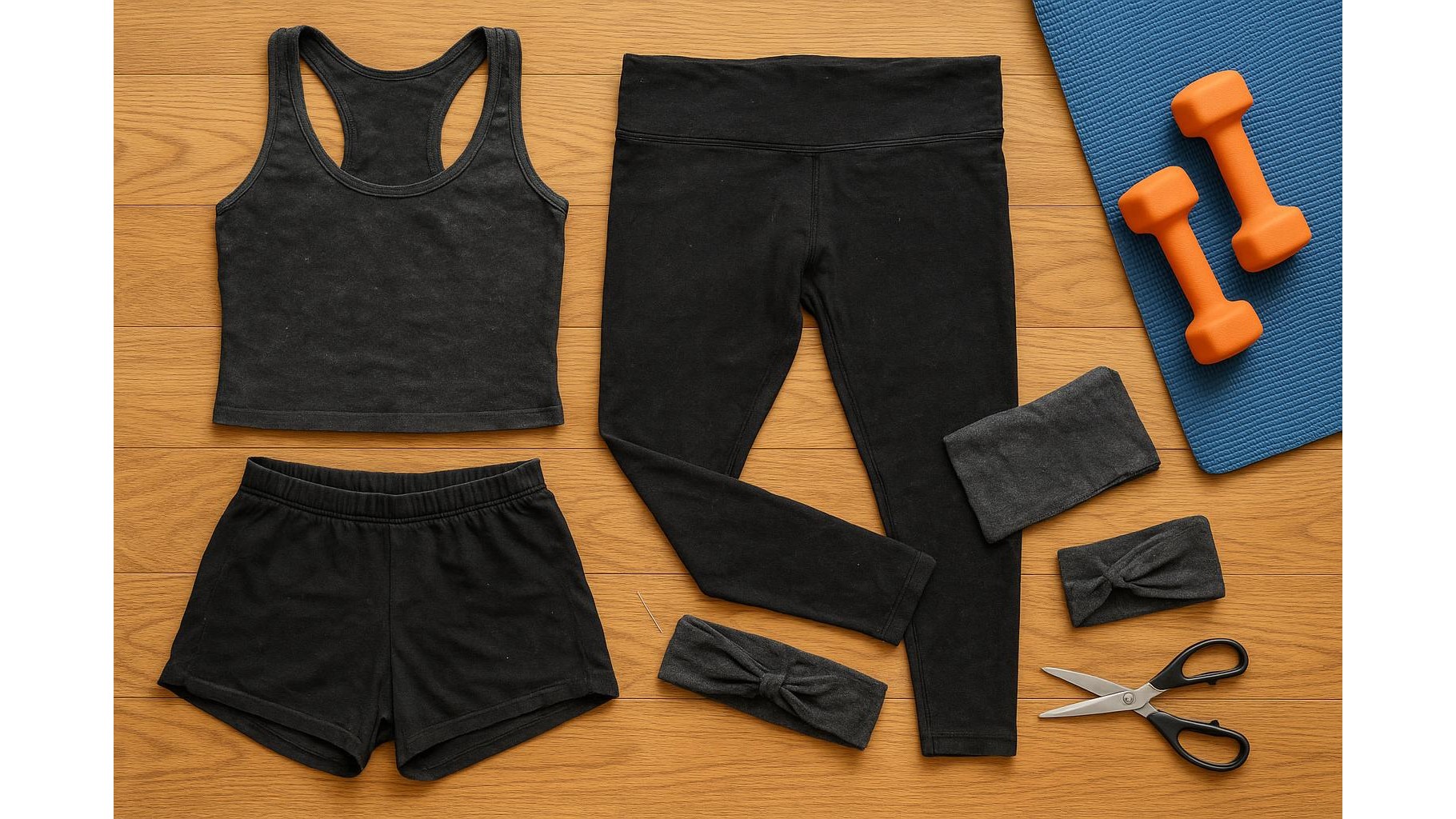
Once your tops, shorts or leggings are beyond comfortable wear, they are perfect candidates for upcycling into useful home gym accessories. Legs from old leggings can be sliced into wide loops to make soft, breathable headbands that keep sweat out of your eyes during HIIT or kettlebell work. Cut them slightly narrower at the back for a snug fit. Sleeves from long‑sleeve tops can be turned into wrist wraps or light elbow covers to add a bit of cushioning under weights. You can also wrap strips of old performance fabric around resistance bands, metal handles or barbell centres to act as protective sleeves, preventing the bands from rubbing against rough flooring or your skin. Secure the strips with a simple whip stitch so they stay in place but can still stretch and flex with the movement.
Turning worn fabrics into cleaning cloths and gym rags
Even when fabric is too stretched or pilled for accessories, it still has value as household rags and gym cleaning cloths. Synthetic sports materials are ideal for wiping down equipment because they dry quickly and do not shed much lint on textured rubber or knurled steel. Cut flat sections into squares or rectangles, removing bulky seams. Dedicate darker colours to cleaning weights, mats and benches, and lighter ones to mirrors, windows and screens in your home gym. Keep a small stack in a basket near your training area and use them after each session with your preferred eco‑friendly cleaner. This not only extends the useful life of your old garments, but also encourages a regular cleaning habit that keeps your home gym more hygienic and pleasant to use.
Repairing and upcycling your home workout clothes is a simple way to save money, reduce waste and get more value from pieces you already love. By learning a few basic stitching techniques, reinforcing high‑wear areas and creatively repurposing worn fabrics into headbands, protectors and rags, you can build a more sustainable fitness routine. Next time you spot a hole or thinning patch in your leggings or tops, reach for a needle and scissors before the bin and give your gym gear a second life.