Building a reliable home gym wardrobe is not just about style. If you learn how to read workout clothing labels — from fabric blends to GSM and care symbols — you can choose pieces that survive sweat, stretching and constant washing. This guide walks you through the main details to look for, so your favourite leggings and tees do not fade, sag or pill after a few sessions in your living room gym.
Understand fabric blends for performance and durability
The first line on most gym clothing labels is the fabric composition. For intense home workouts, look for blends that combine polyester or nylon with a smaller percentage of elastane (spandex). Polyester and nylon are strong, resist abrasion and dry quickly, while elastane adds stretch and recovery so your clothes snap back to shape. A label reading “88% polyester, 12% elastane” usually means a compressive, supportive legging that will not bag at the knees. On the other hand, 100% cotton feels soft but tends to hold sweat, shrink and lose shape faster. For tops, a cotton‑poly mix can balance comfort and durability, but for high‑intensity training, prioritise higher synthetic content for better moisture management and faster drying between home sessions.
What GSM tells you about thickness and longevity
Some technical labels mention GSM (grams per square metre), which indicates fabric weight. A higher GSM usually means a thicker, denser knit that can be more durable and less see‑through, which is key for home gym leggings and shorts. Light fabrics (around 120–160 GSM) feel airy but may show wear, pilling and transparency sooner if you do a lot of squats or floor work. Medium weights (180–220 GSM) often hit the sweet spot between comfort and coverage for everyday training. Heavy fabrics (above 250 GSM) can be very supportive and long‑lasting, but may feel warm for cardio. When comparing similar items, use GSM as a clue: if two pairs of leggings are both polyester‑elastane but one lists a higher GSM, that one is more likely to stand up to frequent washing and friction from exercise mats and benches.
Decode care symbols to avoid accidental damage
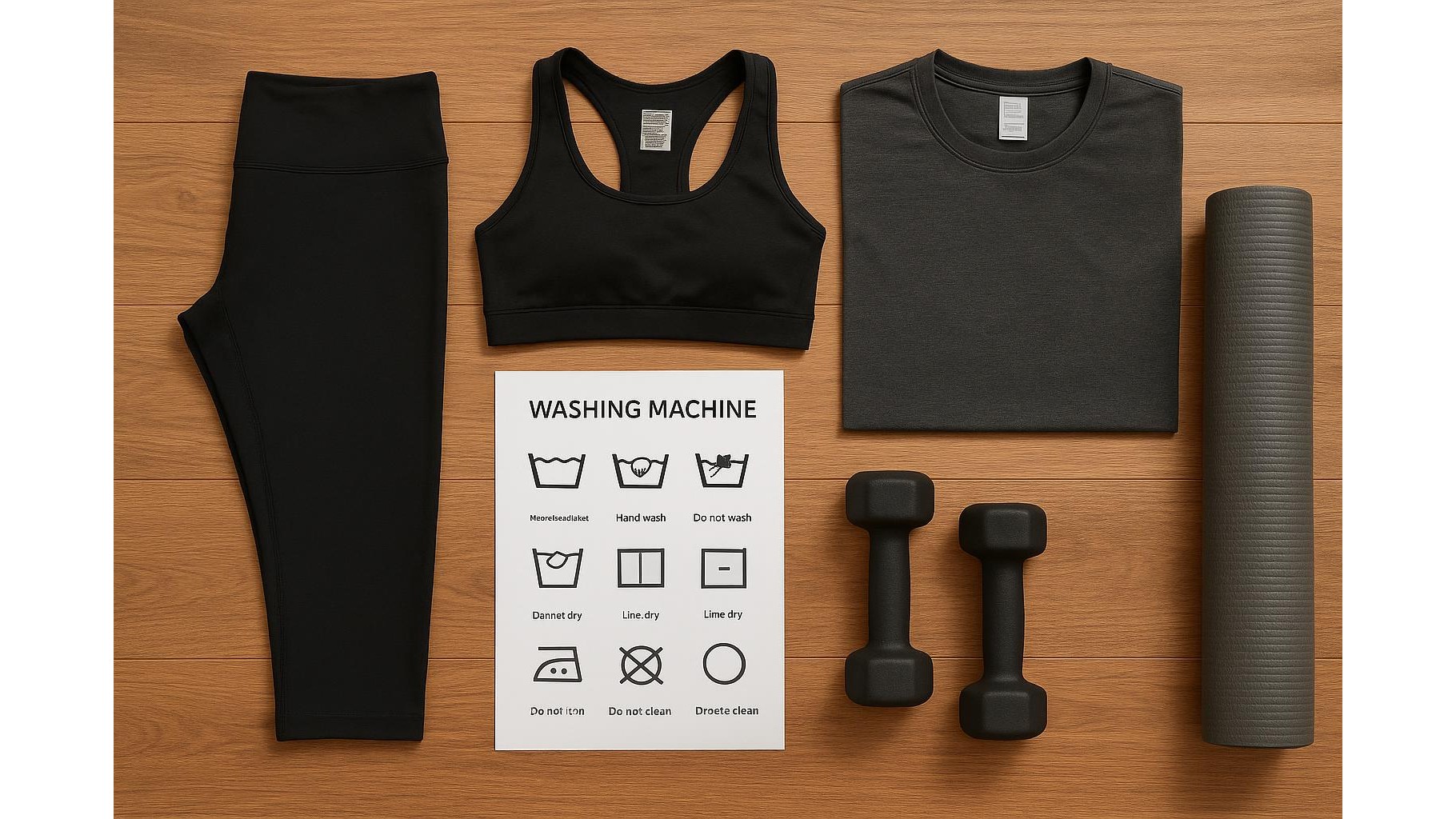
Care symbols are your roadmap to making clothes last. Look for the small icons under or next to the fabric composition. A tub with numbers indicates the maximum wash temperature; for most performance gear, you will see 30°C or 40°C. Following this helps preserve elasticity and colour. A triangle with a cross means no bleach, essential for maintaining stretchy fibres. A square with a circle and a dot refers to tumble drying: one dot is low heat, two dots medium, a cross means do not tumble dry. For home gym clothing, line drying is almost always safer to protect elastane and printed logos. An iron with a cross means do not iron — high heat can melt synthetic fibres. Finally, a circle with letters refers to dry cleaning, which is rarely needed for sportswear; if it is crossed out, keep cleaning simple with machine wash and air dry.
Construction details that signal longer life
Beyond the fabric, the label can tell you about construction quality. Look for mentions of flatlock seams or “anti‑chafe stitching”; these techniques reduce friction but also tend to be stronger than basic overlocking, helping garments keep their shape during stretching and repeated washing. Labels that highlight reinforced gussets (extra panels at stress points like the crotch) suggest better resistance to tearing in deep squats or lunges. If the label notes double‑layer or “self‑fabric” waistbands, that is a sign of improved support and reduced rolling. Pay attention to any notes about anti‑pill finishes or abrasion resistance; these treatments help fabrics stay smooth even when they rub against mats, dumbbells or resistance bands in your home gym. All these small details add up to clothing that looks and performs like new for longer.
How to align labels with your home workout routine
To make smart choices, match what you read on the label to how you actually train at home. If you do daily HIIT or cardio, pick lighter, sweat‑wicking polyester or nylon blends, and follow care symbols for gentle, frequent washing. For strength training and floor‑based workouts, choose mid‑to‑high GSM leggings with reinforced seams and gussets to handle friction and stretching. If you prefer slower sessions like yoga or Pilates, a softer cotton‑rich blend with some elastane can be ideal, as long as you wash in cold water and avoid the dryer to maintain shape. Always read whether the item is “quick‑dry”, “sweat‑wicking” or “compressive”; these clues help pair each piece with the right type of home workout. Over time, you will recognise which label details match the clothes that stay in your rotation longest.
In summary, taking a minute to decode workout clothing labels pays off in more durable, comfortable and reliable home gym outfits. Focus on smart fabric blends, check GSM when available, follow care symbols carefully and look for clear notes on construction quality. By aligning what is written on the tag with your real training routine and laundry habits, you can reduce fading, sagging and pilling, and build a small collection of gear that survives countless home sessions without losing performance.