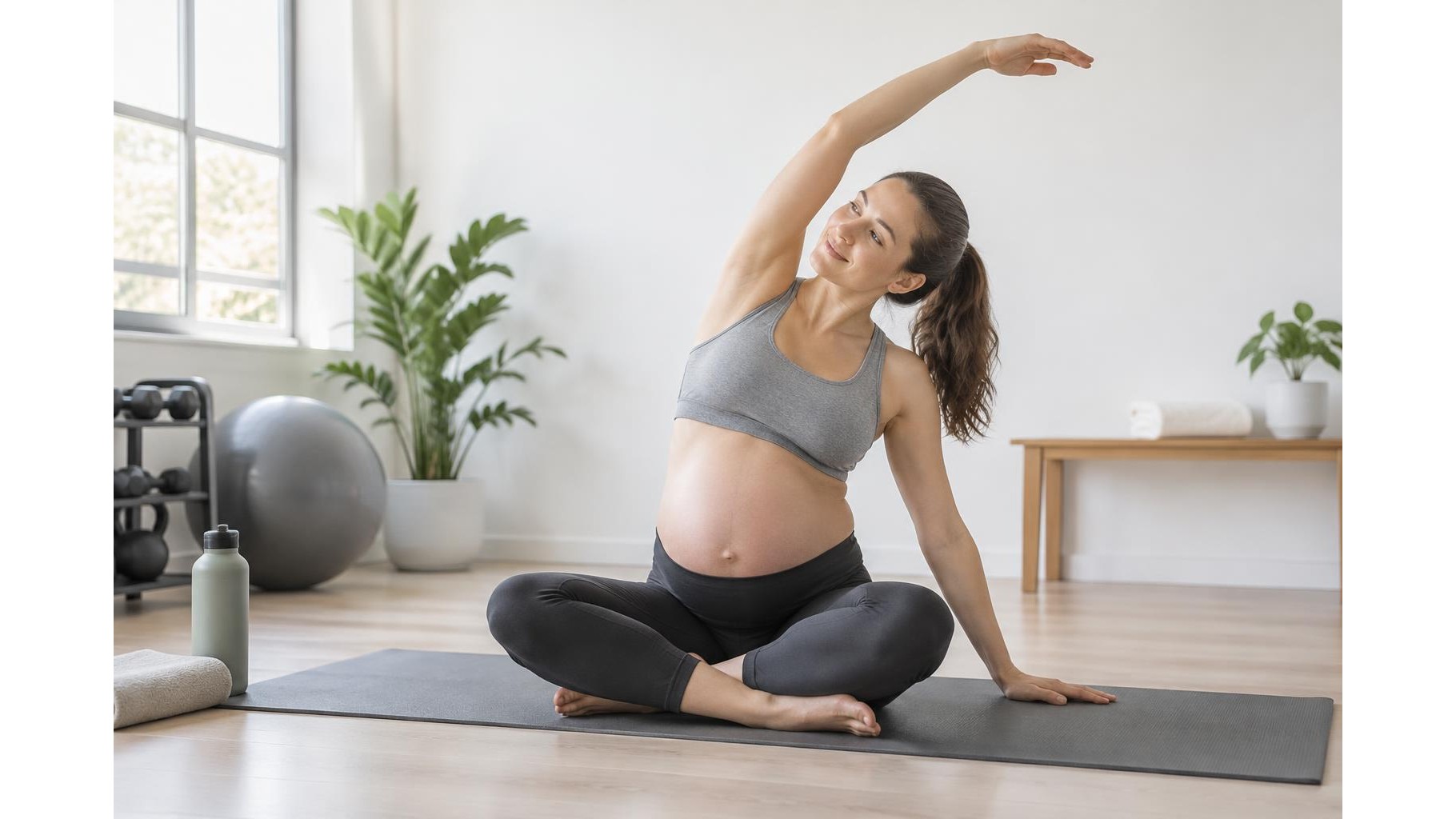
Home workouts can be a welcome way to stay active during pregnancy, but comfort matters more than squeezing into your usual kit. Choose clothes that move with your body, feel good through a full session and are easy to adjust as your shape changes. The right outfit should support gentle movement without overheating, digging in or restricting your breathing. Follow your healthcare professional’s personalised advice about exercise, and let comfort—not a clothing size or fitness goal—guide your choices.
Prioritise a flexible, comfortable fit
Start with how the garment feels when you stand, sit, bend and take a few steps. Pregnancy workout clothes should allow your abdomen, hips and thighs to move freely, with no pulling across seams or pressure when you sit. A close fit can help prevent fabric from shifting during exercise, but compression should never feel restrictive. Check the size chart and, if possible, try clothes on later in the day, when swelling or body changes may be more noticeable. You may prefer your current size, a different cut or a size up; labels are only a starting point.
Look for stretch that recovers
Soft stretch fabrics make it easier to squat, reach and move through gentle home training. Look for material that gives in more than one direction and returns to shape without feeling tight. A cotton blend can feel soft, while performance fabrics often dry faster during a warm session. Whatever the blend, check that the fabric is not transparent when stretched or bent. Seams should lie flat against your skin and avoid areas that are already sensitive. If a fabric feels scratchy, traps heat or leaves marks, it may not be comfortable for the workout or for recovery afterwards.
Choose a waistband you can adjust
Waistbands can make or break comfort as your bump grows. Over-bump leggings may provide a gentle, secure feel, while under-bump styles can avoid covering the abdomen. Neither option is best for everyone: focus on whether the band stays put without digging in, rolling down or pressing on your stomach. Wide, soft waistbands and adjustable drawstrings can offer flexibility, but loosen any drawstring if it creates pressure. A pair that feels comfortable standing may feel different when seated, so test the waistband in positions you use during training.
Match support to your activity
A supportive sports bra can reduce bounce and discomfort, particularly as breasts change during pregnancy. Choose a breathable, non-restrictive fit with straps and a band that feel secure without making it harder to breathe. Adjustable features can help extend wear as your body changes. For gentle home workouts, you may prefer light or medium support; choose according to your comfort and the activity, rather than assuming more compression is better. Avoid garments that pinch, rub or leave persistent indentations, and reassess fit if your body changes or a bra becomes uncomfortable.
Keep cool and make easy outfit adjustments
Breathable, moisture-managing layers can help you feel more comfortable during home training. A lightweight top that drapes over your bump can be paired with leggings or shorts, depending on the room temperature and your preference. Keep water nearby and choose layers that are easy to remove if you feel warm. As your body changes, reassess the fit instead of trying to make one outfit last throughout pregnancy. You might switch to a longer top, a softer waistband or a different bra size. Stop exercising and seek medical advice if you feel unwell or notice concerning symptoms.
Comfortable maternity workout clothes are flexible, breathable and supportive without constriction. Try each outfit through the movements you plan to do, adapt it as your body changes, and follow personalised medical advice about staying active during pregnancy. The best choice is the one that feels comfortable for you.