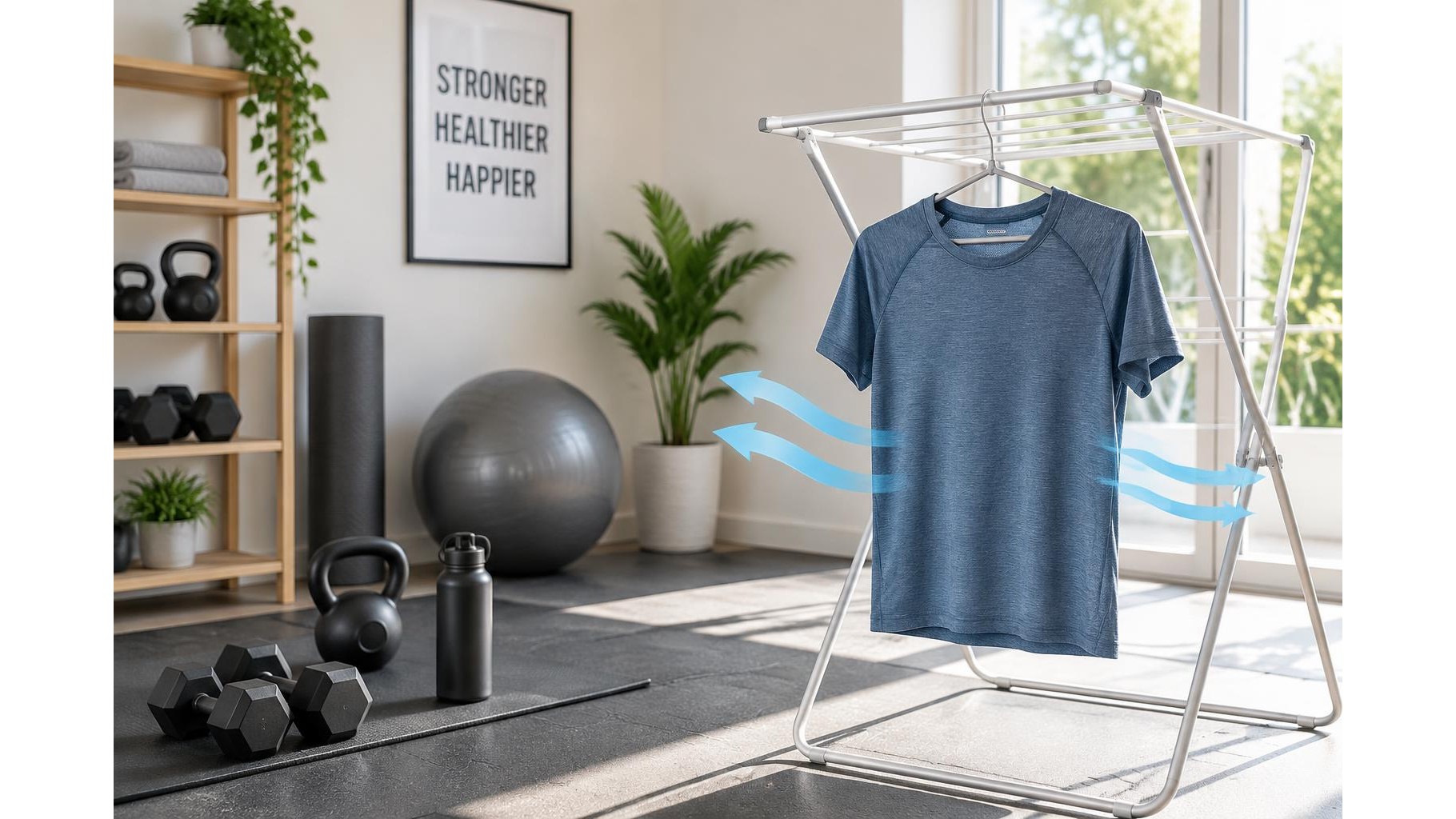
When home workouts happen on consecutive days, a sweaty shirt that stays damp can be uncomfortable and unpleasant to put on again. Choosing clothes that dry quickly is not just about buying anything labelled “technical”: fibre type, fabric weight, seams, fit and washing habits all affect drying time. Use the garment’s construction and care label to judge how it is likely to perform in your routine.
Understand what moisture-wicking means
Moisture-wicking describes how a fabric moves sweat away from the skin towards its outer surface, where it can spread out and evaporate. Polyester and nylon are common choices for training tops and leggings because their fibres absorb relatively little water and generally dry faster than cotton. Some blends combine synthetics with elastane for stretch. Cotton can feel soft, but it tends to hold more moisture, so a cotton-heavy shirt may remain clammy after a hard session. Wicking does not mean sweat disappears: airflow, humidity and how much fabric is wet also determine drying speed.
Check the fabric and garment construction
Compare the full fibre composition on the label rather than relying on words such as “performance” or “quick dry.” A lightweight polyester knit is often a practical option for indoor cardio and circuit training; a denser fabric may feel more supportive but take longer to dry. Look for mesh panels or open-knit zones in areas that tend to get hot, such as the back or underarms. These features can improve ventilation, although a garment’s overall weight and coverage still matter. Flat seams and smooth finishes can also reduce rubbing during repeated movements.
Choose a fit that lets air circulate
A close fit can help a wicking fabric move sweat away from the skin, but clothes that are excessively tight may trap heat and feel restrictive. Very loose garments can allow airflow, yet may cling once wet or interfere with floor exercises. Aim for a fit that supports the activity and allows a full range of motion. Check that waistbands stay in place during squats and that sleeves or hems do not bunch up. If possible, try the garment in movements you actually do at home, rather than judging comfort while standing still.
Balance quick drying with durability and odour
Thin fabrics can dry efficiently, but they are not automatically durable. Inspect stitching, hems and areas that experience friction, such as inner thighs and underarms. A resilient knit and secure seams are useful if you train often and wash clothes frequently. Synthetic fabrics may retain odour even after drying, especially when sweat, body oils and detergent residue build up. Antimicrobial or odour-control finishes can help some garments, but they do not replace prompt washing and thorough drying. Treat such claims as a feature to assess, not a guarantee of freshness.
Use laundry habits to speed up drying
Follow the care label: high heat can damage stretch fibres and some finishes, while fabric softener may coat fibres and reduce moisture transfer. Wash sweaty kit soon after training, using the recommended detergent amount, and avoid leaving damp clothes in a closed gym bag or laundry basket. A gentle spin can remove excess water; then hang garments separately in a ventilated room or outdoors out of direct heat. Avoid piling wet items together. If you need gear for tomorrow, owning two or more suitable sets is often more reliable than expecting one garment to dry instantly.
For quick-drying home workout clothes, compare fibre content, fabric weight, ventilation and care instructions rather than trusting broad marketing claims. Choose a comfortable fit, check construction for signs of durability, and wash and hang garments promptly. These practical details make it easier to find technical apparel that feels ready for the next session.