The right joggers should feel unobtrusive from your first warm-up squat to the final floor exercise. For home strength training, comfort is about more than soft fabric: trousers must stretch without sagging, stay put at the waist and keep excess material away from your feet and equipment. Use these practical checks to compare fit and construction before choosing a pair.
Look for stretch that moves with you
Fabric needs enough two-way or four-way stretch to accommodate deep squats, lunges and kneeling, without becoming baggy after repeated movement. A cotton-rich knit may feel soft and breathable, while polyester blends often dry faster and hold their shape well. Check the fabric description, but treat it as a starting point: the useful test is how the material behaves when you bend and extend. Pull gently across the thigh and knee; it should give without feeling thin or strained, then recover rather than stay stretched out. If you train in a warm room, a lighter, moisture-managing fabric can feel less clammy than a thick fleece. Avoid overly slick material if it shifts against a bench or mat.
Check the waistband under effort
A waistband should feel secure without digging in when your torso folds during a squat or sit-up. A broad elastic waistband usually spreads pressure more evenly than a narrow one, while an adjustable drawcord can help fine-tune the fit. Test both sitting and standing: the waistband should not roll, slide down or press uncomfortably into your abdomen. If the joggers have a drawcord, check whether it sits inside or outside and whether the ends are likely to catch on equipment. Choose a waist that stays in place without relying on an extremely tight fit; excessive compression can become distracting during breathing and bracing.
Choose cuffs that stay clear
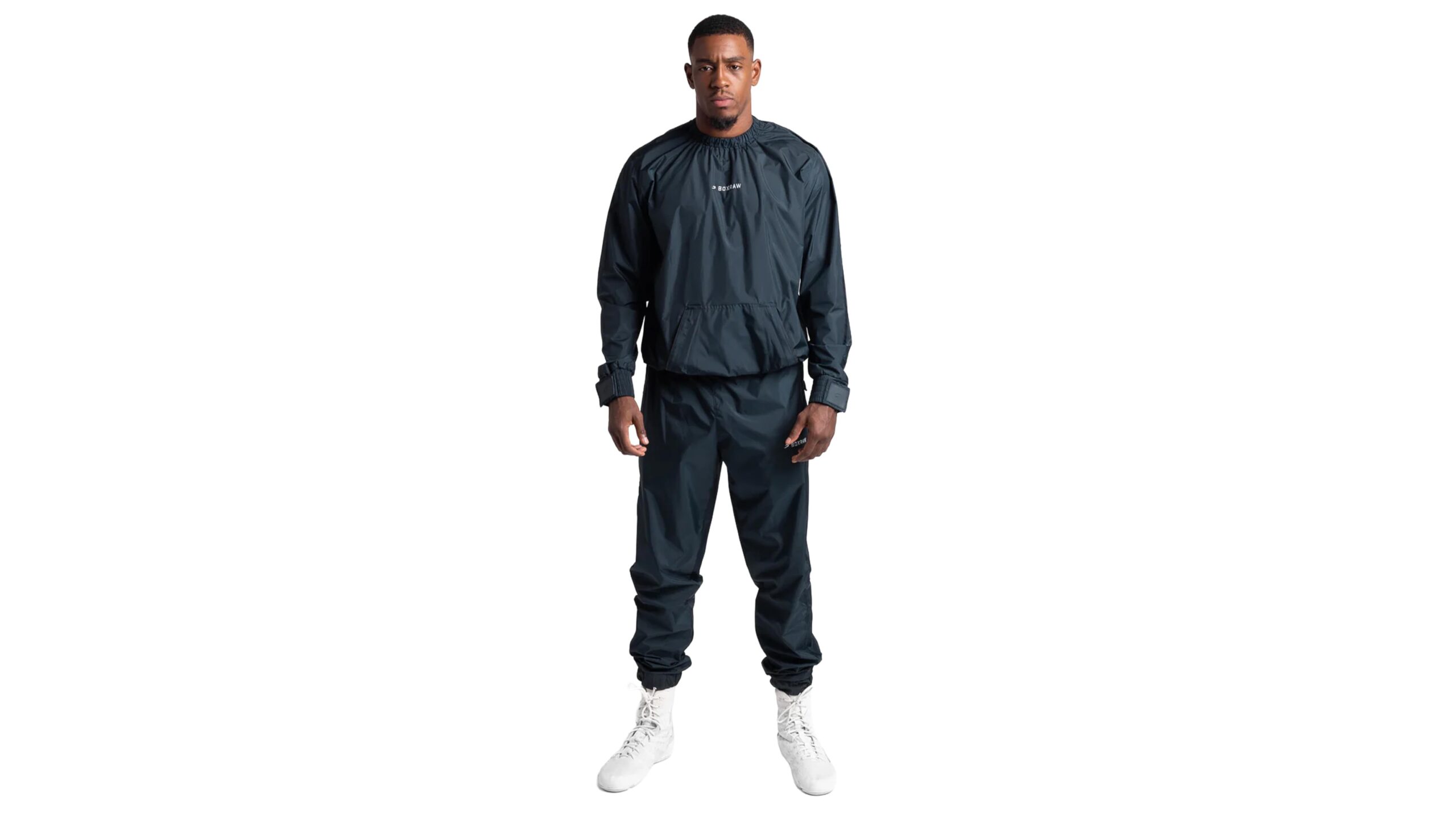
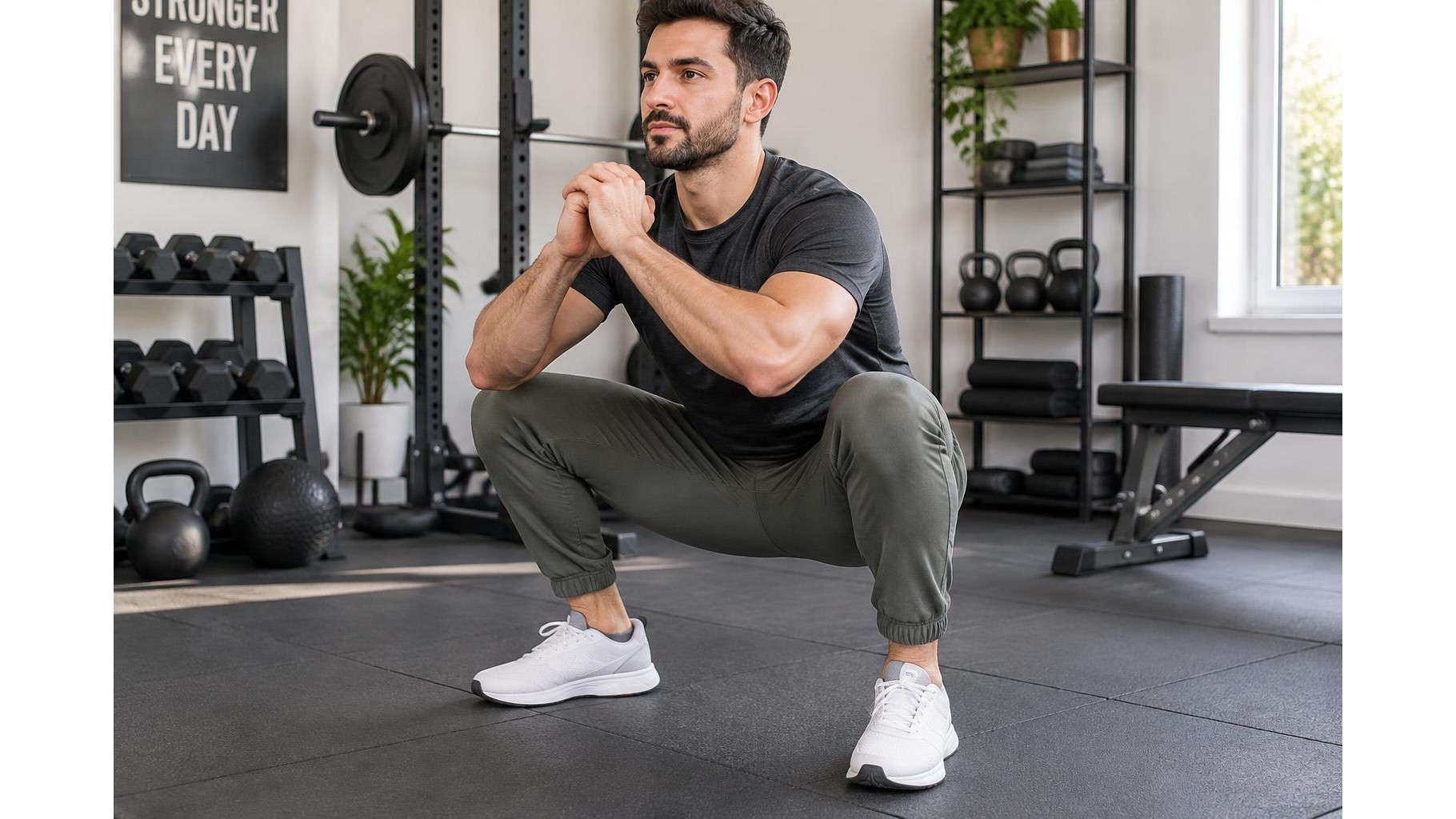
Cuff design affects how joggers behave around ankles, shoes and workout equipment. A close-fitting elastic cuff keeps hems away from your feet during lunges and floor work, and can help prevent fabric catching under a heel. However, a cuff that is too tight may feel restrictive or leave marks. Open hems offer a looser feel, but check that they do not drag on the floor or bunch beneath your foot. Stand, squat and kneel to see whether the hem stays at the ankle. The leg should allow a full range of motion without excess fabric folding heavily behind the knee or gathering around the calf.
Make pockets practical, not bulky
For home training, pockets are useful for a phone, key or remote, but placement and depth matter. Large side pockets can swing or pull the fabric during lateral movements, while bulky pocket bags may press against your thigh when lying on your side. Try a bodyweight squat with your phone in the pocket if you expect to carry it during a session. It should remain secure without bouncing or digging in. Zipped pockets can reduce the risk of small items falling out, though the zipper should not rub against your hands or skin during floor exercises. If you train with no belongings, simpler pockets often mean less bulk.
Use movement-based fit checks
Do not judge joggers only while standing in front of a mirror. Try a deep squat, reverse lunge, hip hinge, kneeling position and a seated forward fold. Look for restricted movement across the hips, knees and seat, and check that the waistband remains covered and secure. Then look for excess fabric: long hems, loose knees or a sagging seat can interfere with movement even if the trousers feel comfortable initially. If possible, compare your usual size with one size up or down, since cuts vary. A good fit feels close enough to stay controlled but relaxed enough for full, unforced movement.
Choose for your routine and recap
The best training joggers balance flexible fabric, a stable waistband, ankle cuffs that stay clear and pockets that do not interrupt your exercises. Prioritise comfort through the movements you actually do, rather than choosing by appearance or fabric claims alone. Test the fit in squats and floor positions, checking for both pulling and unnecessary bunching. With these simple checks, you can find joggers that stay comfortable, practical and out of the way throughout home strength workouts.