
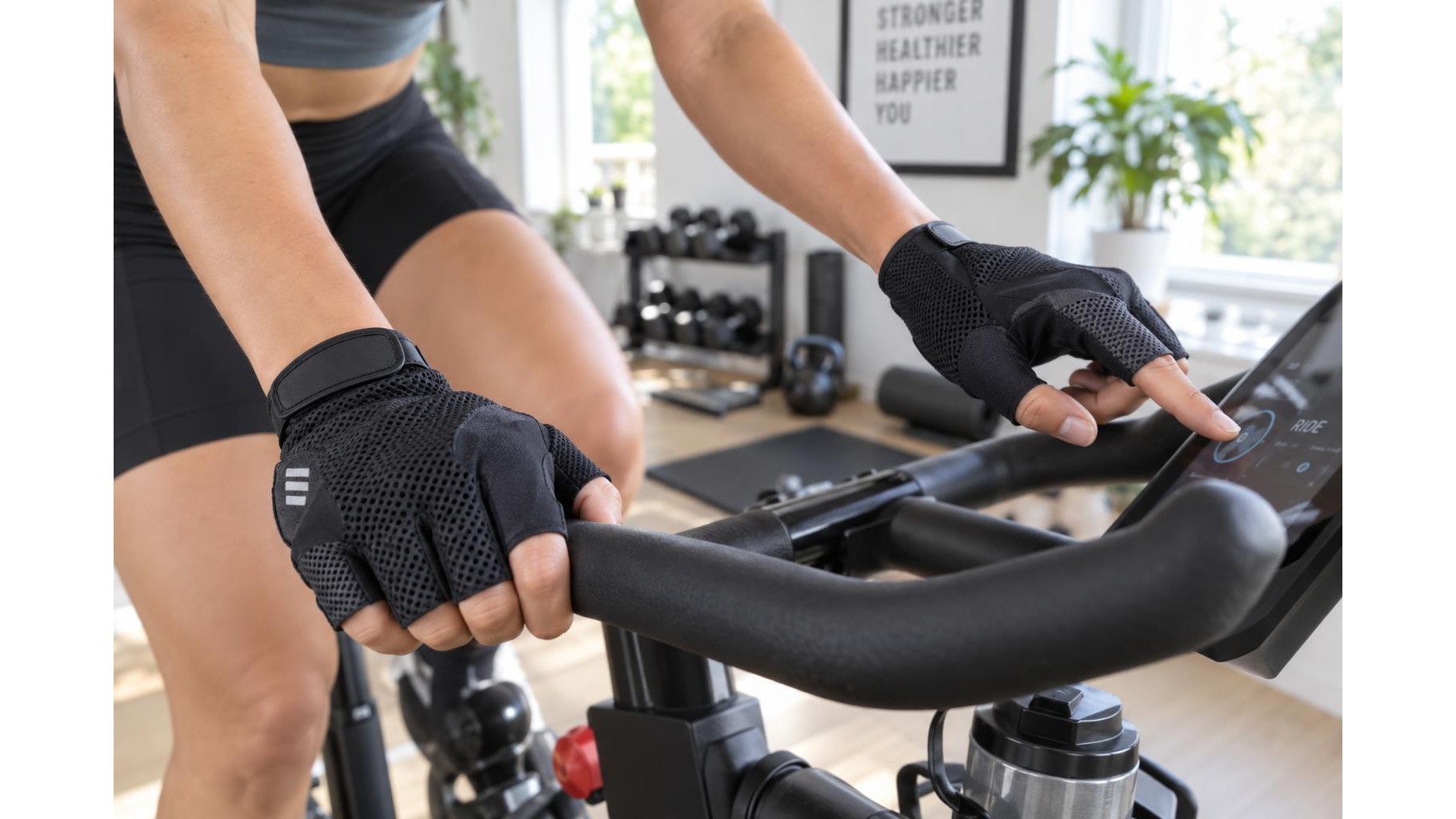
Indoor training can make hands sweaty, sore or tired, but gloves are not automatically the best solution. The right pair should solve a specific problem without making it harder to hold handlebars, weights or a phone. Use this guide to compare grip, palm padding, breathability, touchscreen performance and fit—and to decide when bare hands are preferable.
Start with the reason you need gloves
For indoor cycling, gloves can help if your palms become slippery, your handlebars cause pressure points, or you want a light barrier between your hands and shared equipment. They may also be useful during workouts involving repeated contact with handles or bars. Choose a lightweight design made for exercise rather than a thick winter glove: excess material can trap heat and make a secure grip less natural. If your hands stay comfortable and dry, gloves may add little benefit.
Look for dependable, unobtrusive grip
Check the palm for textured panels or silicone details positioned where your hand meets the handlebar or exercise equipment. Grip should feel secure without forcing you to squeeze harder. A bulky, sticky or uneven surface can interfere with small adjustments to hand position, so consider how the glove feels when gripping a bar and operating its controls. For home workouts, make sure the palm material suits the equipment you actually use; a glove that works on cycling handlebars may feel awkward on dumbbells.
Choose padding for comfort, not bulk
Padding can help reduce pressure during longer rides, especially if you notice discomfort at the base of the palm. However, thicker padding is not always better. It can change your hand position, reduce feedback from the bars and make a close grip feel less secure. Look for cushioning that sits in the areas where pressure builds, while leaving fingers and the rest of the palm flexible. If you have no pressure-related discomfort, a lightly padded or unpadded glove may feel more natural.
Prioritise airflow and touchscreen use
Indoor sessions can be warm, so breathable fabric and ventilation across the back of the hand help limit heat and moisture. A quick-drying, washable construction is practical when gloves are used frequently. For touchscreen use, look for fingertips described as screen-compatible and test them with your device if possible: performance can vary by screen protector, finger placement and sweat. Make sure you can tap, swipe and pause a workout without removing the gloves. Touchscreen fingertips are a convenience, not a substitute for secure handling of equipment.
Get the fit right—and know when to go bare-handed
Measure your hand using the maker’s size guide, then check that the glove sits smoothly across the palm and fingers. It should be snug without restricting circulation, pinching at the webbing or bunching when you close your hand. Adjustable wrist closures can help prevent slipping, but should not feel tight. Bare hands are often better for exercises where direct tactile feedback matters, such as many weightlifting movements, or whenever gloves feel slippery, restrictive or overly warm. Avoid wearing gloves if their seams or padding compromise your hold.
Make comfort the deciding factor
The best indoor workout gloves are lightweight, breathable and secure, with only as much padding as you need and touchscreen fingertips that work reliably with your device. Match the design to your activities, check the fit in a closed grip, and wash the pair regularly. If gloves interfere with control or comfort, leave them off: for many indoor sessions, clean, dry bare hands are the simpler choice.









