
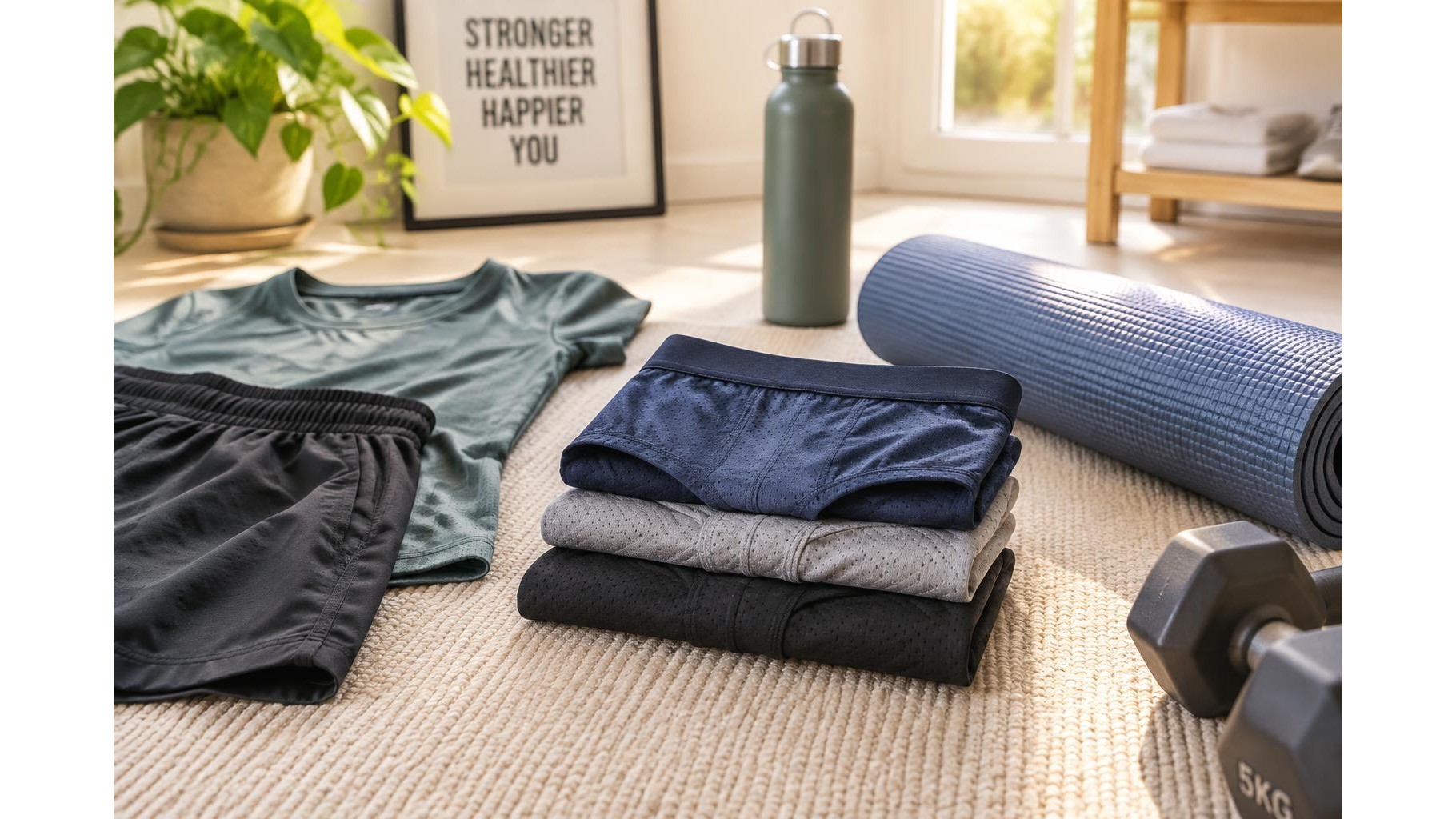
Comfortable training underwear should support movement without becoming something you notice every few minutes. At home, a session might shift from squats and deadlifts to floor stretches or a quick cardio circuit, so the best choice balances a secure fit with breathable comfort. Focus on fabric construction, waistband stability, seams, coverage and moisture management—then test the fit through the movements you actually do.
Choose fabric for the way you train
Look for a fabric that feels soft against the skin but has enough stretch to move with you. A blend containing elastane or spandex can provide useful recovery, helping underwear return to shape after deep squats or long strides. Lightweight synthetic blends often dry faster than cotton, while cotton-rich options may feel familiar and comfortable for gentler sessions. Check the fabric weight and construction too: very thin material can feel less supportive, while thick fabric may hold heat. The right balance depends on your workout intensity and whether you tend to run warm.
Check waistband stability
A waistband should sit securely without digging in, rolling or sliding as you bend. A wide, soft-edged band can spread pressure more evenly, which may feel better during core work or when you sit on the floor. Test it with a hip hinge, a squat and a standing reach: if it folds or shifts, try a different rise or size. Avoid choosing a tighter size just to gain support; excessive compression can restrict comfortable breathing and movement. The best waistband stays put while feeling almost unnoticeable.
Pay attention to seams and construction
Seam placement can make a bigger difference than a product description suggests. Flatlock or low-profile seams are less likely to rub during repeated movements, while bulky stitching may become irritating under fitted leggings or shorts. Check the inner leg and edges in particular, since friction often shows up there first. A supportive front construction can help keep everything comfortably in place, but it should not feel restrictive. If possible, try the underwear under your usual workout clothes and move around before removing the tags.
Match coverage to your routine
Coverage is personal, but it should remain consistent through different exercises. Boxer briefs with a longer leg can reduce skin-on-skin rubbing and may stay in place during cycling, lunges or cardio. Shorter cuts can feel cooler and less noticeable for stretching or low-impact training. Consider whether the leg openings ride up when you squat, and whether the garment bunches beneath your shorts. A gusset or shaped panel may improve movement and reduce pulling. Choose the cut that gives you coverage without excess fabric or pressure.
Manage sweat and find your fit
Moisture-wicking fabric moves sweat away from the skin, while a breathable knit can help heat escape. These features are useful for intervals and warm rooms, but no fabric can compensate for a poor fit. Use the brand’s size chart and measure rather than relying on a label from another maker. When testing a new pair, try a few bodyweight squats, a forward fold, a lunge and a brief jog in place. Watch for slipping, pinching, chafing or fabric that stays damp. Wash according to the care label to preserve stretch and performance.
For home workouts, supportive underwear is a matter of secure fit, comfortable coverage and low-friction construction, not maximum compression. Choose fabric that suits your temperature and training style, then make sure the waistband and leg openings stay comfortable through a full range of motion. A short movement test can reveal whether a pair is ready for lifting, stretching and cardio.









