
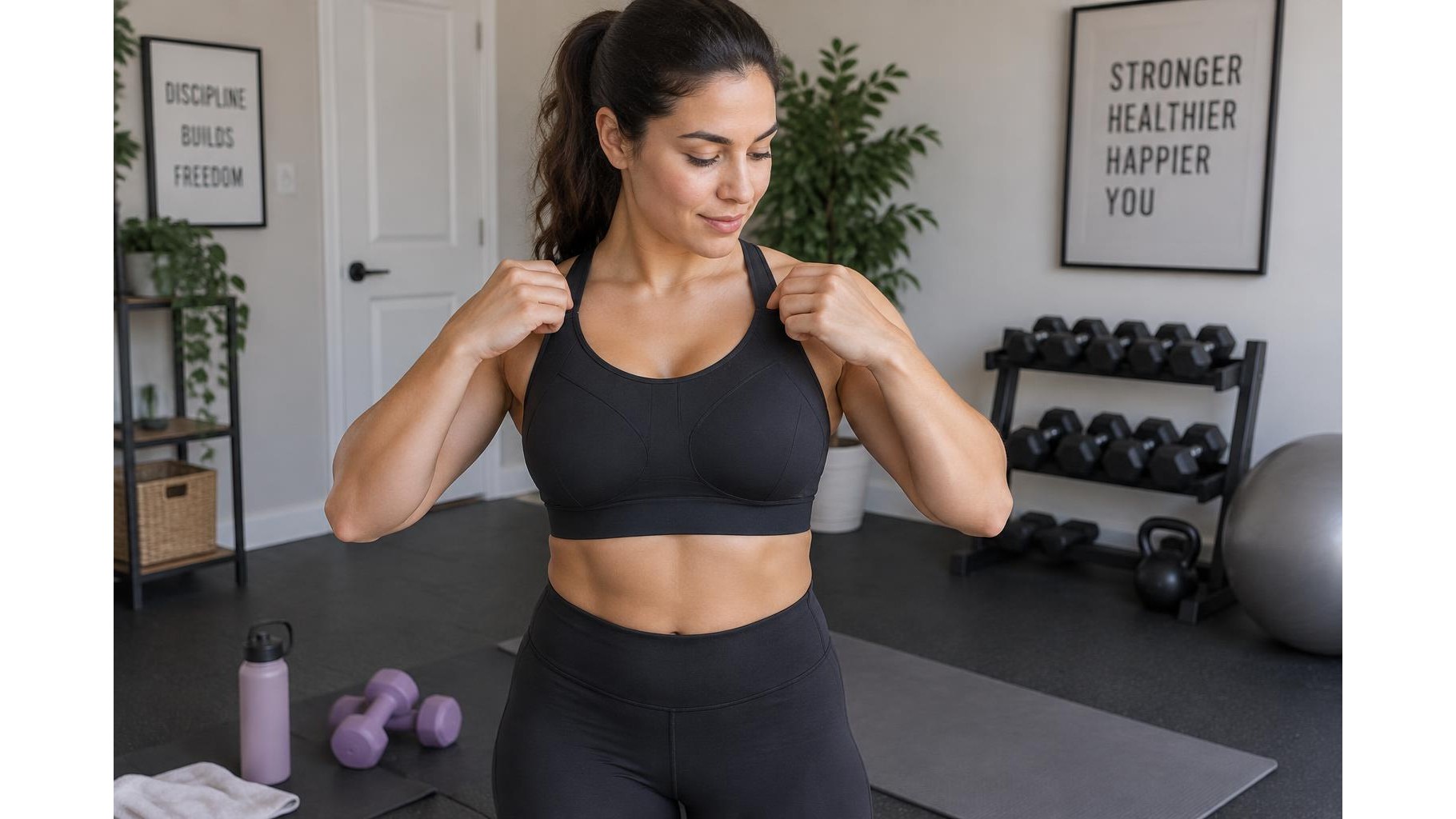
A sports bra that feels secure during a strength set may pinch or shift when you reach overhead. Adjustable straps make it easier to fine-tune the fit, but they work best as part of a bra that also suits your activity, body shape and preferred level of coverage. Use this guide to compare strap design, band support, fabric and closures, then check the fit with movements you actually do at home.
Choose straps that adjust without digging in
Look for sliders that move smoothly and stay in place once adjusted. Wider, padded or softly finished straps can spread pressure across the shoulder, especially during longer sessions. Narrow straps may feel less bulky, but should not cut into the skin or carry the bra’s support on their own. Set both sides evenly, then test arm raises and shoulder rolls. The straps should lie flat without slipping, twisting or pulling the bra upward. If you need to shorten them to the tightest setting to feel secure, try a different size or style instead.
Check the band before tightening the straps
The underband provides much of a sports bra’s stability. It should sit level around your torso, feel snug, and allow you to breathe comfortably. Raise your arms and bend from side to side: a band that rides up may be too loose, while one that leaves painful marks or restricts breathing may be too tight. A firm band can help limit bounce during low-impact cardio and provide a stable base for strength work. Avoid using very tight straps to compensate for a loose band, as this can create shoulder pressure without improving support.
Match support and shape to your workout
For controlled strength sessions, prioritise a secure band, comfortable coverage and freedom to reach overhead. Mobility work calls for straps that stay put without limiting shoulder movement; racerback or cross-back designs can feel stable, but check that the strap arrangement does not pull across your neck. For walking, step-ups or other low-impact cardio, choose a support level that feels steady through repeated movement. Product labels are useful starting points, not guarantees: cup shape, fit and personal comfort all affect how supportive a bra feels.
Look at fabric, seams and closures
Stretch fabric should feel supportive without becoming restrictive when you inhale, twist or hinge. Moisture-wicking materials can help manage sweat during warm indoor workouts, while a soft lining and smooth seams may reduce rubbing. Check that seams do not press into the ribs or sit awkwardly under the arms. Pull-on styles have a clean finish, while hook-and-eye closures can make dressing and band adjustment easier. If you choose a clasp, make sure it lies flat against your back and remains secure as you move.
Run a practical fit check at home
Try the bra on with the straps adjusted to a comfortable starting point. Then perform a short sequence: reach overhead, rotate your torso, hinge at the hips, take a few brisk steps and do several bodyweight squats. Notice whether the band shifts, the cups gape or compress, or the straps slip or dig in. You should be able to breathe deeply and move freely, with support appropriate to the session. Recheck fit after washing, following the care label, since elastic can change over time. If discomfort persists, try another size or design.
In summary, adjustable straps are a useful way to refine comfort, but a good home-workout fit depends on the whole bra. Prioritise a stable, level band, suitable coverage, comfortable fabric and straps that stay put without pressure. Test the bra with strength, mobility and low-impact movements before relying on it for a full session.









