When your living room doubles as your gym, your workout clothes work overtime. Between daily sessions, limited airflow and quick turnarounds between washes, it is easy for leggings, tops and socks to trap sweat and bacteria. Choosing the right odor-resistant workout clothes, together with smart laundry habits, will help you keep your home training space fresher and your favourite gear in rotation for longer.
Understand what really causes workout odour
Odour does not come from sweat alone; it comes from bacteria feeding on sweat trapped in fabric. Synthetic fibres like polyester and nylon are light and quick-drying, but their structure can cling to oily residues from your skin, creating a perfect environment for smells to linger. Natural fibres such as merino wool and some forms of high-quality cotton are naturally more breathable and can slow down bacterial growth, which is why they often stay fresher between washes. When you train at home every day, pay attention to how your current gear smells after it dries: if it still has a sour note, you likely need fabrics or finishes specifically designed for odour control.
Choose fabrics and technologies that fight odour
Look for labels that mention anti-odour treatments, antimicrobial finishes or silver-infused fibres. These technologies are designed to slow bacterial growth in the fabric, helping your gear smell fresher for longer. Blends that combine polyester with merino wool or other natural fibres can balance moisture-wicking performance with odour resistance, which is ideal when you are doing strength circuits or cardio in a confined space. Also check the fabric weight and knit: tighter weaves can trap more heat and moisture, while lighter, open knits and mesh panels around high-sweat zones (underarms, back, behind the knees) help sweat evaporate faster, reducing the time bacteria have to multiply.
Leggings, tops and socks: what to prioritise for home workouts
For leggings, prioritise moisture-wicking, quick-drying fabrics with a soft, smooth finish; these are less likely to hold on to odours and will feel comfortable on a sofa or yoga mat. High-rise designs are useful for at-home routines that mix floor work and standing moves, as they stay in place and reduce friction that could make you sweat more. For tops, sleeveless or breathable short-sleeve designs with mesh panels will help with ventilation when you are training in smaller rooms. When it comes to socks, choose pairs labelled as anti-odour or sport performance, ideally with targeted cushioning and ventilation zones; socks are often the first items to smell, so investing in a few high-quality pairs will dramatically improve how fresh your home gym corner feels.
Smart washing strategies to keep gear fresher
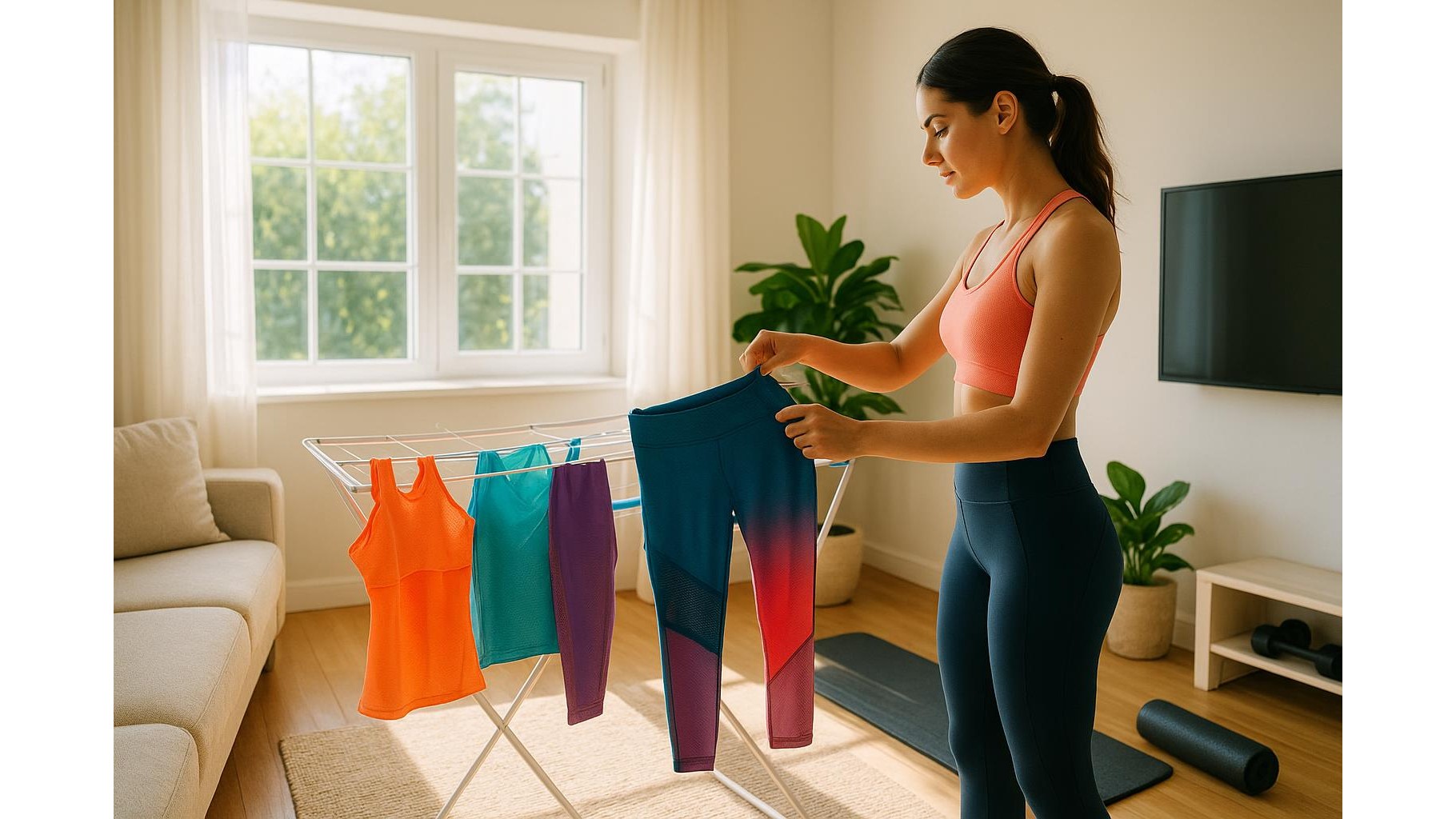
Even the best odor-resistant fabrics need proper care. After a workout, avoid leaving clothes in a heap on the floor or in a closed laundry basket, as this traps moisture and accelerates bacterial growth. Instead, air clothes out on a drying rack before washing. Use a sports-specific detergent or a gentle liquid detergent and avoid fabric softeners, which can coat fibres and make odours harder to remove. Wash in cold or warm water according to the label; hot water can damage performance finishes. For heavily used pieces, an occasional pre-soak in water with a bit of sports detergent or a specialist odour-removing additive can help break down stubborn sweat residues that regular washing leaves behind.
Everyday habits when your living room is your gym
Small daily habits make a big difference when you work out at home. Rotate between at least two or three sets of your favourite workout leggings and tops so that each has time to dry completely between sessions. Hang sweaty gear in a well-ventilated spot, preferably by a window or near a fan, instead of over radiator heaters, which can bake odours into fibres. Keep a dedicated basket or hook for used gym clothes to separate them from everyday items. If you often do quick, short workouts, consider changing out of your gym outfit as soon as you finish; the less time you spend sitting around in damp clothes, the less chance bacteria have to thrive and the easier it will be to keep your garments smelling neutral.
Choosing odor-resistant workout clothes for daily home training is about combining the right materials, effective fabric technologies and consistent washing routines. By focusing on breathable, quick-drying leggings, tops and socks with antimicrobial or anti-odour properties, and by treating them with care in your laundry cycle, you can keep your living room gym fresher, extend the life of your gear and feel more confident every time you press play on your next workout video.