Training at home under bright ceiling lights or ring lights can turn even the best outfit into a shiny, sweaty distraction. The wrong fabric or color will reflect light, highlight every crease, and make sweat patches look worse on camera and in the mirror. The right choices, instead, help you stay focused on performance while looking clean and matte. Here is how to combine anti-glare colors, smart cuts and camera-friendly fabrics for tops and bottoms in your home gym.
Table of contents
Choose matte fabrics, not shiny performance blends
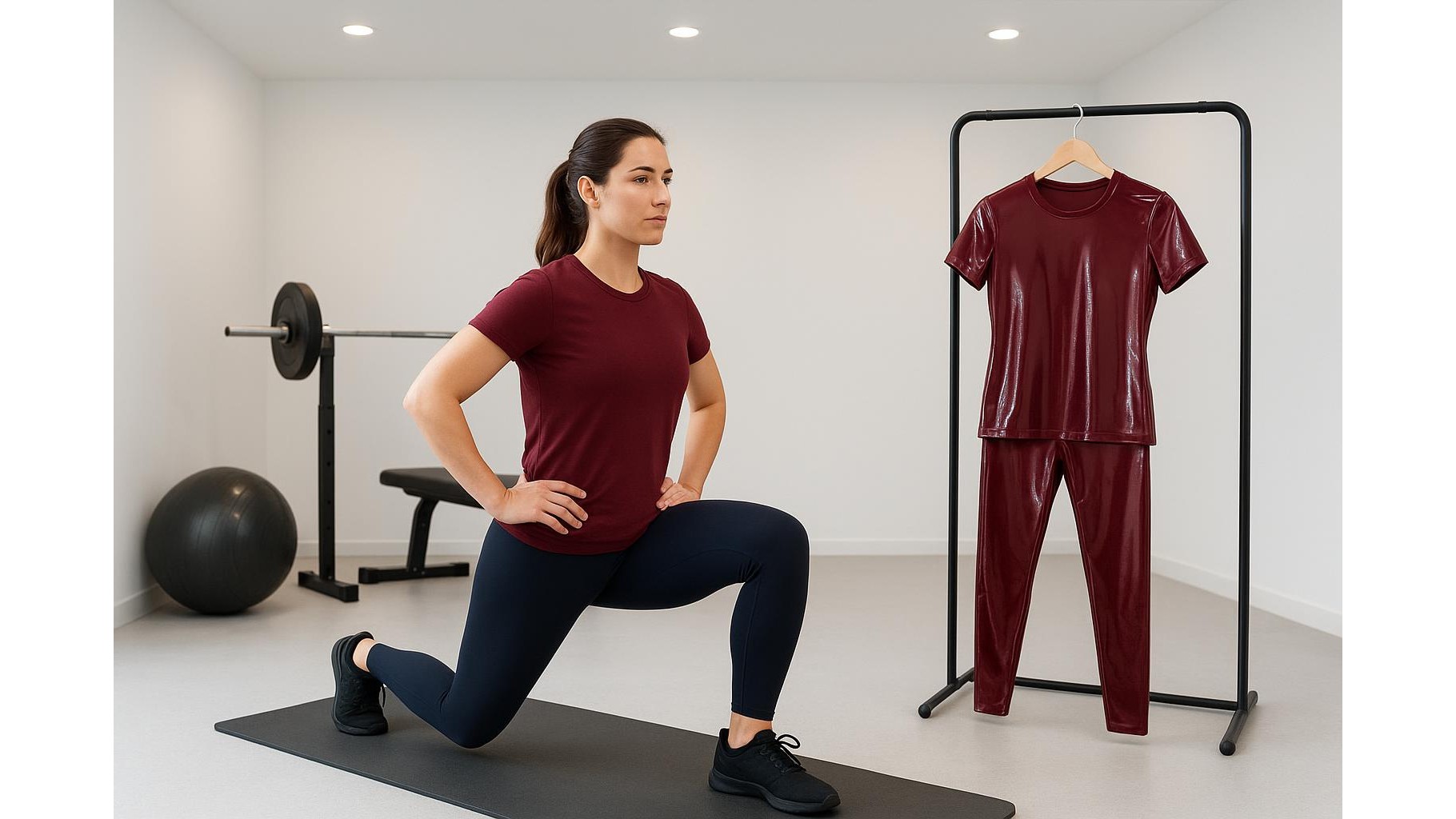
For home workouts under strong indoor lighting, your first priority is a matte finish. Many high-performance pieces use polyester or nylon blends with a subtle sheen that catches ring light and LED glare, exaggerating contours and sweat. Look for descriptions like “brushed”, “cotton-touch”, “matte” or “peached” rather than “satin”, “glossy”, or “compression shine”. Tight, slick fabrics can reflect every beam, while softer knits diffuse light across the surface. A good rule: if the material looks shiny in product photos, it will look even shinier under your downlights or camera setup.
Pick colors that hide sweat and reflections
Color choice is crucial for anti-glare workout outfits. Under strong lighting, very light tones—especially pure white, pale grey and neon shades—can bounce light back into the camera, creating hotspots and emphasizing texture on your body. At the same time, mid-tones like heather grey often reveal dark sweat marks around the chest, back and waistband. To minimise both shine and stains, favor deep, muted colors: charcoal, forest green, navy, burgundy, and chocolate brown. These tones absorb light instead of reflecting it and make damp areas less visible. If you enjoy patterns, choose small, matte prints in dark palettes; they visually break up sweat patches and avoid the “spotlight” effect often seen on solid bright fabrics.
Flattering cuts that don’t cling in the wrong places
Even the best fabric will fail if the cut is too tight in high-sweat zones. Under overhead lighting, clingy panels across the chest, lower back and under the glutes will darken as you sweat, making patches obvious. Opt for slightly relaxed fits in tops: athletic t-shirts or tanks that skim the torso instead of vacuum-sealing it. For bottoms, high-waisted leggings or fitted shorts with a medium compression help hold shape without stretching so far that the fabric becomes thin and shiny. Avoid extra seams or panels right over sweat-prone areas, as these lines catch light and frame any dampness. Strategic mesh inserts are fine only if they are matte and not placed where you sweat the most.
Camera-friendly details for ring light and streaming workouts
If you record content or train via video call, think like a camera operator. Strong ring lights highlight any reflective logos, zipper pulls or glossy prints, which can distract from your form. Prefer tone-on-tone or small, matte logos printed low on the hip or hem. Limit metallic details and glossy graphics across the chest or thighs; these can flare on screen and add unwanted glare. Consider how your outfit looks from all main angles—front, side and back—because bright ceiling lights often cast hard shadows. Slightly darker, uniform colors help your body outline remain clear without creating shiny hotspots on shoulders, traps, or quads.
Layering strategies to manage sweat and shine
Smart layering helps control both moisture and light reflection. Start with a breathable, sweat-wicking base layer in a dark, matte color to catch moisture closest to the skin. Over that, add a lightweight, looser top in a slightly heavier knit; this outer layer diffuses light and visually softens any marks from the base. For bottoms, wearing seamless, dark underwear under leggings prevents color contrast from showing through when fabric is stretched under bright LEDs. If you tend to sweat heavily, keep a second matte top nearby and switch midway through your session to maintain a clean look, especially if you are filming multiple sets or classes in one day.
Building an anti-glare home workout wardrobe is about more than fashion. By choosing matte fabrics, darker and muted colors, and cuts that skim rather than cling, you reduce distracting reflections and sweat patches under strong indoor lighting. Combine smart layering with minimal shiny details, and your outfits will stay camera-ready from warm-up to cooldown, allowing you to focus fully on technique, consistency and enjoyment of your training sessions.