
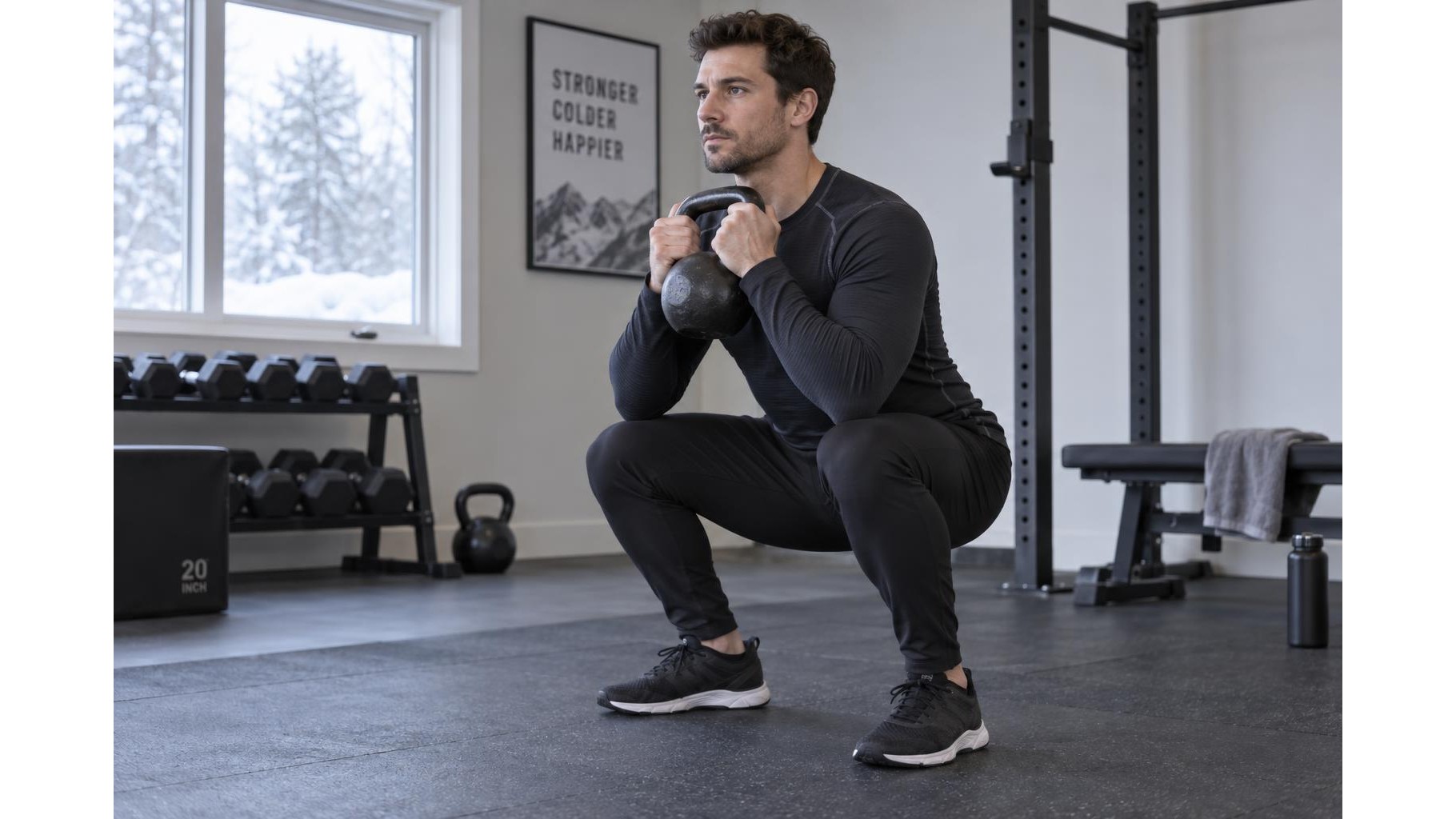
A chilly training room can make the first minutes of a winter workout uncomfortable, but dressing too warmly may leave you overheating once your heart rate rises. The right thermal base layer offers light insulation, moves sweat away from your skin and stretches with you. Focus on fabric weight, moisture management, fit and seam placement rather than choosing the thickest top you can find.
Choose fabric weight for your room and workout
Base layers are often described as lightweight, midweight or heavyweight. For a moderately cool home gym and an active session, a lightweight layer is usually a versatile starting point: it can take the edge off the cold without trapping too much heat during intervals or circuits. A midweight top may suit a colder room, gentle mobility work or longer rests between sets. Heavyweight fabric is more likely to feel stifling during vigorous training. Consider the room temperature, how quickly you warm up and whether you can remove an outer layer easily.
Look for effective moisture management
Even in a cold room, exercise produces sweat. A good base layer should help move moisture away from the skin so you are less likely to feel clammy when you pause. Merino wool is valued for warmth and natural odour resistance, while synthetic fabrics such as polyester are often quick-drying and practical for frequent training. Blends can balance these qualities. Check the garment’s care label and product details, and think about how you train: high-intensity workouts tend to reward fast-drying fabrics, while lower-intensity sessions may call for a little more warmth.
Prioritise stretch and a comfortable fit
A base layer should sit close enough to your body to manage moisture, but it should not restrict breathing or movement. Look for four-way stretch or a flexible fabric blend that follows you through squats, overhead presses and floor exercises. Raise your arms and bend at the waist when trying a top on; it should stay comfortably in place without pulling across the shoulders or riding up. A close fit is useful, but compression is not essential. If you are between sizes, compare the brand’s size chart and consider whether you prefer a relaxed or snug feel.
Check seams, cuffs and layering details
Seam placement can make a noticeable difference during repeated movement. Flatlock seams are designed to lie flatter against the skin and may reduce rubbing, particularly under the arms or around the shoulders. Raglan sleeves can allow freer shoulder movement, while a longer hem may stay tucked during floor work. Check that cuffs do not feel tight and that labels will not irritate your neck. If you plan to wear a mid-layer on top, choose a smooth, low-bulk base layer that will not bunch beneath it.
Wash technical layers with care
Good care helps preserve a garment’s fit, stretch and performance. Follow the care label, wash promptly after sweaty sessions and use a mild detergent. Avoid fabric softener, which can leave a coating that interferes with moisture management, and skip bleach unless the label explicitly allows it. Wash technical tops with similar items, close any zips that could snag them and choose a gentle cycle when recommended. Air-drying is often preferable to high heat, which may damage elastic fibres or shrink some fabrics. Store the layer clean and fully dry.
Build a layer that works for your routine
For most winter home workouts, a lightweight or midweight top with reliable moisture management, comfortable stretch and low-irritation seams is a sensible choice. Match the fabric to the room and the intensity of your training, then adjust with removable layers rather than relying on one very thick garment. A well-fitting base layer should keep you comfortable through warm-ups, work sets and cool-downs without becoming a distraction.









