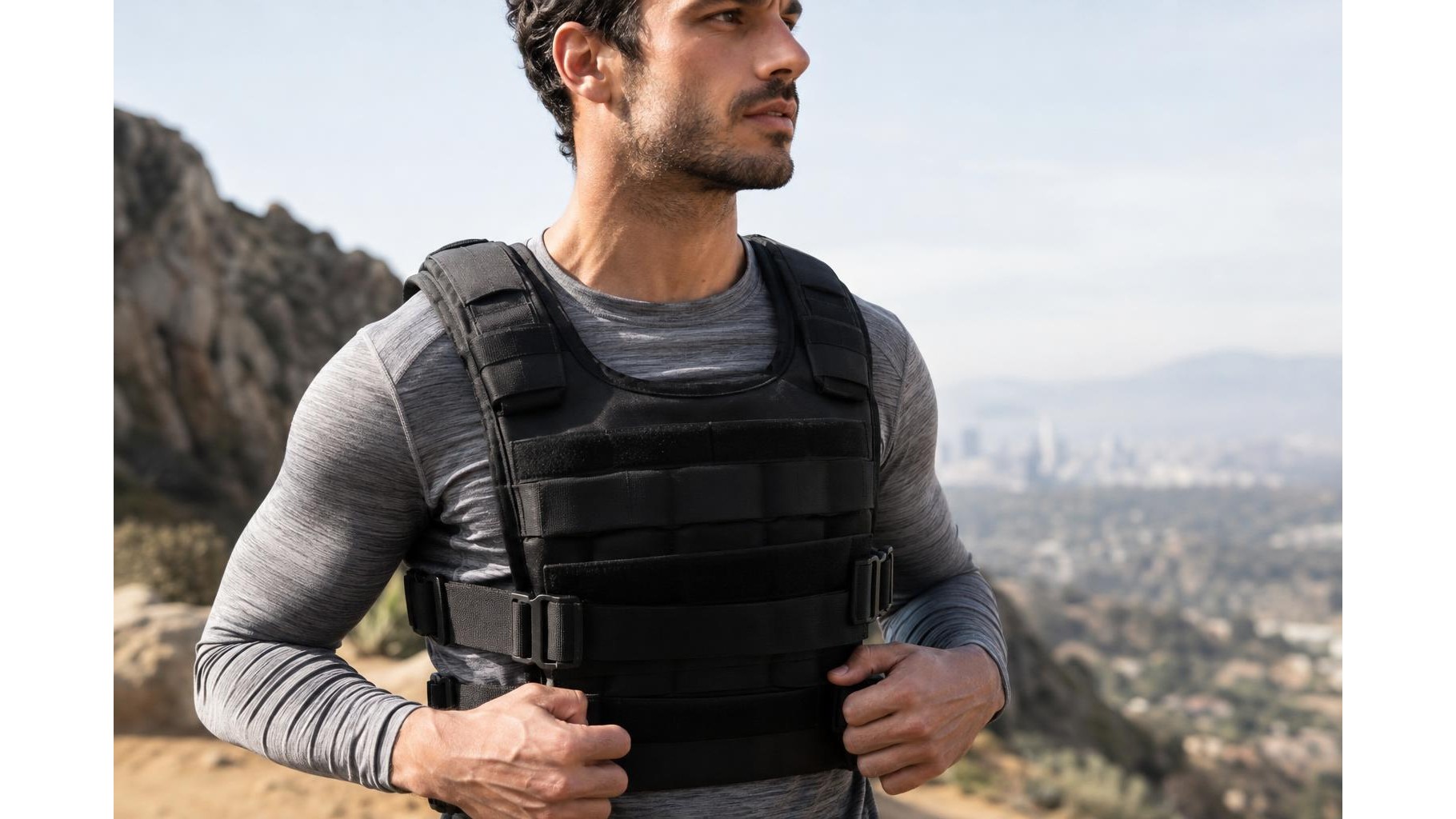
A weighted vest adds more than resistance: it presses fabric against the torso and can make rubbing, dampness and excess warmth harder to ignore. Choosing the right technical workout shirt helps keep walking, strength work and conditioning comfortable. Look beyond fabric claims and assess how the shirt fits beneath the vest, where its seams sit and how well it handles heat.
Check the length and coverage
A shirt that rides up can expose skin to vest edges, while extra fabric may bunch beneath the waistband or hip straps. Choose a length that stays tucked or comfortably covers the waistband when you reach overhead, bend and walk. Test the shirt with the vest fastened: raise your arms, hinge at the hips and rotate your torso. The hem should remain in place without pulling tightly across your shoulders. If you wear a vest with a long torso panel, make sure the shirt does not fold into a thick ridge underneath it. Fit can vary between brands, so use the size chart and consider trying your usual size alongside another option.
Look for smooth, low-profile seams
Vest pressure can turn an otherwise minor seam into a source of irritation. Inspect the shoulders, sides and underarms, where straps or vest panels may press against stitching. Flat seams, smooth seam finishes and minimal interior labels can reduce friction during repeated arm swings and loaded movements. Avoid bulky decorations, raised prints or thick pockets on areas covered by the vest. Comfort is personal, so a short trial wearing the shirt beneath your actual vest is more useful than judging the garment on a hanger. Stop if you notice persistent rubbing, pinching or skin irritation.
Balance fabric weight and durability
A lightweight shirt can feel less oppressive under a vest, but ultra-thin material is not automatically the best choice. It should tolerate repeated washing and movement without becoming transparent, snagging easily or clinging uncomfortably when damp. Check the garment’s care label and feel the fabric for a smooth, flexible hand. A moderate-weight synthetic or blended knit is often a practical starting point for sweat-heavy sessions, while a softer blend may suit lower-intensity walks. Consider the conditions, session length and your own tendency to overheat rather than choosing by fabric weight alone.
Assess ventilation and moisture handling
Heat can build where the vest covers the chest and back, limiting airflow. Look for breathable construction, mesh panels or ventilation zones, but check that these do not land directly beneath abrasive straps or rigid edges. Moisture-wicking fabric can help spread sweat across the surface so it dries more readily; it does not prevent sweating or guarantee that you will stay cool. A shirt that feels comfortable when dry may cling once wet, so consider how the fabric behaves during a brisk warm-up. Wash technical garments as directed and avoid fabric softener if the care label warns it can affect performance.
Test fit through your full range of motion
Choose a close but unrestrictive fit: loose fabric may wrinkle under the vest, while a very tight top can feel restrictive and hold pressure against sensitive areas. Before training, fasten the vest as you normally would and perform a few controlled squats, presses, rows and torso turns. Check for bunching at the waist, pulling across the chest, chafing at the armpits and pressure from seams. Make sure the vest itself is correctly adjusted; a shirt cannot compensate for straps that rub or a load that shifts. Recheck comfort after a short walk as well as during strength movements.
Choose for the session, then reassess
The most suitable shirt is the one that remains smooth, breathable and comfortable beneath your particular vest—not necessarily the lightest or most technical-looking option. Start with a well-fitting top with low-profile seams, practical coverage and fabric suited to your training conditions. Test it during an easy session before relying on it for longer or more demanding work, and adjust the vest if pressure or rubbing persists. Small details in length, seam placement and fit can make weighted-vest training feel noticeably more comfortable.