Choosing a shirt for repeat training
A technical workout shirt earns its place in a home-gym wardrobe by surviving more than a single sweaty session. Barbells, bench upholstery, resistance bands and repeated washing all create opportunities for pilling, pulled yarns and worn seams. A fabric’s label can tell you what it is made from, but construction, fit and care determine how well it holds up. Look for a shirt designed to balance breathability with a smooth, stable surface, then check how it behaves against the equipment and movements you use most.
Read the fabric construction
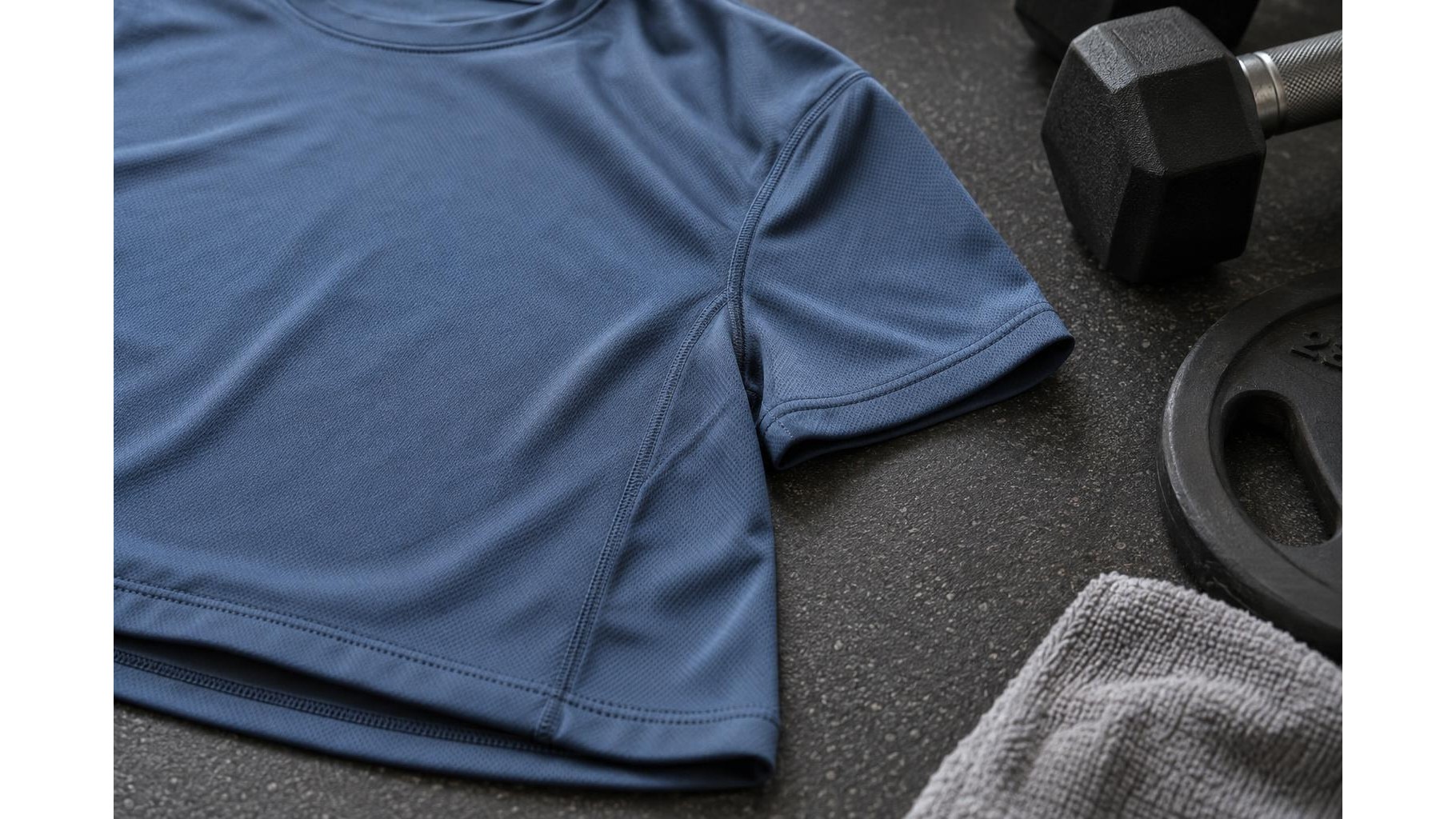
Knitted fabrics are comfortable and stretch readily, but loose or highly textured surfaces can catch on hook-and-loop straps, rough bench covers and equipment edges. A smooth, compact knit is generally a sensible choice for strength work and cardio alike. Examine the shirt in good light: uneven loops, ladders or loose fibres may signal a surface more vulnerable to snagging. Mesh panels can help with ventilation, but inspect their edges and placement; panels on high-friction areas such as the sides or underarms may wear sooner. A tighter construction is not automatically better if it restricts movement, so test the fabric’s stretch and recovery.
Consider yarn and fibre blends
Polyester is common in technical tops because it dries quickly and can retain its shape, while elastane adds stretch. Durability depends on the yarn and knit as well as the fibre name: smooth, continuous-filament yarns often present fewer protruding ends than fuzzy, staple-spun surfaces, which can be more prone to pills. Blends can combine comfort and stretch, but a high elastane content does not itself guarantee resistance to abrasion. When shopping, check product details for fabric weight and construction, and inspect customer photos for signs of fuzzing after wear. Treat any claim such as “anti-pilling” as useful information, not a promise that friction will never leave marks.
Inspect seams and finishing
Turn the shirt inside out before buying, if possible. Flat, even stitching with no loose loops is less likely to rub against skin or catch on straps. Reinforced shoulder seams can be useful if you carry weights or frequently pull the shirt on and off, while neatly finished hems are less likely to unravel. Seams should sit away from pressure points where a bar, bench or backpack rubs. Check that the collar lies flat and returns to shape after a gentle stretch. For cardio, smooth seams can reduce chafing; for lifting, durable stitching helps the shirt tolerate repeated reaching and bracing.
Choose a practical training fit
A shirt that is too tight can strain seams when you reach overhead, while excess fabric can snag on equipment or bunch beneath your back on a bench. Aim for a close but comfortable fit: raise both arms, rotate your shoulders and hinge at the hips to check coverage and freedom of movement. The hem should not ride up during presses, and sleeves should not bind when you flex. If you are between sizes, compare the garment measurements with a shirt you already like rather than relying on the size label alone. Consider how the fabric feels when damp, since a clingy fit may become distracting during intervals.
Launder to limit wear
Friction and heat can shorten a technical top’s life. Follow the care label, wash shirts inside out with similar lightweight garments, and close hook-and-loop fasteners on other kit before washing. Use a gentle cycle and mild detergent; avoid fabric softener if the label advises against it, as residue can affect moisture management. Skip high-heat drying and do not wash technical tops with towels or rough items that shed lint. Air-drying usually reduces heat stress. Remove the shirt promptly, and avoid leaving damp kit crumpled in a gym bag. For frequent training, rotating several tops gives each one time to dry and reduces repeated wear on a single garment.
Make durability part of the choice
The most dependable workout shirt is not defined by a fibre label alone. Prioritise a smooth, stable knit, tidy seams and a fit that moves without excess fabric, then protect those features with careful laundry habits. Inspect the surface periodically for loose yarns and address snags gently rather than pulling them. Matching the shirt to your equipment and training routine helps it stay comfortable through strength sessions, cardio and repeated washes.