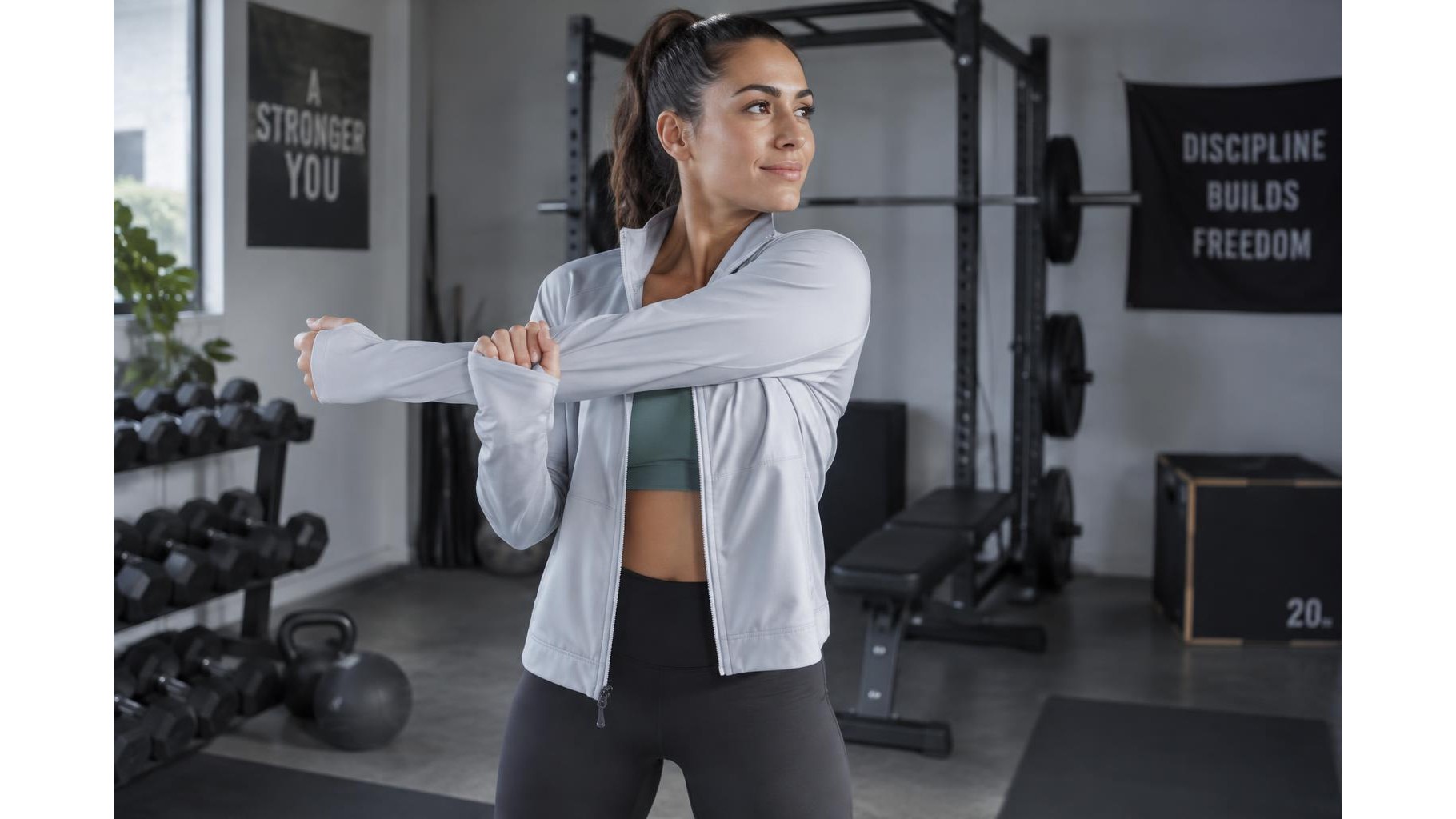
A cool home gym can make the first minutes of a workout uncomfortable, but wearing too much can leave you overheated as soon as your effort rises. The right technical workout jacket provides light warmth while letting moisture and excess heat escape. Focus on fabric, ventilation, fit and easy layering to stay comfortable through warm-ups and lower-intensity sessions without needing to keep the jacket on for every exercise.
Choose a breathable, quick-drying fabric
Look for lightweight synthetic fabrics such as polyester or nylon blends, which generally dry faster than cotton after you start sweating. A small amount of stretch can help the jacket move naturally during mobility drills and bodyweight exercises. For a chilly room, a lightly brushed interior or a double-knit fabric may add welcome warmth without the bulk of a heavy fleece. Check the garment’s care instructions, too: a jacket that is easy to wash is more practical for regular training.
Balance warmth with ventilation
Warmth is useful during a slow start, but ventilation matters once your body temperature rises. A full-length front zip lets you adjust airflow quickly, while a stand collar can help shield the neck from a draft. Look for breathable panels or a fabric construction that does not feel clammy against the skin. Zipped pockets are convenient for storing a key or phone, but avoid bulky pocket details that could press uncomfortably against you during floor exercises.
Find a fit that allows free movement
A training jacket should sit close enough to retain some warmth without restricting your shoulders, elbows or torso. Try reaching overhead, rotating your arms and bending forward when assessing the fit. The hem should stay in place without riding up, and sleeves should cover the wrists without obscuring your hands. If you plan to wear a base layer underneath, allow room for it, but avoid an oversized cut that catches on equipment or flaps during movement.
Layer for changing workout intensity
Use a simple layering system rather than relying on one thick garment. A moisture-wicking base layer helps manage sweat, while the jacket adds removable warmth over it. Start your warm-up wearing both, then unzip or take off the jacket as your heart rate climbs. Keep it within reach for rest periods or stretching. This approach is especially useful when a home gym has uneven temperatures or when your session alternates between gentle preparation and more demanding sets.
Check the details before buying
Consider how the jacket will work with your actual training routine. Smooth seams can reduce rubbing, and cuffs that stay secure help keep sleeves out of the way. If you train near a fan or an open window, a close-fitting collar and a modestly protective outer face may improve comfort; a heavy, waterproof shell is usually unnecessary indoors. Review the size chart and fabric composition, and choose features that support movement and temperature control rather than adding unnecessary weight.
For a cool home gym, the best jacket is light, breathable and easy to adjust. Choose quick-drying fabric, a movement-friendly fit and ventilation you can control, then pair it with a moisture-wicking base layer. Remove or unzip the jacket as your workout warms up, and put it back on for slower intervals or cooldowns. A flexible layering strategy keeps you comfortable without carrying excess heat through the whole session.