
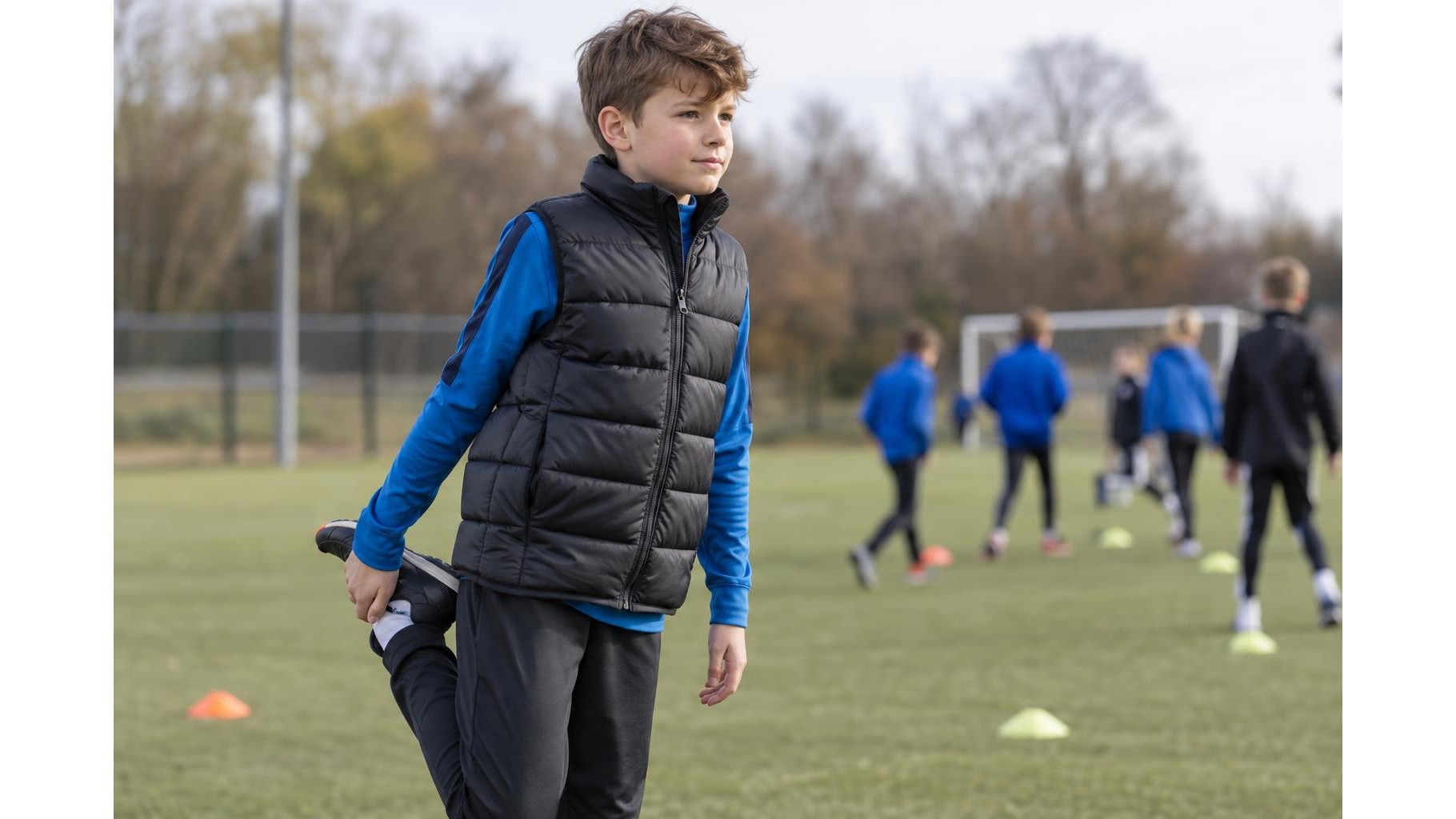
A boys’ lightweight puffer vest can add useful warmth for a walk, an outdoor warm-up or the trip to training without covering the arms or restricting movement. The right choice depends on how your child will wear it, the temperatures and wind in your area, and whether it can cope with frequent use. Use this guide to compare fit, insulation, mobility and care before choosing a layer.
Start with the activity and the weather
Think about when the vest will be worn. For a brisk walk or the journey to practice, a light layer over a long-sleeved top may be enough. During active warm-ups, children generate heat quickly, so a bulky or very warm vest can feel uncomfortable. In colder, windy conditions, a vest works best as part of a layering system, with a suitable base layer and a wind-resistant outer layer when needed. It does not cover the arms, so it is not a substitute for a jacket in wet or exposed weather. Check the local forecast and consider how long your child will be outdoors, rather than choosing by season alone.
Check fit over the clothes he will wear
Try the vest over the usual training top or sweatshirt. There should be room to move and, if needed, add a light layer underneath, but excess fabric can flap, bunch up or catch on equipment. Check that the shoulders sit comfortably, the armholes do not rub, and the hem stays in place when your child bends, reaches and jogs. A full-length zip should be easy to use and should not press against the chin when fastened. If buying online, use the brand’s size chart and measure your child; age labels alone are not a reliable fit guide. Avoid sizing up so much that the vest gets in the way.
Balance insulation with freedom of movement
“Lightweight” can describe different levels of warmth. Look for clear information about the fill and construction, but remember that labels such as down, synthetic or padded do not by themselves tell you how warm a garment will feel. A vest with moderate insulation may suit cool, dry walks and short waits before practice, while a thinner option may be more comfortable during exercise. Consider whether the fabric and filling feel flexible rather than stiff. The sleeveless design keeps the arms free, which can help with drills and layering, but it should not ride up or restrict overhead reaches. Let your child try a few warm-up movements before removing tags.
Look for practical details
Useful features include a secure front zip, pockets that close, a soft chin guard and a hem that sits comfortably over the waistband. Reflective details can help with visibility on darker journeys, but they do not replace lights or other safety measures where required. Check the outer fabric for care and weather guidance: some vests resist light drizzle, but water resistance is not the same as waterproofing. For a child heading to training, a simple, easy-to-pack design may be more useful than extra features that add bulk. Also consider whether the vest can be worn comfortably beneath a rain shell or coat.
Make care and durability part of the decision
Children’s kit gets muddy, sweaty and packed into bags, so read the care label before buying. Confirm whether machine washing is allowed, what temperature is recommended and whether the garment needs special drying. Follow those instructions to protect the filling and shape. Check seams, zips and pocket construction, especially if the vest will be used several times a week. A compact design is convenient for carrying, but it should still be easy to dry fully after washing. Choose a colour and finish your child is willing to wear; a theoretically warm vest is no help if it stays at home.
For outdoor warm-ups, prioritise a comfortable fit, enough insulation for the conditions and unrestricted movement over a long list of features. A lightweight puffer vest is most useful in cool, relatively dry weather when the arms need to stay free; choose a warmer coat or weatherproof layer when wind, rain or prolonged cold calls for more coverage. Check the size chart, care label and your child’s comfort in motion before making the final choice.









