Building a reliable home gym is not only about weights and resistance bands. The right workout towel, headband and wristbands keep sweat under control, protect your equipment and make every session more comfortable. Choosing quick-dry, odor-resistant options means less laundry stress, fewer bacteria and a fresher training space. Here is how to evaluate fabrics, antimicrobial treatments, sizes and maintenance, with concrete examples of what to look for when you shop.
Why sweat management matters in your home gym
During home workouts, sweat quickly soaks mats, benches and dumbbells, creating a humid micro‑climate where bacteria thrive. A good gym towel absorbs moisture fast, protects upholstery from salt and skin oils, and helps you keep a secure grip on gear. Headbands and wristbands prevent sweat from dripping into your eyes or onto your hands, which is crucial for safety when you lift or use resistance machines. Even if you train in a small room with limited ventilation, choosing quick-drying, breathable accessories keeps odours under control and reduces the risk of skin irritation. Prioritise pieces that combine high absorbency with fast evaporation and, if possible, some form of antibacterial treatment.
How to choose the best home workout towels
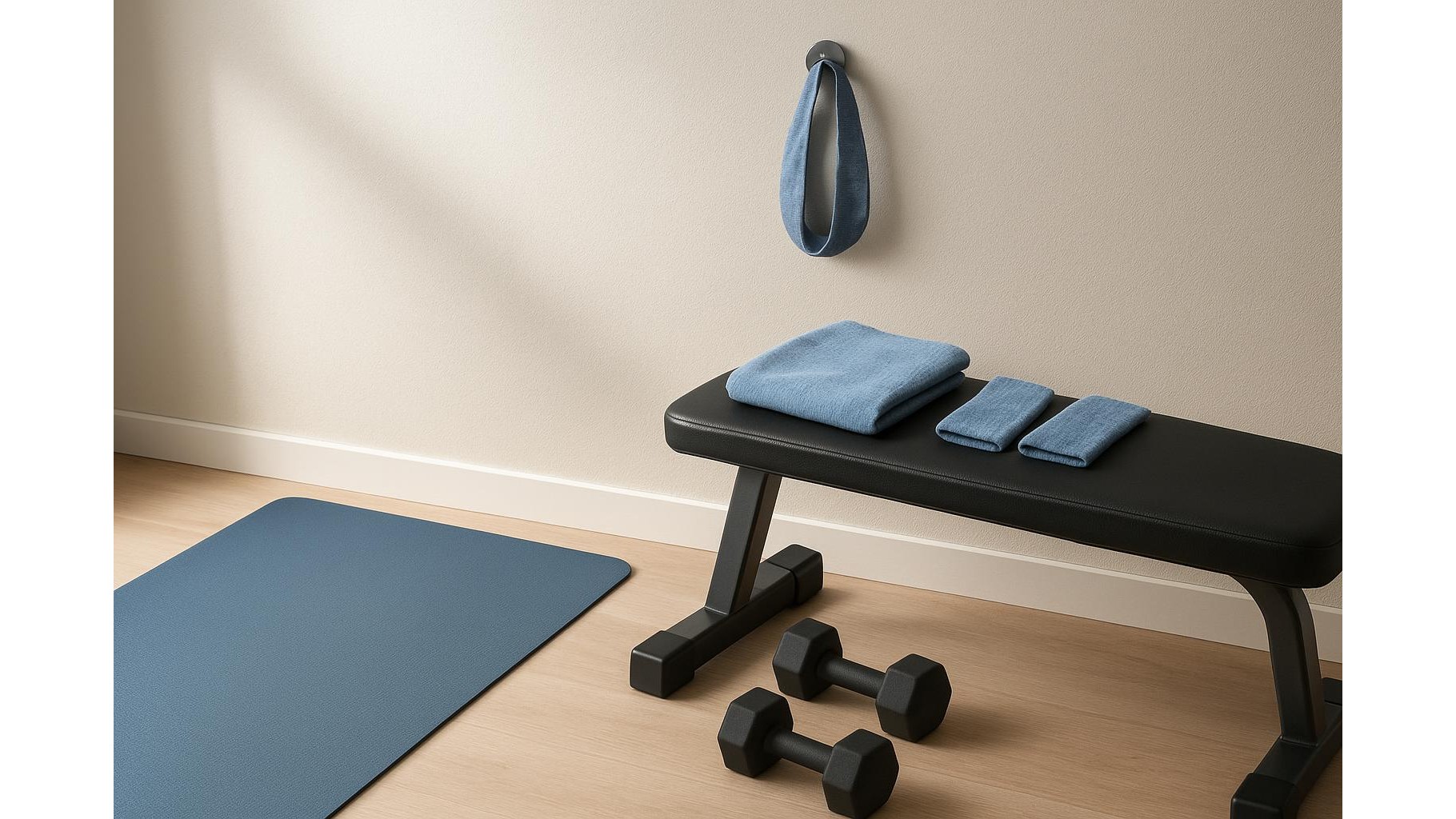
When you select a home workout towel, fabric is your first decision. Microfibre towels are ideal for home gyms because they are extremely lightweight, compact and quick-drying. Look for blends of polyester and polyamide with a soft, low‑pile texture that glides over the skin without irritation. A good gym towel should be large enough to cover a bench or yoga mat but still easy to handle; dimensions around 80–100 cm in length strike a balance between coverage and portability. Check that the towel is labelled as fast-drying and that it remains effective after repeated washes. Odour control often comes from anti-odour or antimicrobial finishes applied to the fibres, which inhibit bacterial growth and keep the towel fresher between washes. Prefer models that can be machine‑washed at 40 °C or higher, without fabric softener, to preserve absorbency.
Features to look for in sweat-wicking headbands
A quality sports headband is essential if you do HIIT, cycling or any cardio where sweat runs down your forehead. Choose moisture-wicking fabrics such as microfibre polyester, nylon blends or performance cotton that draw perspiration away from the skin and spread it over a larger surface to speed up evaporation. The inner side should be soft and non‑abrasive, especially if you wear it for long sessions. For comfort, a wide design offers more coverage and stability, while a slim band works better for low‑impact training or under headphones. Pay attention to fit and elasticity: the headband must stay in place during burpees and jumping jacks without creating pressure points. Seamless or flat‑seam construction minimises chafing. If odour is a concern, look for mentions of anti-odour technology or silver‑ion treated yarns that limit bacterial growth on the fabric and keep the headband fresher between washes.
Choosing wristbands for grip and comfort
Wrist sweatbands are often underestimated but can significantly improve comfort and safety in a home gym. Their main role is to intercept sweat before it reaches your hands, maintaining a secure grip on dumbbells, kettlebells and pull‑up bars. Classic cotton‑rich terry bands remain popular because they are soft, highly absorbent and easy to wash. For intense or longer sessions, consider technical fabrics that combine cotton with polyester or elastane, enhancing breathability and drying speed. The band should fit snugly without restricting circulation; multiple sizes or stretchy knit constructions help adapt to different wrist circumferences. Easy maintenance is essential: prioritise bands that can handle frequent machine washing without losing elasticity or piling. Dark colours tend to hide stains better, while lighter tones make it easier to see when the band needs washing, which is useful to prevent odour build‑up.
Drying speed, odour resistance and hygiene routines
To keep your home workout textiles hygienic, focus on both material properties and daily habits. Quick-dry microfibre and performance blends not only feel more comfortable during exercise but also spend less time damp after washing, reducing the window for bacteria and mould to grow. Look for labels mentioning anti-bacterial, anti-odour or silver-ion treatments, especially if your workout area is poorly ventilated. However, these finishes are not a replacement for good hygiene: hang towels, headbands and wristbands fully open after each session, avoid leaving them piled in a gym bag, and wash them regularly depending on intensity of use. For most home athletes, washing towels and headbands after one or two hard workouts is a good baseline, while wristbands may need more frequent cleaning because they sit close to the skin and collect sweat and skin cells. Avoid fabric softeners and very low‑temperature cycles, which can reduce absorbency and hygiene.
Building a practical sweat-control kit for home training
Putting together a simple sweat-control kit makes home workouts smoother and helps protect your equipment over time. Aim to have at least two or three microfibre gym towels in rotation so one is always dry and ready, plus a couple of headbands and pairs of wrist sweatbands to alternate between sessions. Store them near your workout space to build the habit of using them consistently. When you shop online, read product descriptions carefully to verify fabric composition, size, drying time and washing instructions, and pay attention to user reviews that mention odour control and durability. By prioritising quick‑dry, odor‑resistant accessories and matching them with a smart cleaning routine, you keep your home gym fresher, more inviting and safer for every training style, from yoga flows to heavy lifting.
The right combination of quick-dry towels, sweat-wicking headbands and wristbands transforms your home workouts, keeping you comfortable while protecting your gear and your skin. Focus on breathable, high‑absorbency fabrics, verified anti-odour technologies and straightforward maintenance, and build a small rotation of accessories so you are never forced to train with damp, musty kit. This simple investment in sweat management makes your home gym cleaner, more hygienic and far more enjoyable to use every day.