
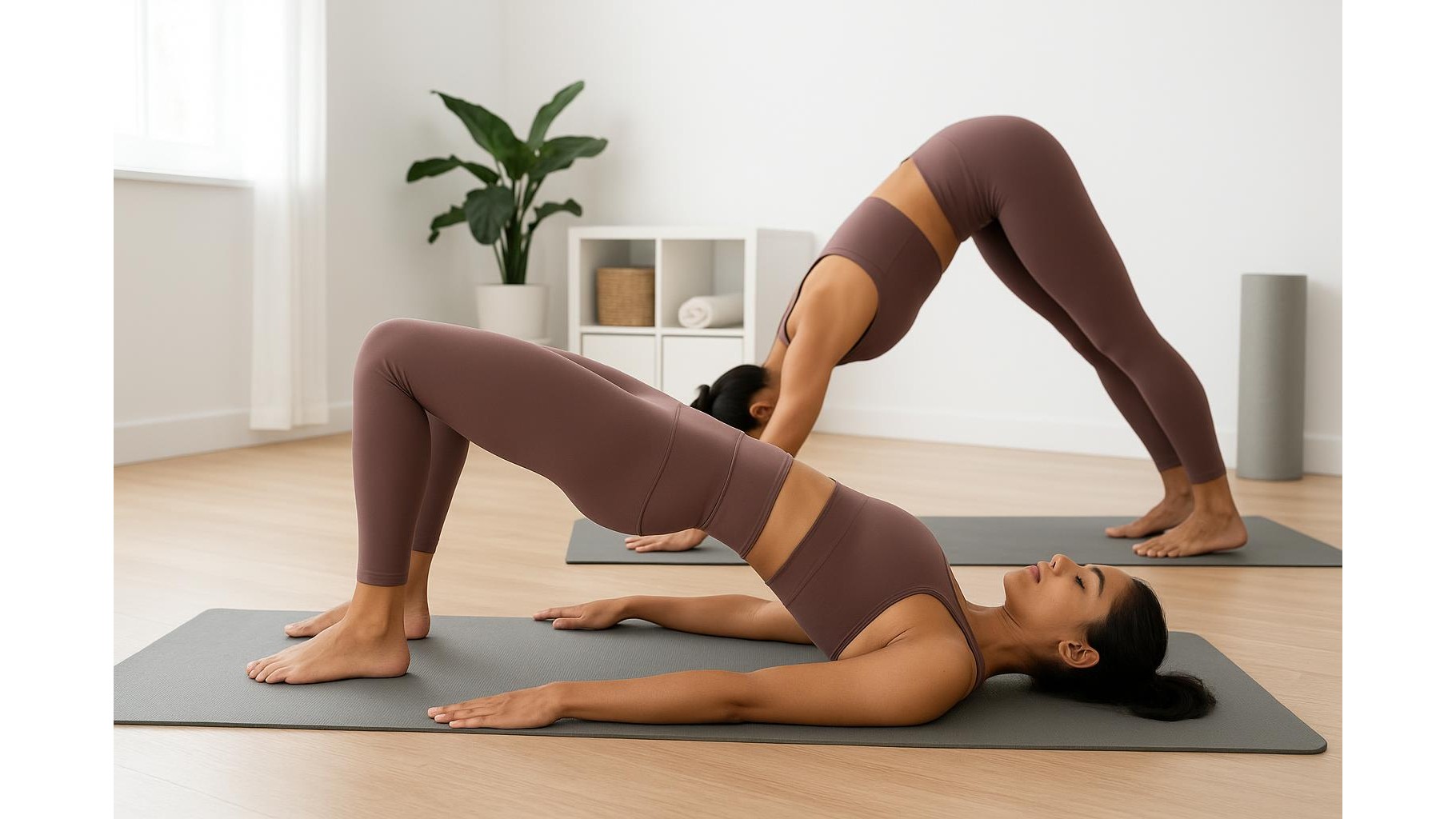
When your home routine includes plenty of floor work, glute bridges and playful inversions, the wrong outfit can turn every set into a battle with your clothes. Choosing home workout tops and bottoms that stay put means paying attention to cut, coverage and fabric so you can focus on form instead of tugging, twisting and re‑tucking.
Why fit matters more for floor work and inversions
During planks, down dogs and hip bridges, gravity pulls your clothes in every direction. Loose hems roll, necklines gape and shorts migrate north. For inverted training, you want pieces that feel like a second skin without digging in. Look for compressive but stretchy fabrics with at least 15–20% elastane, and avoid oversized tees or flimsy bralettes that flip over your head. A secure, gently compressive fit around the ribcage, waistband and leg openings is key for staying covered through roll‑ups, pikes and handstand drills.
Tops and sports bras that won’t ride up or gape
For upper body comfort, prioritise longline sports bras and fitted tanks over cropped, ultra‑low styles. A longline bra with a broad underband hugs more of your torso, so it is less likely to curl or creep up when you stretch overhead or tip upside down. Choose high necklines or medium coverage to prevent spillage during bridges, hollow holds and side planks. Wide, adjustable straps distribute pressure and keep everything anchored without cutting into your shoulders. If you prefer layering, pair a compressive longline bra under a close‑fitting tank with a bit of elastane so the outer layer moves with you instead of billowing. Steer clear of slippery cotton that stretches out and stays damp; moisture‑wicking synthetics keep their shape better across repeated sets.
Shorts that stay in place during bridges and core work
For home workouts heavy on glute bridges, hip thrusts and ab circuits, the right workout shorts can make a huge difference. Opt for mid‑thigh or biker‑length cuts with a supportive, high waistband. Short shorts tend to creep up when your legs move away from your body or when you rock through your spine, which can leave you constantly pulling at the hem. Look for flat, wide leg bands or gently compressive hems that grip without digging in, and check for four‑way stretch so the fabric recovers after deep lunges or splits. Avoid loose running shorts with split sides; their flowy outer layer easily rides up during floor sequences and inversions, leaving you feeling exposed every time you roll or pivot on the mat.
Leggings that won’t roll, slide or go sheer
When it comes to leggings for inversions, the waistband is crucial. Aim for a high‑rise style that reaches just below your ribcage with a wide, double‑layer band. This helps stop rolling when you move from standing to seated, or swing your legs overhead. A combination of nylon or polyester with elastane offers the right balance of grip and stretch, and a matte, medium‑thick fabric feels more secure and less likely to go sheer in deep squats or splits. Try a quick at‑home test: perform a downward dog, a bridge and a toe‑touch—if the waistband stays flush against your torso and you are not adjusting the crotch or ankles, you have found a pair that will support you through more dynamic inverted flows.
Fabric, seams and details that keep everything in place
Beyond basic fit, details make the difference between a distraction‑free set and a constant struggle. Choose flatlock seams or minimal seam designs to avoid chafing where your body meets the floor, especially along the waistband and inner thigh. Look for gusseted crotches in leggings and shorts for better mobility and less pulling. Moisture‑wicking, quick‑dry fabrics help your clothes stay snug instead of sagging as you sweat. Finally, consider darker colours or subtle patterns for extra confidence during hip hinges and hamstring stretches; they are more forgiving if the fabric stretches. When every seam and panel supports your movement, your home gym clothing becomes an ally instead of a distraction.
Choosing home workout tops and bottoms that stay put is about matching smart design with the way you actually move: rolling, reaching, hinging and going upside down. Prioritise high, secure waistbands, longline and high‑neck bras, mid‑thigh or longer shorts, and supportive fabrics with plenty of stretch. Once your outfit is dialled in, you can focus fully on form, breathing and progression—confident that your gear will stay exactly where it should.









