Training without sneakers in your home gym can feel freeing, but it also exposes your feet to slippery floors, impact and bacteria. The right pair of home workout socks will give you extra grip, cushioning and breathability, so you can lift, stretch or do Pilates safely and comfortably. In this guide we look at what to consider when choosing anti-slip socks and how to keep them hygienic over time.
Table of contents
Why grip socks matter for home workouts
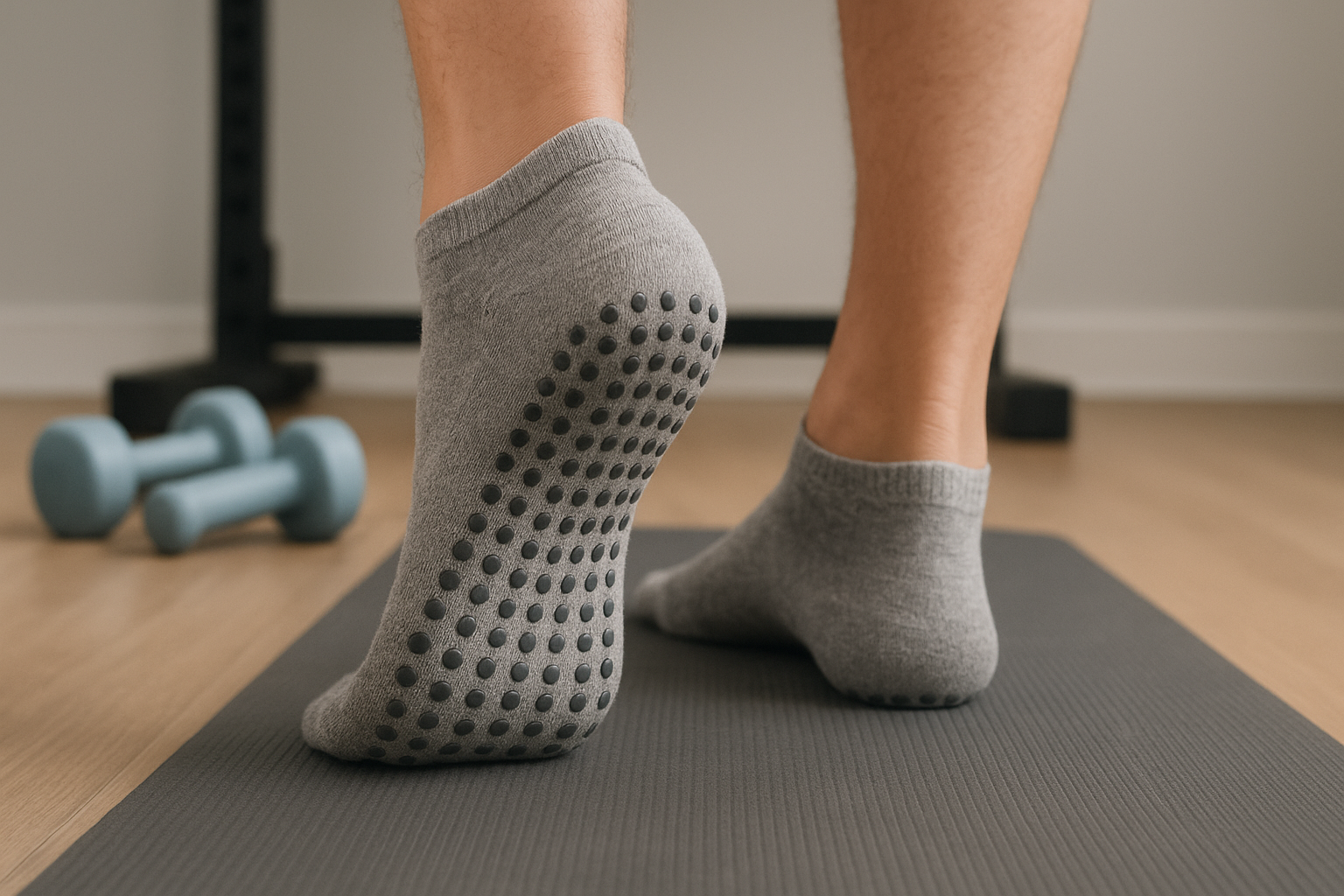
When you train without shoes, your feet become your main contact point with the floor. Grip socks with silicone or rubber dots on the sole help prevent slipping during squats, lunges, yoga flows or Pilates reformer work. They create extra traction on laminate, tile or vinyl floors that are often found in home gyms. A good pair of grip socks should feel secure without sticking uncomfortably to the surface, allowing you to adjust your stance between exercises. This enhanced stability not only lowers the risk of falls but also lets you focus on technique, particularly in unilateral moves like split squats or single-leg deadlifts.
Cushioning and arch support for strength training
If you do bodyweight or light strength training at home, look for socks with targeted cushioning under the heel and forefoot. Extra padding absorbs impact during jumps, burpees and step-ups, and can reduce pressure on the metatarsals when you hold static positions like low squats. Some home workout socks add slight arch compression to cradle the midfoot and limit fatigue in longer sessions. The key is balance: too much thickness can make your stance unstable, but a medium-density terry or padded zone under key contact points offers comfort while keeping you grounded for lifts and balance work.
Breathable materials and sweat management
Because you are wearing socks directly on the floor, breathability is crucial. Choose moisture-wicking fabrics such as performance blends with cotton, polyester and elastane that move sweat away from the skin. Mesh panels on the top of the foot or around the toes help release heat, which is especially useful in high-intensity circuits or longer cardio sessions on a mat. Avoid very thick cotton-only socks that trap moisture and dry slowly; damp socks increase the risk of blisters and unpleasant odours. A snug, ventilated fit around the midfoot and toes keeps your feet cooler and more comfortable from warm-up to cool down.
Hygiene tips when training without shoes
Working out barefoot or in socks only means more direct contact with dust, sweat and bacteria on your home gym surfaces. To keep things hygienic, reserve a set of home workout socks that you use only for training and wash them after every session at the recommended temperature. Clean your yoga mat and floor regularly with a suitable disinfectant or a mild cleaning solution to reduce germs. If your feet tend to sweat heavily, consider rotating between two or three pairs so each can dry fully between uses. Check the grippy soles for wear: once the dots are worn down or peeling, traction and cleanliness both suffer, making replacement a smart move for foot health.
Choosing the right style for your training style
Different home workouts call for slightly different sock features. For yoga and Pilates, low-cut or ballet-style grip socks with exposed toes can improve toe splay and balance, while still providing anti-slip soles. For strength sessions and circuits, ankle-length socks with fuller coverage offer more protection against friction from benches or equipment. Consider whether you prefer a tighter, compressive feel or a more relaxed fit; both can work, as long as the sock does not bunch up or twist when you move. If you train on colder floors, a slightly thicker model can add warmth, while still giving you the traction and support you need.
Choosing the right home workout socks means balancing grip, cushioning, breathability and hygiene. By focusing on anti-slip soles that keep you stable, fabrics that manage sweat, and regular cleaning habits, you can train safely and comfortably without shoes in your home gym. Investing in a few dedicated pairs tailored to your favourite workouts will help protect your feet, improve performance and make every session feel more secure and controlled.