Building a home gym often means training on a mix of tiles, hardwood and rubber flooring. The right pair of home workout socks can transform how safe, stable and comfortable you feel during lifting, mobility work and light cardio. Instead of grabbing any pair from your everyday drawer, it pays to think about grip, cushioning and thickness so your feet stay supported and your movements stay sharp.
Table of contents
Why grip matters on mixed home gym floors
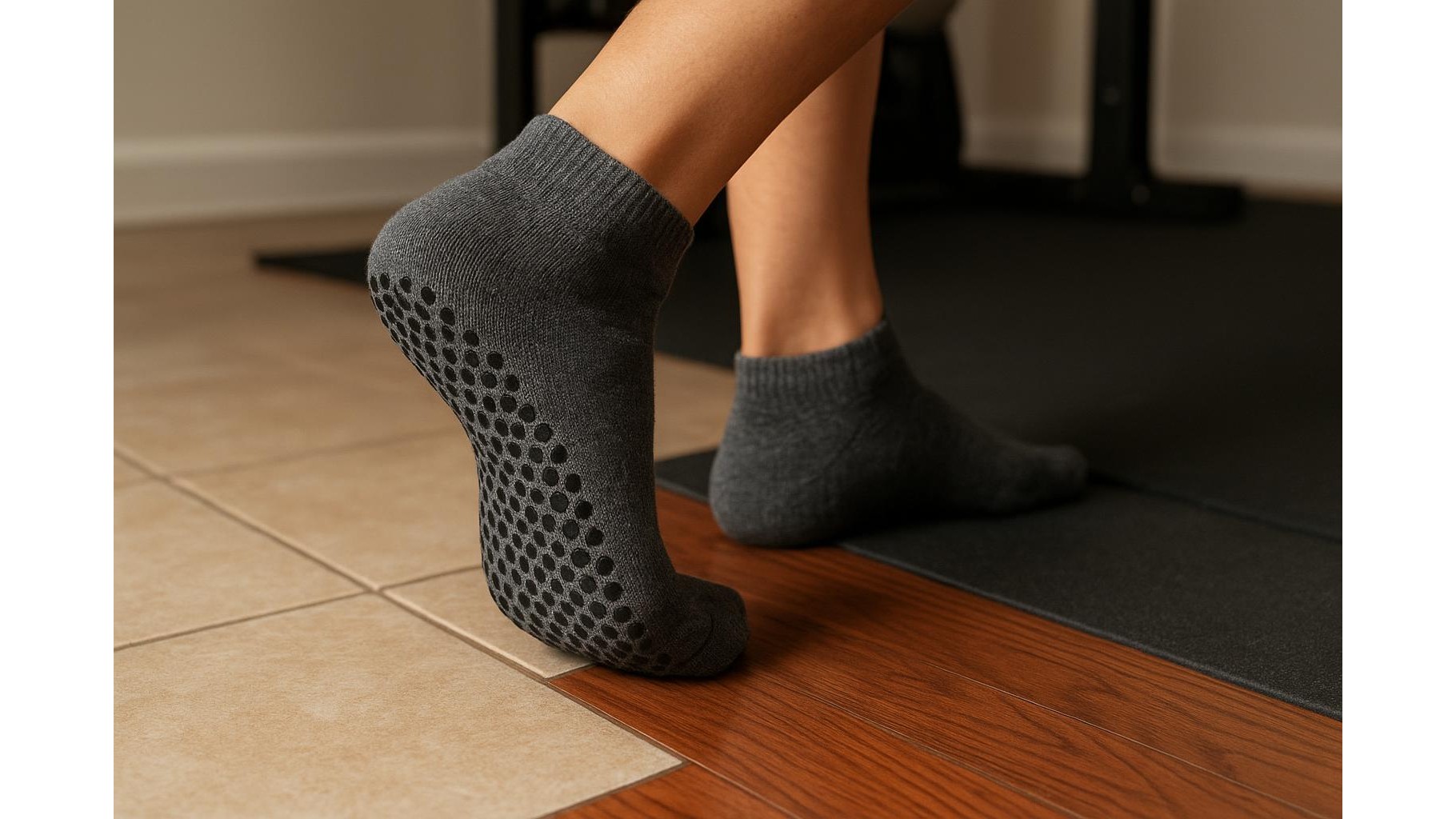
If your home gym is in a living room or garage, you probably move between smooth tiles, slightly dusty hardwood and a rubber mat. On tiles and wood, regular cotton socks can feel like skating; on rubber, they can twist and bunch. For exercises like split squats, Romanian deadlifts or push-ups, you need non-slip grip socks with silicone or rubberised patterns under the forefoot and heel. These improve traction when you drive through the floor, helping your knees track correctly and your hips stay aligned. For yoga and Pilates, grip around the toes lets you lengthen and rotate without slipping, which is crucial for balance drills and static holds.
Choosing cushioning for lifting, mobility and light cardio
The best cushioning level depends on what you do most at home. For strength training with free weights, you actually want a relatively low-profile, firm sock, especially under the heel, so you can push evenly through the floor without wobble. For mobility flows and bodyweight work, a bit more padding under the ball of the foot and around the toes can reduce pressure on hardwood or older tiles. If you do light cardio such as step routines, low-impact aerobics or short skipping sessions inside, look for socks with targeted cushioning at the heel and forefoot but not so thick that your foot feels unstable inside training shoes. Matching your cushioning to your main activity keeps feet comfortable without sacrificing ground contact.
Getting thickness and temperature just right
Sock thickness is a balance between temperature management and feedback from the floor. On cold tile in winter, a slightly thicker, brushed interior can keep your feet warm and relaxed, which is especially helpful before mobility or stretching. On the other hand, if you train hard on rubber flooring in a small room, thicker socks can trap heat and sweat, making them slippery inside shoes. For most home gyms, a medium-thickness, breathable knit works well year-round: thin enough for good control during lifts, but not so minimal that you feel every ridge of the floor. Look for mesh zones on the top of the foot and snug ribbing around the arch so the sock stays in place as you switch surfaces.
Material, fit and hygiene in a home environment
Because home workouts often mean training barefoot or in socks only, material choice and fit are crucial. Prioritise blends with moisture-wicking fibres such as polyester or nylon mixed with cotton or bamboo for softness. This keeps your feet drier when you move from a cool floor to a warmer mat. A secure fit around the midfoot and heel prevents the fabric from twisting when you pivot or lunge, which reduces friction and blisters. In a home setting, hygiene also matters: opt for socks that wash well at higher temperatures and dry quickly, so you can rotate pairs across the week. Anti-odour treatments or naturally odour-resistant yarns are a bonus if you keep your gym corner in a shared living space.
How many pairs you really need and how to use them
To keep your routine simple, start with two to three pairs of dedicated home workout socks. Use a thin, grippy pair for heavy lifting days or sessions focused on stability and balance. Reserve a slightly cushioned pair for mobility flows, yoga, Pilates and light cardio on tiles or hardwood. If your home gym has a large rubber mat area, it can help to choose one pair specifically for that zone so the grip pattern wears in evenly. Rotate your socks, letting each pair dry thoroughly between sessions, and inspect the grip pads from time to time; once they look flattened or polished, traction on smooth floors will drop and it is time to replace them. Treating socks as essential equipment, not an afterthought, will make every home session safer and more comfortable.
Well-chosen home workout socks give you better grip, appropriate cushioning and the right thickness for comfort across tiles, hardwood and rubber. By matching your socks to your main activities—lifting, mobility or light cardio—and considering material, fit and temperature, you turn an everyday item into a genuine performance tool. A small upgrade under your feet can unlock more stable lifts, smoother flows and more confident movement every time you train at home.