Building a home workout outfit as a teen does not have to be expensive or stressful. With a few smart choices, you can create a small, mix‑and‑match fitness wardrobe that feels comfortable, looks good, and supports your training as your body grows and your style evolves. This guide focuses on breathable fabrics, modesty and confidence, sizing for growth, and how to keep costs down while still feeling motivated to move.
Choosing breathable, sweat‑friendly fabrics
For home workouts, breathable fabrics matter more than logos. Look for tops and leggings made from lightweight polyester blends or cotton with added elastane, which help wick sweat away and stretch with you during squats, yoga or HIIT. Avoid thick, heavy cotton that keeps moisture in and can make you feel sticky after a few minutes of training. Instead of chasing trends, focus on simple, solid colours that can be worn with anything. A minimal starter kit might include two fitted T‑shirts, one looser tee for layering, and a pair of leggings or shorts in a dark colour that will not show sweat patches easily. This keeps your outfit practical, comfy and ready for any kind of session.
Balancing modesty, confidence and support
Many teens want modest workout clothes that still feel stylish. A good rule is to combine one fitted piece with one looser piece: for example, a fitted tank under a relaxed T‑shirt, or high‑waisted leggings with a longer top that covers the hips. This balance can help you feel confident when you are trying new moves, stretching, or filming progress videos. At home you may not have a changing room, so choose outfits that you can move in without worrying about gaps, slipping straps or see‑through fabrics. Dark colours, double‑layer tops and slightly thicker materials around the chest and hips can make you feel more secure. When you feel covered and supported, it is easier to focus on reps, not on your clothes.
Getting the right fit and planning for growth
As a teen, your body can change quickly, so think ahead when you build your starter fitness wardrobe. Instead of buying everything in a tight, trendy fit, consider choosing one size up for leggings and tops that you will wear often. A high‑waisted legging with enough stretch can stay comfortable as you grow taller, while drawstrings or elastic waists on shorts give extra flexibility. For tops, check shoulder seams and sleeve length rather than just how the body looks in the mirror: if the seams sit well and there is room to move your arms freely, the fit is probably right for workouts. Avoid very low‑rise bottoms or super‑cropped tops that may feel fine now but become awkward after a few months. Smart sizing means you buy less often and still feel good in your gear.
Building a small but versatile workout wardrobe
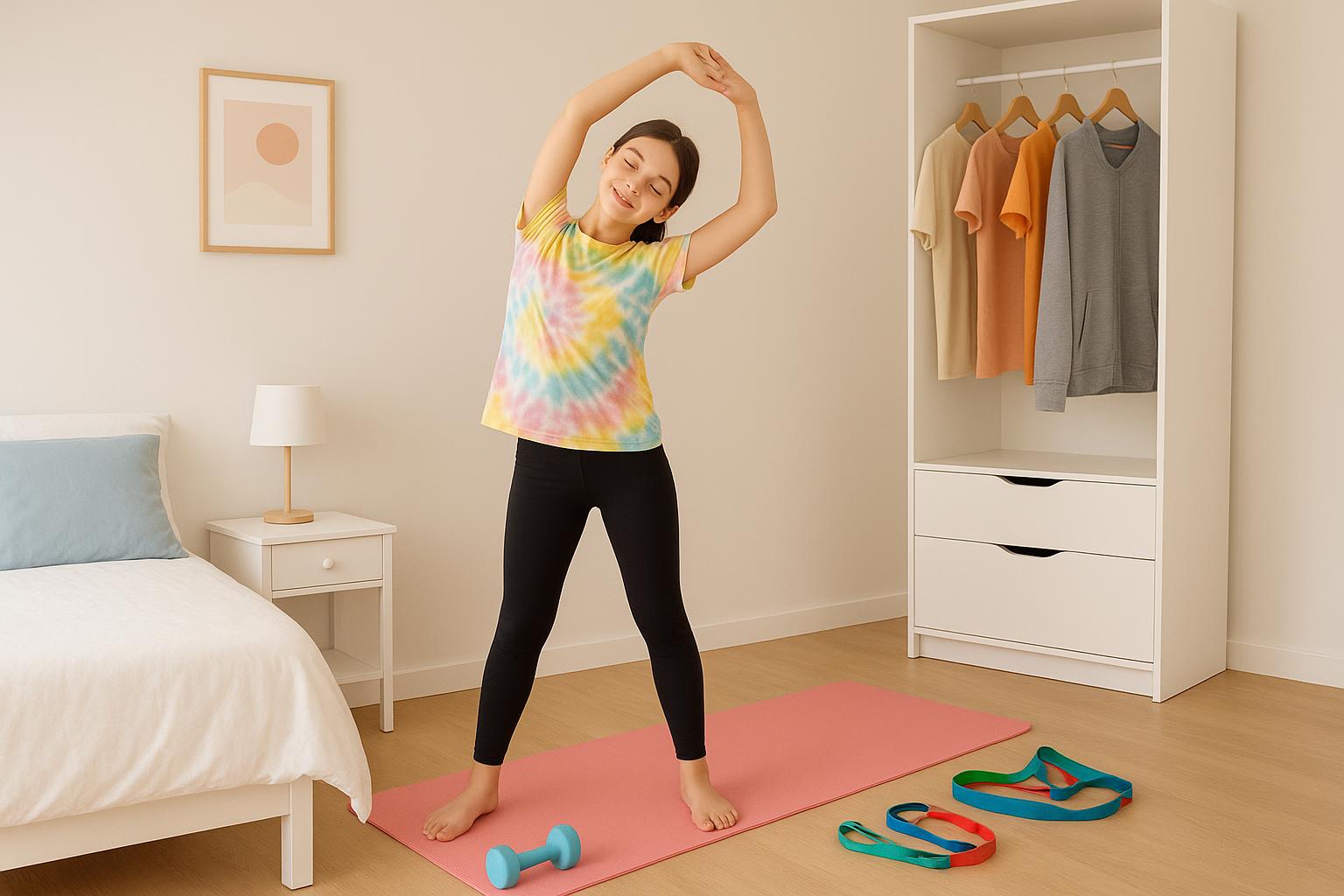
You do not need a huge closet to train effectively at home. A budget‑friendly plan is to aim for a capsule workout wardrobe: around three tops, two bottoms and one extra layer. For example, start with two breathable T‑shirts (one light, one dark), one tank top, one pair of full‑length leggings and one pair of shorts. Add a lightweight hoodie or zip‑up to wear before and after your session, especially if you work out in a cool room or garage. Choose colours that match easily, like black, grey, navy and one bright accent you love. This way you can rotate outfits without repeating the exact same look every day. Washing regularly and air‑drying your gear will help it last longer, meaning your small collection still feels fresh and reliable.
Saving money with smart choices and simple hacks
To stay on a budget, focus on function over fashion drops. Set a clear limit and prioritise items that touch your skin the most, like leggings and sports bras, investing slightly more in pieces that need to be supportive and durable. Then save on graphic tees or hoodies by re‑using comfortable clothes you already own. Avoid buying full sets just for social media; instead, use simple style tricks like layering colours, rolling hems, or tying a loose tee at the waist to give your look variety. Keep a small wish list and add new items slowly, only when something genuinely needs replacing. Building your wardrobe this way helps you develop your own fitness style while keeping your wallet – and your training motivation – in good shape.
Putting together home workout outfits for teens is about comfort, confidence and smart spending, not chasing every trend. By choosing breathable fabrics, respecting your own level of modesty, planning for growth and building a compact, versatile capsule of mix‑and‑match pieces, you create a wardrobe that supports your training for months or even years. Start small, learn what you like, and let your clothes work for you so you can focus on feeling stronger, healthier and more confident in every home session.