Training at home with sensitive joints can be challenging: you want the support of sleeves, wraps and extra layers, but not the sweaty, bulky feeling that often comes with them. The key is to build a home workout outfit around breathable compression, smart layering and moisture‑managing fabrics that protect your knees, elbows and wrists without overheating your whole body. In this guide, we’ll look at how to choose and combine gear so you can move confidently and comfortably in every session.
Choosing the right base layer for sensitive joints
Your base layer is the foundation of any home workout outfit, especially if you have sensitive joints. Look for lightweight, moisture‑wicking fabrics like polyester or nylon blends with added elastane. These materials pull sweat away from the skin, which keeps the area around your knee sleeves or elbow sleeves drier and cooler. Avoid heavy cotton tops and joggers: they trap moisture, cling to your joint supports and make everything feel hotter. A fitted, breathable T‑shirt or tank plus slim but not tight shorts or leggings gives a smooth surface under any extra joint gear, reducing chafing and hot spots.
How to use compression sleeves without overheating
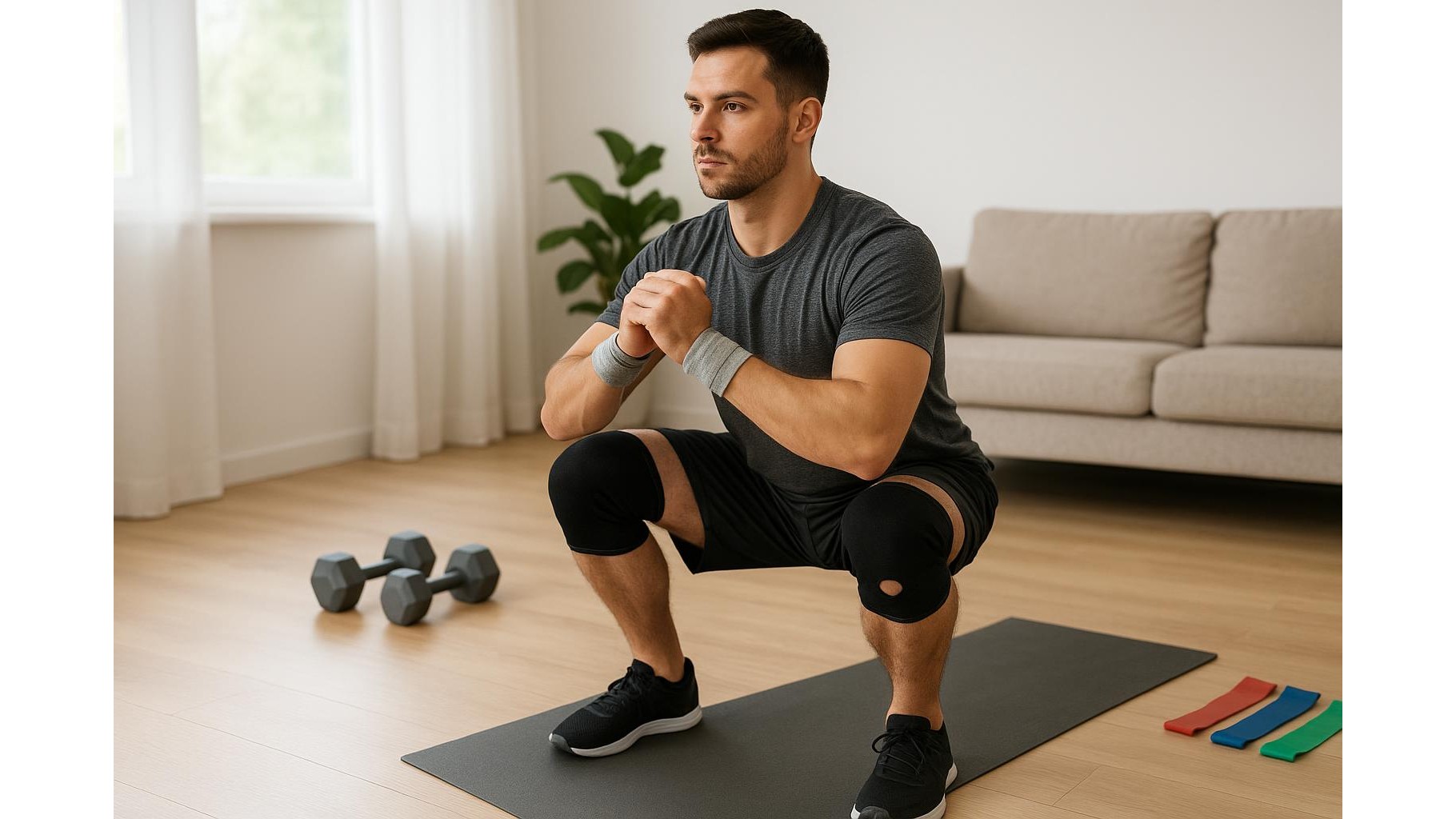
Compression sleeves for knees and elbows are ideal for people who need gentle support at home without the bulk of heavy braces. To stay cool, choose models made with thin, perforated or mesh panels behind the knee or elbow crease, and prioritise products marketed as “breathable” or “quick‑dry”. A proper fit is essential: if the sleeve is too tight, it restricts blood flow and traps heat; if it is too loose, it slides and you over‑tighten other layers to compensate. Combine sleeves with shorts or 7/8 leggings rather than full‑length thick joggers so more skin is exposed to air, and take sleeves off between workouts to let your joints cool fully.
Wrist wraps and light support for home strength sessions
Wrist wraps and light support straps are useful for push‑ups, dumbbell work and kettlebell training when your wrists are sensitive. For home workouts, aim for wraps made from a thinner, breathable elastic instead of stiff powerlifting‑grade material. This gives enough stability without overheating or cutting into the skin. Avoid wrapping too high up the forearm, which reduces air circulation and can cause sweating under the fabric. If you’re doing longer sessions, loosen or briefly remove your wraps between sets. Pair them with a short‑sleeve or sleeveless top so there’s less overlapping fabric at the forearm and wrist area, allowing heat to escape more easily.
Smart layering: keeping joints warm but the body cool
People with joint sensitivity often feel better when knees and elbows are warm, but that doesn’t mean you need a full heavy tracksuit. Use a layering strategy: start with a breathable base layer, then add light, loose outer layers that are easy to remove. For example, wear thin joggers or training tights with knee sleeves, plus a lightweight hoodie or long‑sleeve top over a breathable T‑shirt. Warm up with everything on, then remove the hoodie as your core temperature rises, leaving the joints covered but the torso cooler. Choose outer layers with zips or wide necks so you can quickly vent heat between sets without fully stopping your session.
Fabric and fit tips for comfort and joint protection
The right fabric and fit can dramatically change how supportive gear feels on sensitive joints. Prioritise smooth, flat seams around the knees, elbows and wrists to prevent rubbing under sleeves and wraps. Look for descriptions like “4‑way stretch”, “breathable knit” and “moisture wicking”; these indicate the garment can move with you and manage sweat. Avoid overly compressive leggings worn together with tight knee supports, as the double pressure can create heat build‑up and discomfort. Instead, combine moderate compression on the joint with a slightly looser fit on the limb, such as tapered joggers or straight‑cut training pants that allow air circulation while still keeping muscles comfortably warm.
Putting it all together, the best home workout outfits for sensitive joints blend targeted support with smart temperature control. Use breathable compression sleeves on knees and elbows, light wrist wraps for pressing movements, and moisture‑wicking base layers that let heat escape. Add or remove thin outer layers to keep your joints warm without overheating your whole body, and pay attention to fabric labels and fit details to minimise bulk and rubbing. With a little experimentation, you can build a home gym wardrobe that keeps your joints protected and your workouts comfortable, even on longer training days.