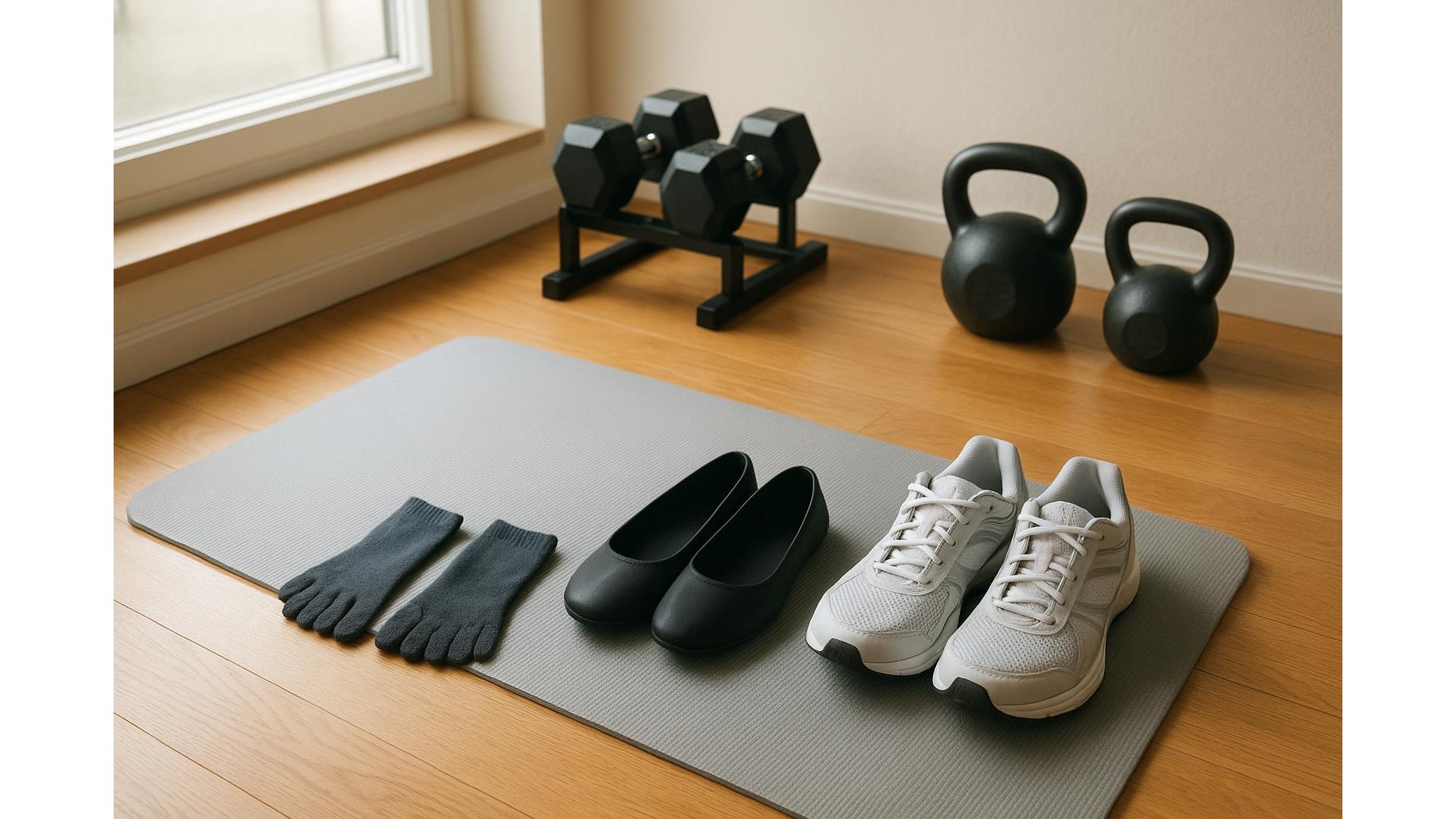
When you train at home, what you put on your feet matters almost as much as your dumbbells and yoga mat. The right mix of home gym socks, minimalist indoor shoes and classic trainers can improve grip, protect your joints and keep your space cleaner. This guide walks you through how to dress your feet for strength training, yoga and mobility, and cardio workouts on different types of floors.
Grippy home gym socks for yoga, Pilates and quiet sessions
For low-impact sessions like yoga, Pilates or mobility work, grip socks are often the most comfortable option. Look for socks with full-length silicone dots or patterns on the sole to keep you stable in downward dog, lunges and balance poses, and a snug elastic arch band so they do not twist on the foot. A breathable cotton or bamboo blend helps manage sweat, while closed toes keep your feet warmer on hard floors. Choose pairs that are fully machine washable at higher temperatures to improve hygiene, especially if you share the workout space with others.
Minimalist indoor shoes for lifting and stability work
When you switch to strength training, especially deadlifts, squats and kettlebell work, minimalist shoes shine. Aim for models with a thin, firm sole and a wide toe box so you can spread your toes and feel the floor. This improves stability and helps you push more efficiently through your feet. Zero-drop or low-drop soles keep your posture more neutral than heavily cushioned running shoes, which can feel wobbly under load. In a home gym, minimalist shoes also add a layer of protection from dropped plates while still letting you benefit from a “barefoot” feel. If you train on laminate or tiles, pick non-marking rubber outsoles to protect the surface from scuffs.
Classic trainers for cardio and mixed home workouts
For cardio sessions such as dance workouts, step circuits or HIIT that involves jumping jacks and skaters, a pair of classic trainers is usually the safest bet. Choose a gym-style training shoe rather than a soft, high-stack running shoe. You want moderate cushioning to absorb impact, lateral support for side-to-side moves, and enough friction to avoid sliding without sticking to the floor. Mesh uppers help your feet breathe during longer sessions. If you have a compact home gym, having one versatile pair of trainers reserved only for indoor use also keeps outdoor dirt off your mat and equipment.
Hygiene, odour control and floor protection
Footwear in a home gym is not just about performance; it is also about hygiene and floor protection. Always rotate at least two pairs of socks or shoes so each can dry fully between sessions. Wash grippy socks frequently, as the rubberised soles can trap sweat. For shoes, use breathable insoles and let them air out in a dry place after training. On the floor side, pair your footwear with a quality exercise mat or protective tiles, especially over hardwood or laminate. This prevents dents from weights and reduces noise for neighbours. Avoid dark soles that can leave marks on pale vinyl or wooden floors.
How to choose what to wear for each type of home workout
The best strategy is to match your footgear to your primary activity and your floor type. On non-slip mats and soft flooring, barefoot-style or minimalist shoes and grippy socks both work well; pick socks for slower work like stretching and shoes for loaded exercises. On smooth, shiny floors, choose footwear with reliable rubber grip and avoid going fully barefoot. If you have sensitive joints or are recovering from injury, a lightly cushioned trainer can take the edge off impact in cardio while you keep minimalist shoes for heavy lifts. Creating this simple rotation—grip socks, minimalist shoes, classic trainers—covers almost every home workout scenario.
In summary, dressing your feet intelligently can make your home workouts safer, more comfortable and more effective. Use grippy socks for yoga and low-impact sessions, minimalist shoes for heavy lifting and balance work, and classic trainers for cardio and mixed routines. Consider hygiene, joint comfort and floor protection when you build your home gym footwear lineup, and you will get more from every session.