Building a home gym is exciting, but your home gym outfit will have just as much impact on how confident, safe and consistent you feel. As a strength beginner you do not need a wardrobe full of trendy sets; you need a small, reliable drawer of clothes that stay put, breathe well and survive regular laundering without falling apart.
Comfortable tops that move with you
Your upper body needs a breathable training top that will not flap around during rows or get caught when you press overhead. Look for lightweight, moisture‑wicking fabrics and simple cuts with minimal seams. A classic example is a short‑sleeve performance t‑shirt in polyester or a polyester‑cotton blend, with a slightly relaxed fit through the torso so you can hinge, squat and press freely. Prioritise tops that are long enough not to ride up when you lift your arms, and avoid heavy cotton that stays wet once you start to sweat. One or two neutral‑coloured shirts are enough to start, and you can re‑wear them across multiple sessions as long as they dry quickly between workouts.
Bottoms that stay opaque and out of the way
For leg days at home, the key is mobility and coverage. You want shorts or leggings that stay put when you sink into a deep squat or set up for hip hinges. High‑waisted, squat‑proof leggings in a medium‑weight stretch fabric give you coverage for lunges, glute bridges and floor work without needing constant adjustment. If you prefer shorts, choose a pair that hits mid‑thigh with a secure waistband so they do not roll up during step‑ups or Bulgarian splits. Skip overly loose jogging bottoms that catch on dumbbells or drag on the floor. Start with one pair of leggings and one pair of fitted shorts; rotate them and only add more once you know what cuts and lengths you genuinely reach for most.
Support garments that protect joints and posture
Support is non‑negotiable in a strength training outfit, especially for beginners who are still dialling in technique. For women, a sports bra with medium support and wide straps prevents bounce during goblet squats, rows and light plyometrics; look for moisture‑wicking cups, a band that lies flat and a racerback or cross‑back design that does not dig into your shoulders. For everyone, consider light compression shorts or fitted base layers if you feel your hips and thighs benefit from extra stability while you learn new patterns. These do not need to be heavy or restrictive; the goal is a snug, secure feel that encourages good posture and lets you focus on bracing your core rather than tugging at clothing between sets.
Socks and footwear for stable lifting
Many beginners underestimate how important socks and footwear are to a safe home gym outfit. Cushioned, mid‑length training socks with reinforced heels and toes reduce friction during long sessions and keep your feet dry. For strength work, you want a stable base: flat, non‑squishy soles help you feel the floor during squats, deadlifts and presses. If you only have standard trainers, choose the pair with the firmest sole and widest base, or consider lifting in socks on a non‑slip surface if it is safe to do so. Prioritise grip and stability over fashion; a reliable pair of socks and solid shoes will support your ankles, improve balance and make every rep feel more controlled.
Fabric choices, layering and a simple starter checklist
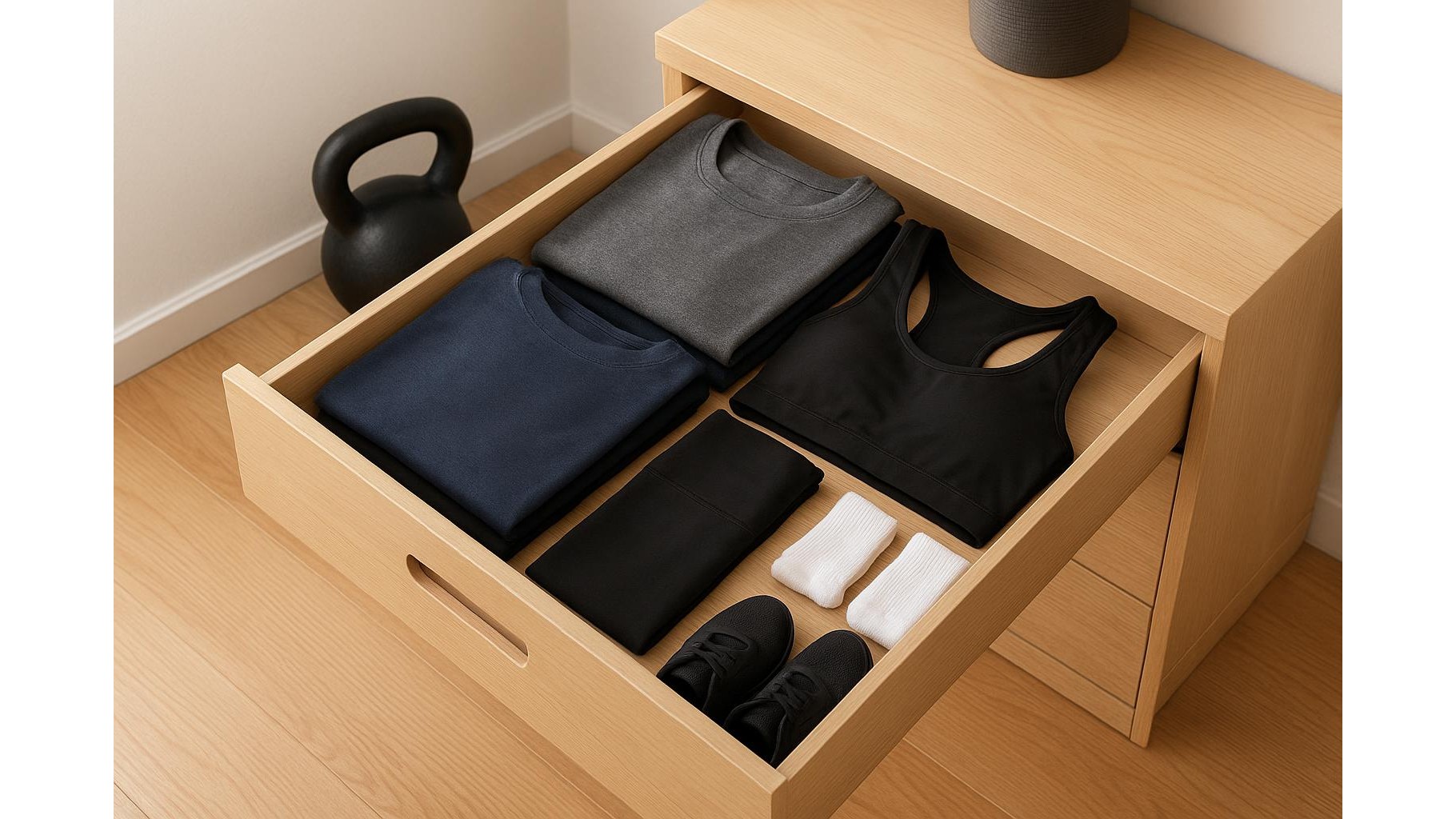
The best home workout clothes balance comfort, mobility and durability. Aim for moisture‑wicking synthetics or blends (polyester, nylon, elastane) that dry quickly, hold their shape and resist pilling. Avoid thick cotton for main layers; keep it for light cover‑ups you can peel off after warm‑up. Because temperature at home can fluctuate, use thin, breathable layers: a light long‑sleeve over your training tee, or a zip hoodie you can remove between sets. To build your first training drawer without overspending, start with this minimalist checklist: two breathable tops, one pair of squat‑proof leggings, one pair of fitted shorts, one supportive sports bra (if needed), two pairs of cushioned training socks and your most stable pair of trainers. With these basics, you will be ready for every session while you gradually discover what extra pieces—like gloves, headbands or additional layers—you truly need.
As you grow stronger, your home gym outfits should still feel simple, reliable and focused on performance rather than trends. Begin with a compact drawer of breathable tops, secure bottoms, supportive garments and stable socks and shoes; upgrade only when you understand how you train and what genuinely improves your comfort and confidence. That way, your wardrobe evolves with your lifting, not your impulse buys.