
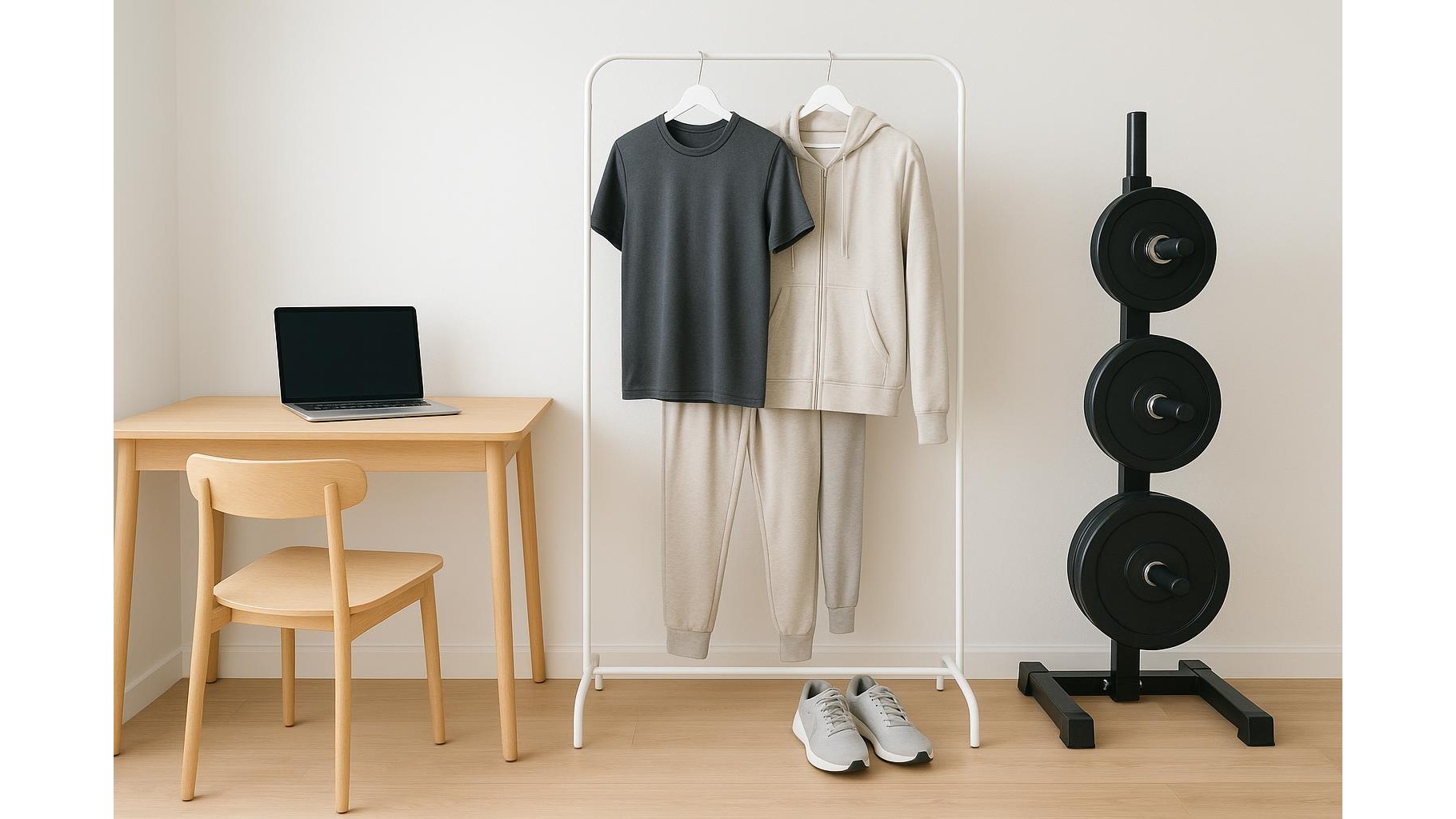
Building a smart home gym isn’t just about racks and dumbbells. If you want to move smoothly from laptop to lunges, you also need a minimal, versatile workout outfit that changes as quickly as your schedule. By centring your wardrobe on one breathable base layer and two easy overlays, you can stay comfortable for strength training, cardio and mobility work without overthinking what to wear.
Why a base-layer system beats a drawer full of clothes
A simple base-layer system removes decision fatigue and keeps you training. Instead of juggling outfits, you wear one reliable, moisture-wicking top and add or remove layers depending on the session. This approach saves time, reduces laundry and keeps your body in the right temperature zone for performance. In a home gym, where you might jump from work calls to kettlebell swings, having a go-to base that feels good against the skin and dries fast makes it easy to start your workout on time instead of procrastinating over wardrobe choices.
Choosing the ideal breathable base layer
Your base layer should be the piece you can wear for hours before and after training. Look for a lightweight, breathable T-shirt or tank made from technical fabrics that pull sweat away from the skin. Prioritise a close-but-not-tight fit so it won’t bunch during push-ups, rows or overhead presses. Flat seams or seamless construction help to prevent chafing in repetitive cardio. Neutral colours like black, navy or charcoal pair easily with any overlay and look presentable on video calls. If you train daily, consider buying two identical base layers so you can rotate them without rethinking your outfit every morning.
Overlay one: warm and light for strength and steady cardio
The first overlay should be a light insulating layer that keeps you warm during warm-ups and slower-paced sessions. A slim-fit zip hoodie or training sweatshirt in a soft, stretchy knit is ideal. You can keep it zipped while you mobilise your joints, then open or remove it as your body temperature rises. Prioritise raglan sleeves or flexible shoulders so it doesn’t restrict overhead movements like presses or pull-downs. Thumbholes are useful if your home gym is cold, while zip pockets let you stash keys or headphones when you transition outdoors. This layer should feel cosy without being bulky, so it doesn’t catch on resistance bands or kettlebell handles.
Overlay two: airflow and coverage for intense home cardio
The second overlay is your ventilated, quick-change layer for high-intensity intervals, bike sprints or jump-rope sessions. Opt for a lightweight zip-through jacket or woven training top with mesh panels or perforations for extra airflow. A full-length zip lets you instantly dump heat between intervals, and elasticated cuffs prevent sleeves riding up during fast arm work. Look for quick-drying fabric so it doesn’t feel clammy if you sweat heavily. This piece should also give enough coverage to step outside for a jog or cool-down walk without needing a full outfit change, making it ideal for small homes where you move between rooms or out to a balcony.
Bottoms and accessories that match every layer
To finish your home gym outfit system, choose one or two pairs of quick-dry training shorts or joggers that work with both overlays. A tapered leg avoids catching on pedals or equipment, while an elastic waistband with a drawcord keeps everything in place during burpees and squats. Add a pair of breathable, cushioned training socks and supportive cross-training shoes that handle strength, cardio and light agility work. Finally, keep a small rotation of sweat-friendly accessories within reach – such as a microfibre towel, headband or cap – so you can adapt to warmer or cooler rooms without digging through drawers.
With one reliable base layer and two smart overlays, your home workout wardrobe becomes as intentional as your training plan. Instead of wasting energy choosing clothes, you can focus on moving well, lifting more and recovering better. Build your system once, keep it within arm’s reach of your home gym space, and you’ll be ready to go from desk to deadlifts, sprints or stretching in minutes.









