Training in a home gym during the shoulder seasons can be tricky. One minute the room feels chilly, the next you are overheating after a few intense sets. The solution is smart layering: building a mid-season workout outfit you can easily adjust as your body warms up and cools down. By combining breathable base layers, light insulating pieces and quick on/off outer layers, you can stay comfortable without interrupting your session.
Start with a breathable base layer
The foundation of any good in-between season outfit is a moisture-wicking base layer. Look for lightweight tops made from synthetic blends like polyester and elastane that pull sweat away from the skin and dry quickly. A close but not compressive fit helps regulate temperature: tight enough to move with you, but not so tight that it traps excess heat. Short-sleeve or long-sleeve depends on how cold your room starts, but either way, this is the layer that usually stays on for the whole workout. Prioritise flat seams and soft fabrics to avoid chafing during high-rep sets, and choose neutral colours that pair well with the rest of your gym wardrobe.
Add a light insulating mid-layer
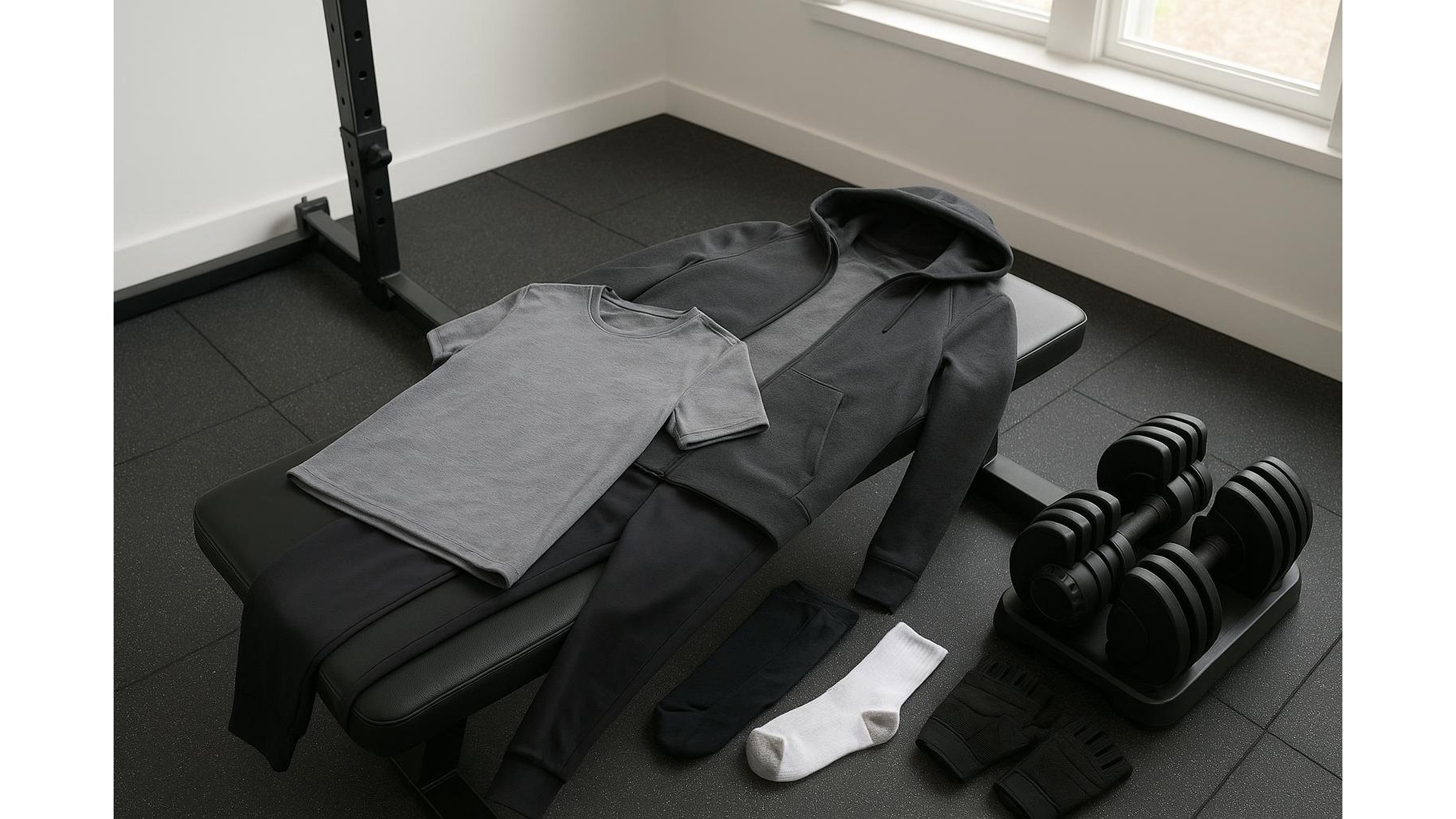
Over your base, use a thin, flexible mid-layer that you can peel off easily once your body temperature rises. Think lightweight long-sleeve tees, slim sweatshirts or technical half-zips. The key is low bulk and high mobility: raglan sleeves, stretch panels and minimal hardware keep your range of motion free for presses, rows and overhead movements. Start your warm-up with this layer on to take the edge off a cool room. As you move into heavier or faster work, slip it off and hang it nearby so you can throw it back on during rest periods or cool-down if you start to feel chilled again.
Use a zip hoodie as an on/off outer shell
For rooms that start genuinely cold, a lightweight zip hoodie works as a variable outer shell. Full-length zips are ideal in a home gym because you can fine-tune ventilation without fully removing the garment: unzip halfway for steady-state cardio, or all the way during heavy lifting sets. Look for breathable cotton-blend or technical fleece that feels warm without being bulky, plus roomy but not oversized fits so it doesn’t catch on dumbbells or resistance bands. Thumbholes and snug cuffs help seal in warmth between sets, while a hood is handy if your training space is near a draughty door or garage.
Balance bottoms: leggings, joggers and shorts
Your lower half also benefits from strategic layering. In cooler rooms, start with fitted leggings or compression tights to keep joints warm and supported. Over these, you can add lightweight shorts or loose joggers that you can remove once your warm-up is done. In slightly warmer conditions, breathable joggers alone may be enough, provided they have tapered legs that won’t interfere with footwork or get caught on pedals and machines. Prioritise fabrics that stretch in multiple directions so squats, lunges and hip hinges feel unrestricted. Adjustable waists and cuffs let you tweak fit as your body warms and any slight sweat build-up changes how fabrics sit against the skin.
Don’t forget socks, accessories and small adjustments
Small accessories make a big difference in mid-season comfort. Opt for performance socks that combine cushioning with ventilation panels to keep feet warm but not sweaty. A thin beanie or headband can take the chill off at the start of a session and is easy to pocket once you are warm. Fingerless gloves help in unheated garages where cold bars can sap your grip. Keep a lightweight towel handy: wiping off sweat between sets lets your layers work properly instead of becoming damp and clammy. Finally, remember that layering is dynamic—start slightly on the cool side, then unzip, roll sleeves or remove layers the moment you feel overheated, aiming to stay comfortably warm rather than hot.
Mid-season home gym training doesn’t have to mean shivering through warm-ups or cutting sets short because you are too hot. By building outfits around a breathable base layer, a removable mid-layer and an adjustable outer shell, you can respond quickly to changing room temperatures and training intensity. Add smart choices for bottoms, socks and accessories, and your not-too-hot, not-too-cold setup will support better focus, safer lifting and more enjoyable workouts in your home gym.