Building a reliable home gym is not just about racks, benches and dumbbells. What you wear next to your skin can make or break a session. The right base layer keeps you dry, reduces chills between sets and helps you focus on your lifts or cardio instead of on sweat and discomfort. In every season, a smart layering system starts with a moisture‑wicking first layer that manages sweat and temperature efficiently.
Table of contents
Why base layers matter in a home gym
At home, it is tempting to train in old cotton T‑shirts, but cotton absorbs sweat and stays wet, leaving you clammy and cold once the intensity drops. A performance moisture‑wicking base layer pulls sweat away from the skin and spreads it across the fabric surface so it can evaporate faster. This process, called capillary action, reduces irritation, helps prevent chills in cooler garages or basements, and keeps you feeling fresher for longer sessions. In a confined home workout space where airflow is often limited, this sweat management becomes even more important for comfort and perceived effort.
[p]
Best fabrics for moisture management
When choosing base layers for your home gym, prioritise technical fabrics over casual textiles. Synthetic fibres like polyester and nylon are popular because they transport moisture quickly and dry fast, which is ideal for high‑intensity interval training, circuits and spinning sessions. Many modern blends add a small percentage of elastane for stretch to move comfortably with your body. For those who prefer more natural options, merino wool offers excellent moisture regulation and odour resistance, making it a strong choice for cooler‑weather strength training. Avoid heavy cotton for your base layer; reserve it for loose outer layers if needed, because cotton traps moisture and can cause chafing and rapid cooling between sets.
Getting the right fit and construction
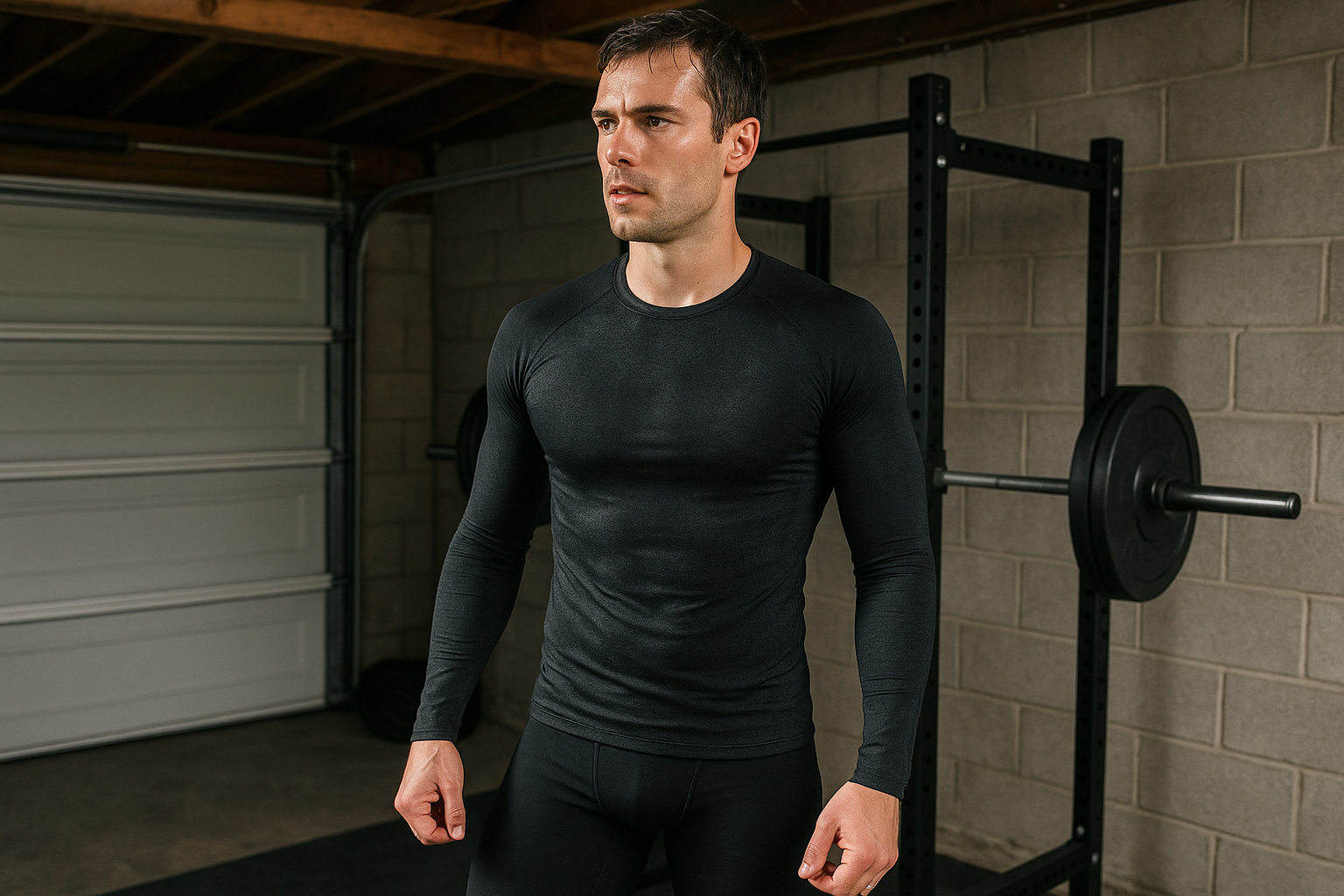
A good home gym base layer should fit close to the body without restricting movement. A slightly compressive fit helps the fabric maintain contact with your skin so it can wick sweat efficiently, but it should never feel constrictive around the chest, shoulders or hips. Look for flatlock seams to minimise rubbing during high‑rep movements or longer cardio sessions, and check that any labels are printed rather than stitched to avoid irritation. Details like raglan sleeves can improve shoulder mobility for presses and pull‑ups. For tops, a longer hem helps the layer stay tucked during deadlifts and kettlebell swings, while for bottoms a wide, soft waistband prevents digging in when you brace your core.
Staying warm in winter home gyms
Many home gyms live in garages, sheds or spare rooms that run cold in winter. A proper winter base layer is crucial for staying warm without adding bulky outerwear that restricts movement. Choose slightly thicker, brushed‑inside synthetic or merino tops and leggings that trap a thin layer of warm air while still wicking sweat. Start with a long‑sleeve base layer and full‑length tights under your regular training shorts or joggers. The goal is to be slightly cool at the beginning of your warm‑up and comfortably warm once you start working, not sweating heavily from the first set. If you tend to overheat, pair a warmer base layer with a light, breathable mid‑layer you can remove once your body temperature rises.
Keeping cool in summer and high‑intensity sessions
In summer, or if your home gym traps heat, your base layer strategy should shift toward maximum breathability. Opt for ultra‑lightweight, mesh‑panelled synthetic tops or sleeveless designs that encourage airflow while still drawing moisture away from your skin. For lower‑body work, moisture‑wicking shorts or 3/4 tights can prevent chafing without adding too much coverage. Light colours reflect heat better than dark ones, which can help in sun‑exposed spaces. Combine these layers with a fan or open windows to accelerate evaporation and cooling. Because these garments dry quickly, they can also be rinsed and reused more easily between sessions, which is ideal if you train at home multiple times per week.
Caring for your base layers for long‑term performance
To keep your base layers performing season after season, pay attention to care instructions. Wash them at lower temperatures with mild detergent and avoid fabric softeners, which can clog the fibres and reduce moisture‑wicking performance. Turn garments inside out before washing to protect surface treatments and reflective details. Air‑drying is best for preserving elasticity and fit, especially for pieces with a high elastane content. Rotate between a few sets of tops and bottoms to reduce wear on any single garment. Well‑maintained base layers will retain their stretch, odour control and wicking properties, ensuring your home workouts stay comfortable whether you are lifting in a cold garage in January or hitting intervals in a sweltering loft in July.
Choosing the right home gym base layers is a simple upgrade that has a big impact on how you feel during and after training. Focus on moisture‑wicking fabrics, a close but comfortable fit, and seasonal adjustments to thickness and breathability. With a small rotation of well‑chosen tops and bottoms, you can stay dry, warm or cool as needed, and dedicate your full attention to progressing your strength, conditioning and overall fitness at home.