When you train hard at home, your leggings become part of your strength training equipment. The right fit can help you move freely, brace your core and stay focused on every rep instead of tugging at your waistband. In this guide we compare high-waisted leggings and mid-rise leggings for squats, deadlifts and floor work, so you can choose the fit that actually works for your home gym sessions.
High-waisted leggings: why lifters love them
High-waisted leggings sit above the navel, wrapping the midsection and offering a hugged-in feel that many lifters appreciate. For beginners and experienced athletes alike, that extra coverage can boost confidence during deep squats, hip hinges and deadlifts. When you brace your core under load, a higher waistband helps you feel supported around the stomach and lower back. At home, where you might be training in closer quarters or in front of a mirror in your living room, that secure feeling can make it easier to focus on technique instead of worrying about exposure or rolling waistbands.
Mid-rise leggings: a balance of freedom and support
Mid-rise leggings usually sit just below or at the navel, offering a slightly lighter, less compressive feel through the torso. Many athletes prefer this for home workouts that blend strength moves with mobility and conditioning. During kettlebell swings, lunges or bodyweight circuits, a mid-rise fit gives the hips and ribcage more freedom to move and breathe. If you dislike fabric sitting high on your stomach or you tend to overheat in tight clothing, mid-rise can feel more natural while still providing enough grip on the hips to stay in place during normal lifting sessions.
Stay-put power for squats and deadlifts
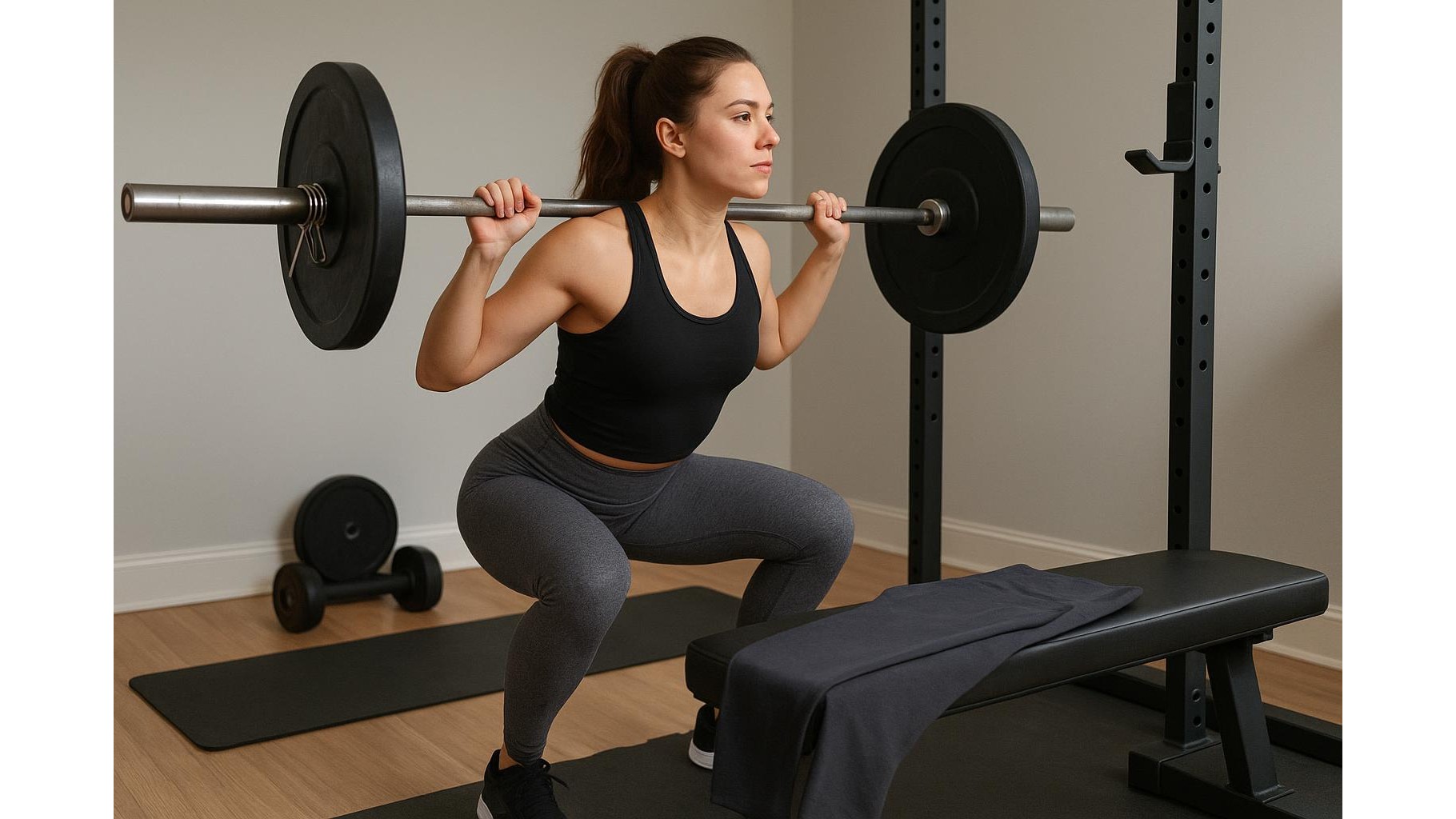
For barbell squats and deadlifts, the priority is stay-put power—leggings that do not slide down when you sit deep into the hole or pull from the floor. High-waisted designs often have the advantage here because they offer more vertical surface area and usually come with wider, more structured waistbands. This reduces rolling and gaping, especially if you lift heavy in your home rack. However, a well-designed mid-rise legging with good elastic recovery and a firm waistband can perform just as well, provided you choose the right size and a technical fabric blend that resists sagging under repeated hip flexion and extension.
Comfort and core support in a home gym setting
Training at home means you might wear your leggings for longer—through warm-ups, strength sets and post-workout stretching. Comfort matters as much as performance. High-waisted leggings can double as gentle core support, giving a compressive feel that some lifters find reassuring when bracing under load. They also tend to pair well with shorter tops or sports bras, keeping the midriff covered. Mid-rise leggings, on the other hand, may feel less restrictive around the diaphragm and are often preferred for longer sessions that include floor work, Turkish get-ups or pilates-style accessory training. If you’re sensitive to pressure on your stomach, a mid-rise cut might keep you more comfortable and consistent.
Floor work, mobility and everyday wear
Home strength training rarely stops at the barbell; it usually includes glute bridges, planks, push-ups and core sequences on the mat. In these positions, a too-loose waistband can creep down, while a too-tight one can dig in or roll. High-waisted leggings excel at staying flat against the torso during planks and hollow holds, reducing the need for mid-set adjustments. Mid-rise leggings may feel better for dynamic mobility flows or sessions that transition quickly from lifting to daily life—answering the door, doing chores or working at your desk. If you want leggings that can move from home gym to everyday wear, a mid-rise pair with moderate compression is often the most versatile choice.
Ultimately, there is no single winner between high-waisted and mid-rise leggings for home strength training—only the fit that matches your body and training style. If you prioritise maximum coverage, core support and stay-put power for heavy squats and deadlifts, high-waisted designs are likely your best ally. If you value freedom of movement, breathability and all-day comfort through mixed sessions and floor work, mid-rise leggings may serve you better. Try both rises with your typical home workout routine and pay attention to how often you need to adjust your waistband; the pair that lets you forget about your clothing and focus on your lifts is the one that truly works.