When you train at home, your leggings are more than just a style choice: they can act as functional equipment. Grip-panel leggings use textured or rubberised zones on the shins, knees or hips to add traction for floor work, self-assisted stretching and stability drills. Used well, this extra stickiness helps you lock into positions that would otherwise feel slippery on a mat or wooden floor. Used badly, it can catch, bunch and distract you from the session. This guide explains when integrated grip is genuinely useful and how to choose models that stay comfortable through both strength and mobility work at home.
How grip panels work during home workouts
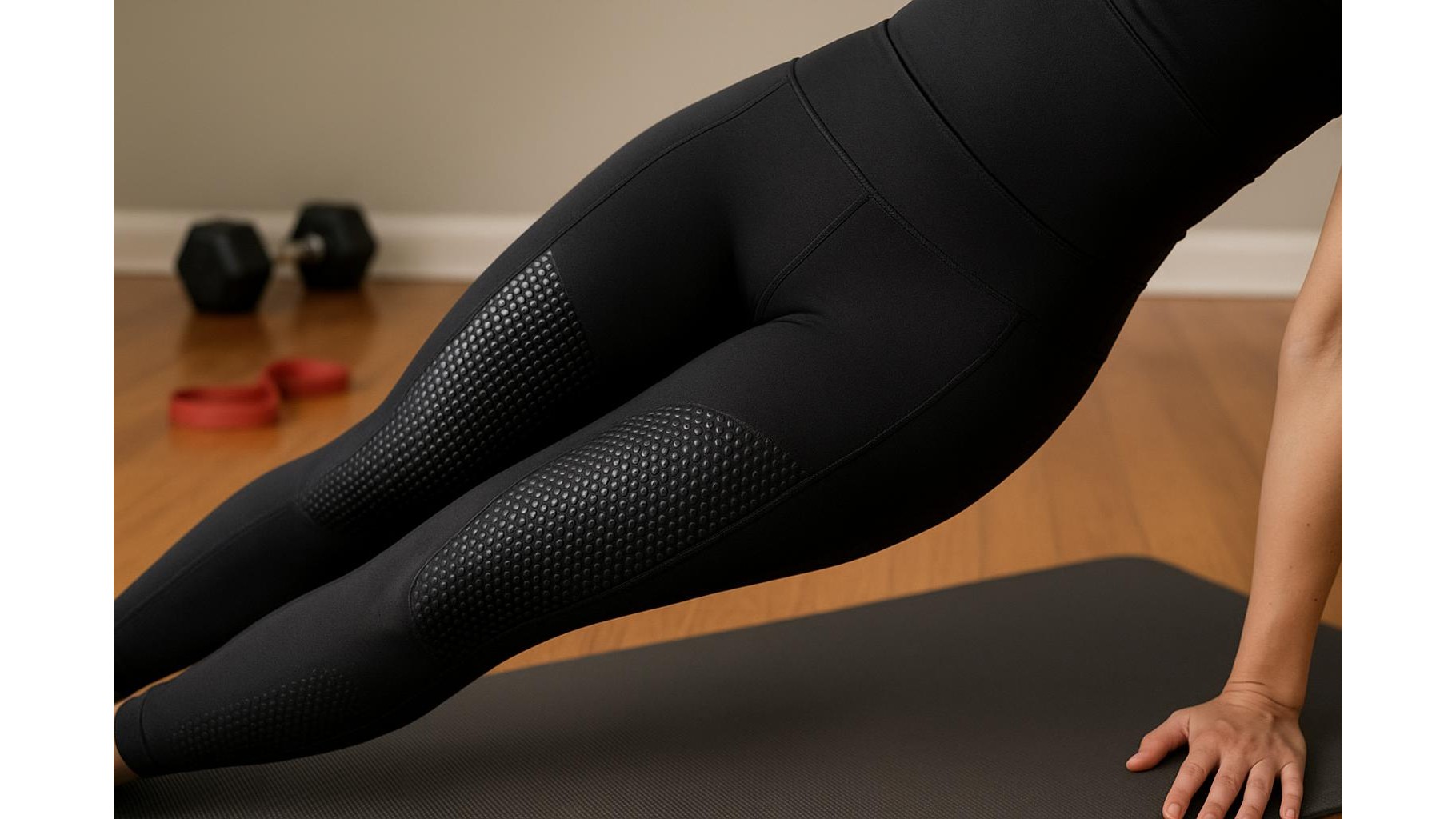
Grip-panel leggings add thin silicone or rubber-like prints on strategic zones so you have more friction where your body meets the floor or your own limbs. On the shins, this can stop your feet sliding away in kneeling planks, pike holds or couch stretches against a wall. On the outer hips and thighs, grip can help you anchor a yoga block or keep a foam roller in place for self-myofascial release. The key advantage at home is repeatability: once you learn where those panels sit, you can hit the same alignment every time, even without a coach watching. For bodyweight strength moves like Nordic curls, Bulgarian split squats with the back foot on a chair, or slow mountain climbers on a smooth surface, that added traction can be the difference between controlled tension and frustrating slips.
When integrated traction becomes annoying
More traction is not always better. Excessive or poorly placed grip zones can grab your mat every time you transition through lunges, make floor-based Pilates feel jerky, or dig in when you fold at the hips. If you love flowing yoga or dance-style conditioning, you may find aggressive shin panels catch during low lunges or sliding transitions. Grip around the waistband can also be a mixed blessing: a lightly textured band can hold the tights in place during burpees, but thick rubber strips may feel clammy and restrictive when you breathe deeply or fold forward. For home training that mixes strength and mobility, look for designs where the grip sits on the lower shins and outer thighs rather than all over, and avoid heavy 3D logos across the knees, which tend to bunch when you kneel.
Choosing fabrics that balance support and flexibility
Because grip print already adds structure, the best home training leggings use a medium-compression fabric that can stretch freely around hips and knees. Prioritise blends with a high percentage of elastane for four-way stretch and a smooth, matte finish; shiny fibres often feel slippery against equipment and can reduce the relative benefit of the panels. For floor work and self-assisted stretches, you want a fabric that glides under the grip zones but does not feel squeaky or plasticky against your skin. Check product descriptions for moisture-wicking and quick-drying claims, as rubberised prints can trap heat if the base cloth runs too warm. At home, where you may train without strong airflow, this temperature control is crucial to keep longer sessions comfortable and prevent the panels from feeling tacky in the wrong way.
Seams, waistbands and comfort during mixed sessions
Integrated grip only pays off if the seams and waistband stay comfortable in static holds and dynamic drills alike. Seek out flatlock or bonded seams around the inner thighs and behind the knees to minimise rubbing when you kneel, rock or slide. Avoid raised or bulky stitching running directly beneath any grip zones, because the combination of pressure and friction tends to produce hot spots on the skin. A high-rise waistband with light internal grip can prevent creeping during deadlifts and overhead presses, but make sure it does not cut across your abdomen when you sit back into deep squats or floor stretches. If you split your home sessions between strength circuits and long stretch routines, favour leggings marketed for both training and yoga rather than pure running tights, which often have tighter waist elastics and more aggressive compression.
How to match grip patterns to your favourite home drills
Before buying, map the grip pattern to your most common at-home exercises. If you do a lot of Nordic curls anchored under a sofa, shin panels that run from the ankle to just below the knee can provide crucial bite against the floor or mat. For self-assisted hamstring and hip stretches where you clasp your leg or use a strap, subtle grip along the back of the calf or thigh can help your hands hold position without over-squeezing. People who love stability drills such as side planks, Copenhagen planks or adductor slides may benefit from small grip patches along the outer thigh and hip, which reduce slippage on benches or stacked cushions. Conversely, if your routine leans towards high-rep circuits with frequent floor-to-standing transitions, you might prefer minimal, low-profile grip that supports key positions but still allows you to pivot and shuffle smoothly around your home gym space.
In a home gym where space and equipment are limited, grip-panel leggings can quietly enhance control in floor work, self-assisted stretching and stability drills. The goal is targeted traction, not full-body stickiness: choose grip placements that support your signature movements, fabrics that breathe and stretch, and seam constructions that disappear against your skin. With the right balance, integrated grip becomes a subtle performance aid that lets you focus on building strength and mobility instead of fighting unwanted slips.