Building a truly gender‑neutral home workout wardrobe is about more than grabbing the nearest old T‑shirt. The right mix of inclusive cuts, technical fabrics and flexible sizing can help everyone in a mixed household feel comfortable, supported and confident while training. Below, we look at how to choose versatile pieces that work on different bodies, and how to layer and style them so that nobody has to compromise on coverage, comfort or performance.
Start with neutral, performance basics
The foundation of a unisex workout wardrobe is a set of neutral basics that can be shared across bodies and styles. Think moisture‑wicking tees, breathable leggings and soft shorts in solid colours like black, navy and grey. Prioritise stretch fabrics with at least some elastane so they adapt to different shapes without digging in. Look for wide waistbands and flat seams that avoid chafing. Choose pieces with simple, minimal branding so everyone feels at ease wearing them, regardless of gender expression. When in doubt, a slightly looser cut is usually more inclusive and more forgiving for home workouts that involve a lot of bending and stretching.
Oversized T‑shirts for coverage and comfort
For tops, an oversized workout T‑shirt is one of the easiest ways to keep things gender‑neutral. Look for unisex or relaxed‑fit designs in breathable cotton or technical blends that manage sweat. A longer length offers extra coverage over hips and seat, which many people appreciate for squats, yoga or floor work. Drop‑shoulder cuts and wide sleeves leave room for different shoulder widths and bust sizes without feeling restrictive. Because these tees are not fitted, they let you layer a compression top or sports bra underneath without drawing attention, helping everyone in the household feel more confident while moving.
Supportive layers: sports bras and compression tops
Even in a gender‑neutral wardrobe, some bodies need extra support. A high‑support sports bra or compression crop can be treated like a functional base layer rather than a gendered garment. Opt for simple, streamlined designs in dark colours that sit flat under T‑shirts or hoodies. Wide, adjustable straps and a broad underband help distribute pressure and make fit more inclusive across sizes. For people who want more chest compression, look for medium‑to‑high compression tops with breathable panels to avoid overheating during intense sessions. The key is to normalise these pieces as standard performance gear, no different from any other technical layer in the drawer.
Leggings and shorts that fit every body
When it comes to bottoms, unisex leggings and training shorts can be surprisingly versatile if you pick the right details. Choose mid‑ to high‑rise leggings with a wide, soft waistband that will sit comfortably on straighter or curvier bodies. Four‑way stretch and squat‑proof fabrics prevent see‑through issues and make the same pair workable for different sizes. For shorts, look for 7–9 inch inseams for more coverage, plus inner liners or compression shorts if some household members prefer extra modesty. Drawstring waists and flexible size ranges (for example, S–XXL) allow sharing between partners or roommates. Neutral colours and subtle finishes keep the look inclusive and minimalist.
Layering with hoodies and mix‑and‑match pieces
Layering is where a gender‑neutral home workout wardrobe really shines. A soft, unisex zip hoodie can be thrown over any base layer for extra warmth during warm‑ups or post‑session stretching, while also adding psychological comfort for those who prefer more coverage. Look for mid‑weight fabrics that are cosy but not bulky, with roomy shoulders and sleeves to fit over bras or compression tops. Building a small capsule of mix‑and‑match pieces – two tops, two bottoms and one outer layer per person – lets everyone customise their outfit without doubling the amount of clothes in the house. Sticking to a cohesive colour palette means that any tee can work with any pair of shorts or leggings.
Size, fit and confidence in a shared wardrobe
The final step is making sure your inclusive workout gear actually serves every body in your space. Pay attention to size charts and consider sizing up for shared pieces so no one feels squeezed. When possible, prioritise brands that use unisex sizing or provide detailed measurements rather than gendered labels, as this helps everyone choose what feels best. Encourage each person to identify their preferred level of coverage – from fitted to loose, from cropped to longline – and stock at least one option that meets those needs. Ultimately, a gender‑neutral home workout wardrobe is about comfort, ease and confidence: when the clothes disappear into the background and you can focus fully on moving, you know you have built the right inclusive kit.
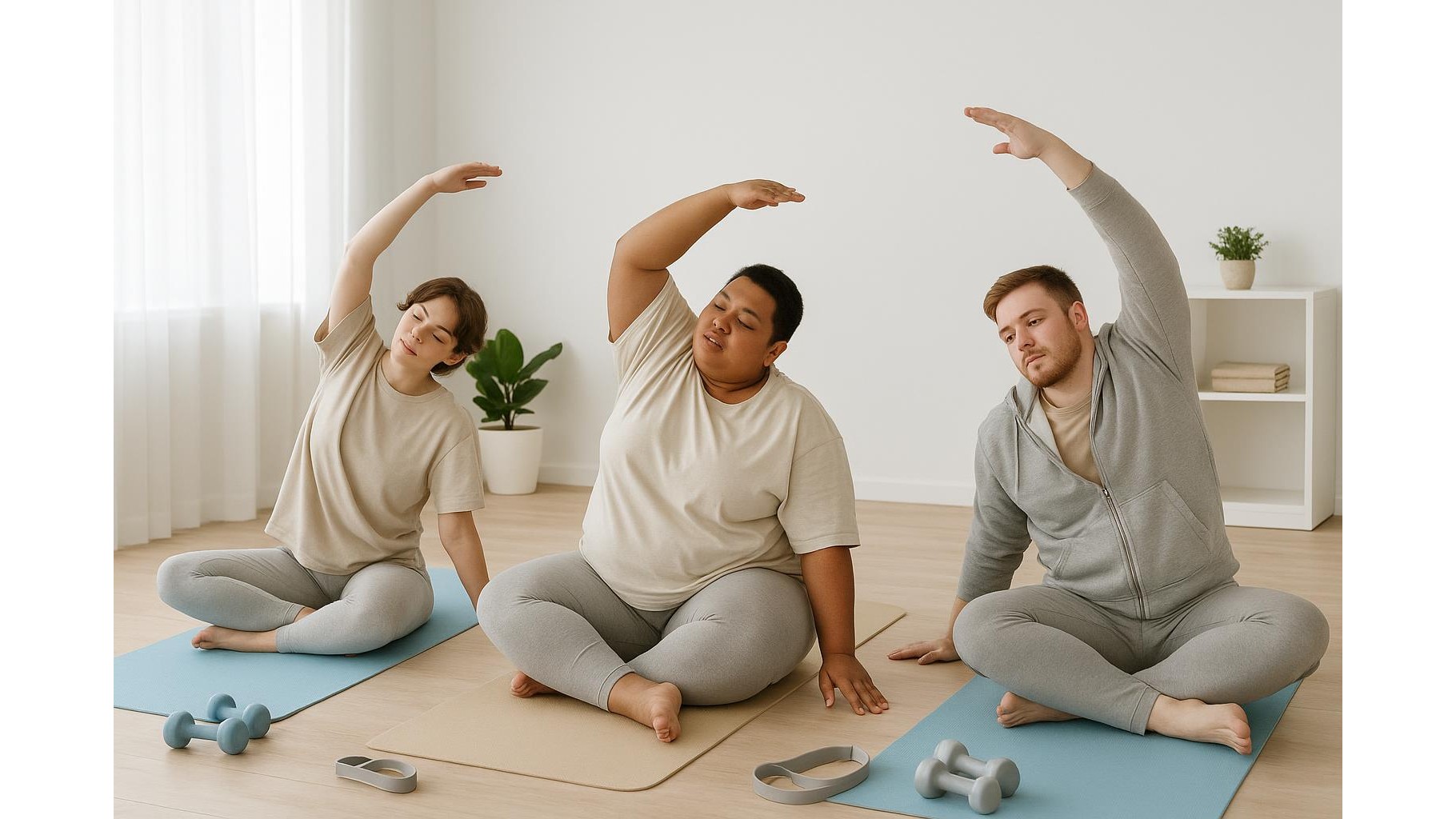
A possible accompanying image could show two or three people of different body types in a bright home gym corner, wearing neutral‑coloured unisex leggings, oversized T‑shirts and a zip hoodie, with yoga mats, dumbbells and resistance bands visible in the background.