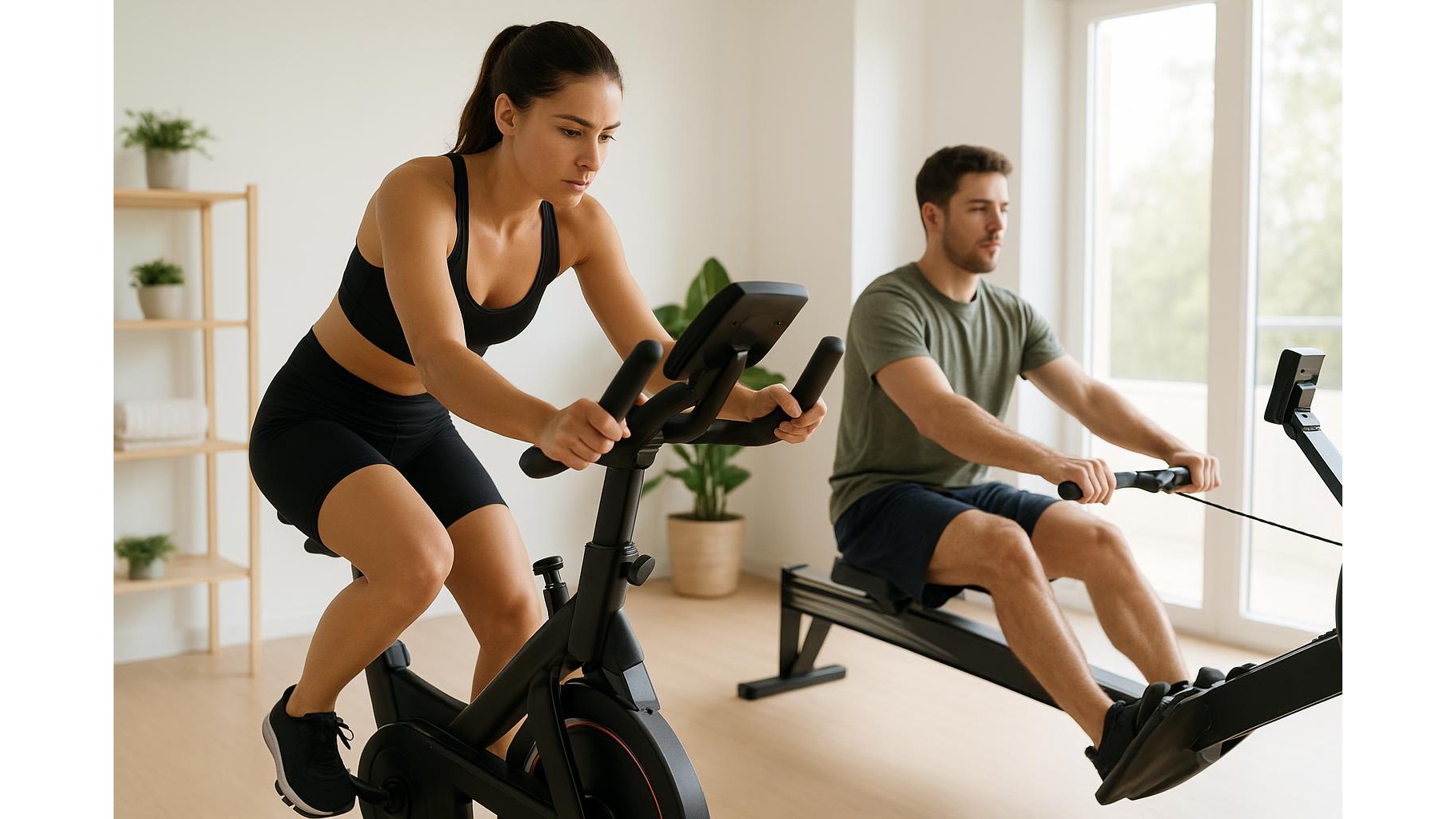
When you start doing longer home indoor cycling or rowing sessions, what you wear on your lower half can make the difference between a smooth workout and one ruined by chafing and discomfort. The main debate is between tight compression shorts and looser, relaxed-fit training shorts. Both can work well on a bike or rowing machine at home, but they behave very differently when it comes to support, breathability and how they layer with other gear. Here is how to decide what will actually feel best over the long haul.
Table of contents
Support and muscle stability for long cardio
Compression shorts hug the thighs and glutes, gently stabilising the muscles during repetitive movements like pedalling or rowing. This close fit can reduce unwanted jiggle, which some users find helps with perceived fatigue and post‑session soreness. For longer, higher‑cadence sessions on a spin bike, compression can also keep everything locked in place around the saddle area, which adds a subtle feeling of control. In contrast, relaxed shorts rely on a looser cut and often a built‑in mesh brief for basic support. They feel less restrictive, but on longer rows and rides you may notice more movement of the fabric and soft tissue, which some people find distracting. If you value a held‑together, performance‑oriented feel, compression wins here; if you hate any sense of tightness, relaxed fit will feel more natural.
Chafing, seams and saddle comfort
For home cycling and rowing, chafing is one of the biggest comfort issues. Compression shorts usually have flat, minimal seams and stay firmly in place, so fabric does not bunch up between your thighs or against the saddle or seat rail. This makes them excellent as a base layer under other shorts or on their own. The smooth surface also pairs well with a padded saddle or seat pad, preventing friction hot spots. Relaxed‑fit shorts, especially those cut for running or general training, can ride up as you pedal or hinge forward on a rower. The fabric may twist or fold, and thicker seams on the inner thighs can rub over time. If you are prone to inner‑thigh or groin irritation, a snug, low‑seam compression short is usually the safer option, sometimes combined with an anti‑chafe balm on very long rides or rows.
Breathability, sweat management and fabric feel
Indoor sessions can get very hot, especially on a bike trainer or rowing machine in a small room. Good moisture management is essential. Compression shorts are normally made from dense, stretchy synthetics that wick sweat quickly but may feel warmer, especially if the fabric is thick or has a high degree of compression. Look for versions marketed as lightweight or mesh‑panelled if you overheat easily. Relaxed‑fit shorts tend to feel airier thanks to their looser cut: air can circulate more freely around the legs, and many designs use lightweight woven fabric with side vents. However, the outer fabric can cling when soaked, and if the inner liner does not wick well, you may still feel uncomfortably damp. If your home gym runs hot and you favour a breezy feel, relaxed shorts have the edge; if you prioritise quick‑dry performance right against the skin, high‑quality compression works very well.
Layering strategies for cycling and rowing at home
One of the best solutions is to combine the strengths of both styles with smart layering. Many home athletes wear a pair of smooth compression shorts as the first layer to handle support, sweat and chafe prevention, then pull on relaxed‑fit training shorts over the top for coverage and a more casual look between sets or around the house. This two‑layer setup works particularly well if you switch between the bike, rower and light strength work in the same session. The base layer stays put during repetitive motion, while the outer layer gives you pockets, modesty and a looser silhouette. Just ensure the outer shorts are not too heavy or long, as excess fabric on the thighs can still catch on the saddle nose or rower rail.
Choosing the best option for your body and training style
Ultimately, the most comfortable choice depends on your body shape, skin sensitivity and the type of home cardio you do most. If you have thicker thighs or are sensitive to friction, a well‑fitting pair of compression shorts, possibly with a minimal pad for cycling, will likely deliver the smoothest experience on both bike and rower. If you favour shorter, mixed‑modality sessions and like to feel free to move, a light relaxed‑fit short with a decent internal brief can be more comfortable and less restrictive. Consider how long your typical rides and rows last, how hot your workout space gets, and whether you are willing to use a two‑layer system. Testing both styles on a few 30‑ to 60‑minute sessions will quickly reveal what truly feels best over time.
In the long run, there is no single winner between compression and relaxed‑fit shorts for home cycling and rowing, but there is a clear winner for you. Compression excels at support, stability and chafe prevention, making it ideal for longer or more intense sessions. Relaxed shorts offer greater airflow and an easygoing feel that many people prefer for everyday training. By paying attention to fit, fabric weight and how each option behaves during real workouts, you can build a small rotation that keeps every indoor ride and row comfortable from warm‑up to cool‑down.