Training at home puts all the focus on your body: how it feels, how it moves and how it recovers. Adding compression arm sleeves and compression calf sleeves to your home gym kit can offer extra support, warmth and comfort, but they are not magic performance tools. Understanding what compression can and cannot do helps you decide if they are worth it for your routine and how to choose the right pair for both upper and lower body.
What compression sleeves can (and cannot) do at home
Well‑designed compression sleeves gently squeeze the muscles, which can improve proprioception (your awareness of limb position), reduce muscle vibration during jumps or high‑rep work and keep joints warm between sets. Many people report that sleeves help them feel more “locked in” during push‑ups, curls, squats or jump rope. However, sleeves alone will not fix technique issues, prevent injury by themselves or dramatically boost strength. Think of them as a small performance and comfort accessory that complements good programming, progressive overload and proper warm‑ups, not a shortcut to results.
Key buying factors: fit, fabrics and pressure level
When choosing compression arm sleeves or calf sleeves, fit is the priority. They should feel snug from end to end without cutting off circulation or leaving deep marks on the skin. Measure the thickest part of your biceps or calf and compare it to the size chart; if you are between sizes, go up for comfort in longer sessions. Look for breathable, moisture‑wicking fabrics such as nylon‑spandex blends, and avoid overly stiff materials for everyday home workouts. A moderate compression level (around 15–25 mmHg in medical terms, even if not always specified) is usually enough for support and light recovery without feeling restrictive.
Arm sleeves for push‑ups, dumbbell work and desk days
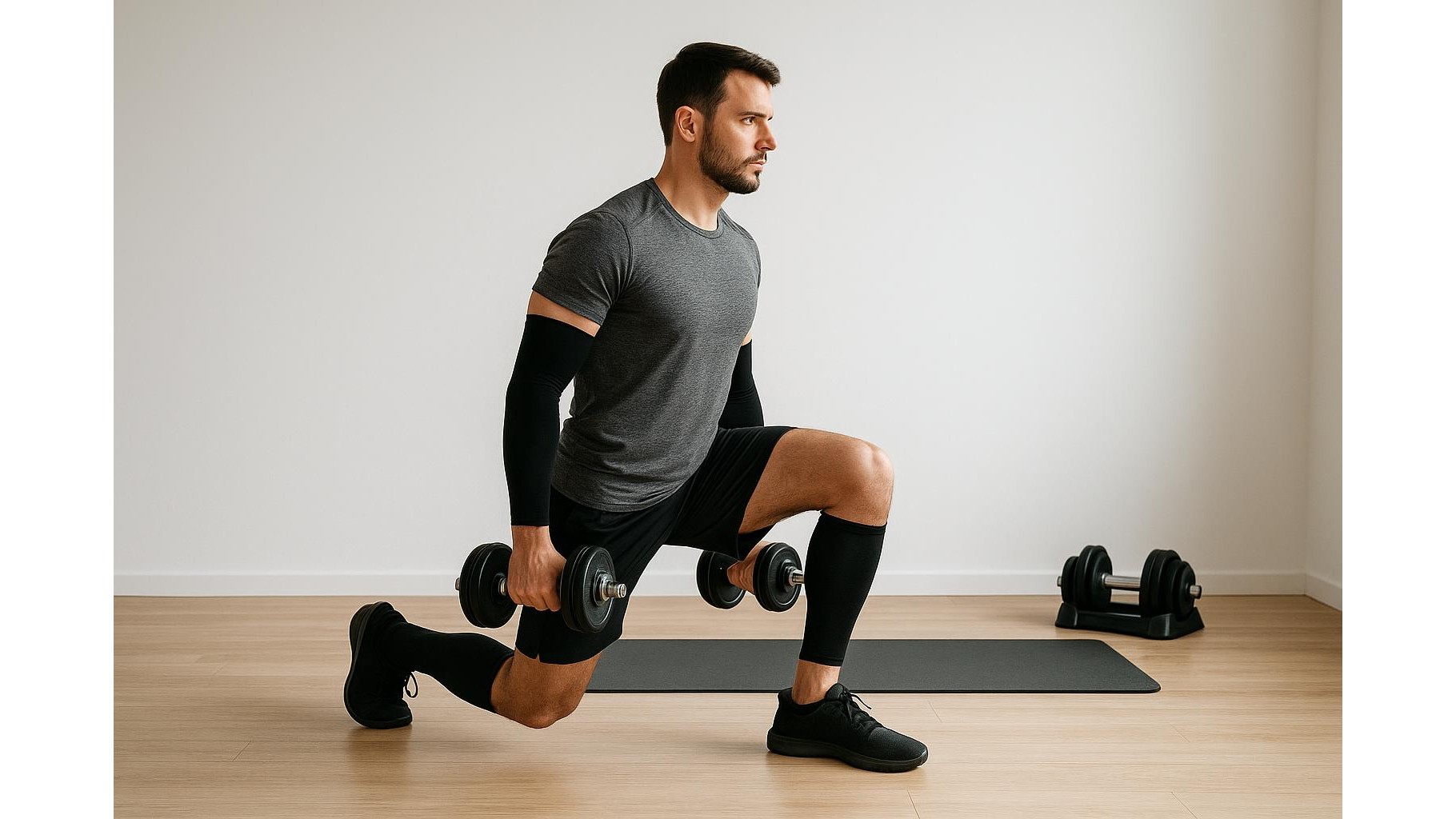
For upper‑body sessions, compression arm sleeves can help keep elbows and forearms warm during sets of push‑ups, bench dips, resistance‑band rows or dumbbell curls. They may also reduce fatigue if you combine home training with long hours at a desk or on a laptop, by supporting forearm muscles used for typing. Prioritise sleeves with flatlock seams to minimise chafing and a stay‑put cuff that does not roll down during planks or overhead presses. If you sweat a lot, lighter fabrics and mesh panels are more comfortable than thick thermal styles, which are better reserved for cold garages or balconies in winter.
Calf sleeves for squats, skipping and treadmill runs
Compression calf sleeves are particularly useful if your home routine includes lots of jump rope, bodyweight squats, step‑ups or treadmill runs. Supporting the calf and shin area can make repeated impact feel more comfortable and may reduce the “heavy legs” sensation later in the day. Choose a length that covers from just above the ankle to just below the knee so the pressure is evenly distributed. For cardio‑heavy sessions, look for quick‑drying, breathable fabrics and a close fit that does not slide when you sweat. If you often alternate strength and running, a pair you can put on and remove quickly is more practical than full compression tights.
How to use sleeves smartly in your weekly training
To get the most from compression arm sleeves and calf sleeves, integrate them strategically rather than wearing them all day. Use them in your warm‑up to raise temperature in elbows, forearms and calves, then keep them on for higher‑impact or higher‑rep sets where you want extra support. After training, you can keep them for a short recovery window, but they are not a replacement for walking, stretching or proper hydration. Rotate between at least two pairs so fabrics can dry fully between sessions, and wash them gently to preserve elasticity. Treat sleeves as one small piece in a bigger home‑training system built on smart programming, good sleep and sustainable habits.
In summary, compression sleeves for arms and calves are a simple, relatively low‑cost add‑on to your home gym setup. They can enhance comfort, keep muscles warm and provide a mild support feeling during push‑ups, dumbbell circuits, squats or cardio, but they will not replace solid technique or a structured plan. Focus on good fit, breathable fabrics and sensible compression levels, then test how they feel in your regular workouts. If they help you move with more confidence and consistency, they are a worthwhile accessory in your home fitness toolkit.