Building a small, color‑coded home workout wardrobe can make training feel smoother, more motivating and far less stressful. Instead of digging through drawers every time you exercise, you simply follow a color rule: one shade for strength, one for cardio, one for recovery. This simple system reduces decision fatigue, helps you stay consistent and even turns getting dressed into a mental warm‑up for the type of session you are about to do.
Why a color‑coded system works for home training
At home, it is easy to lose momentum when you waste time choosing what to wear. A color‑coded outfit system removes that friction: you wake up, see the color that matches your plan and put it on. Colors also act as psychological cues. A bold shade can prime you for an intense strength workout, while softer tones can nudge you into a calmer recovery session. Over time, these visual signals become habits, anchoring your routine and helping you stick to a balanced mix of strength, cardio and mobility across the week.
Choosing your colors for strength, cardio and recovery
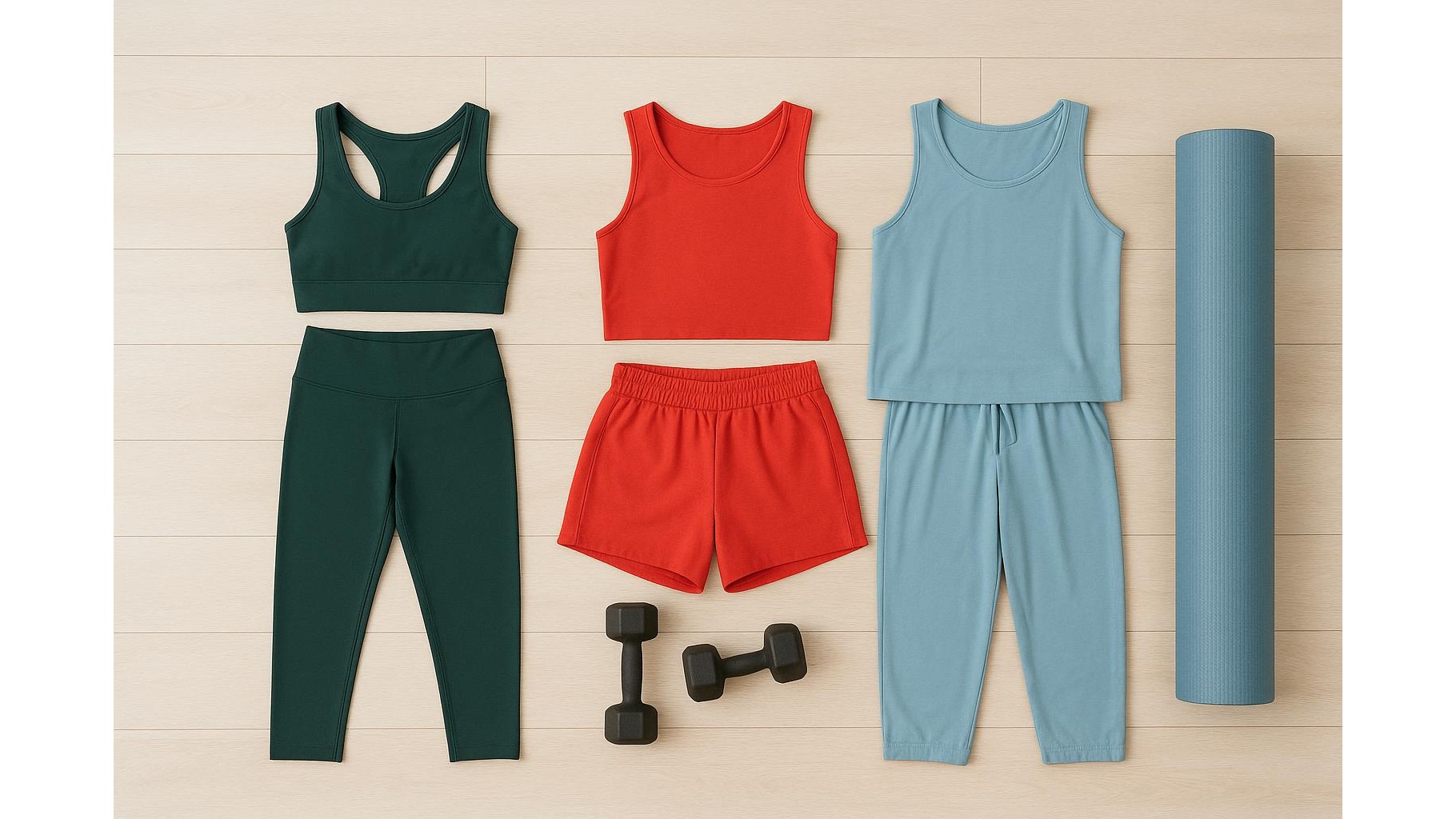
Start by assigning a clear color to each training type. For strength days, many home lifters choose strong, grounded tones like dark green, charcoal or black, which feel stable and powerful. For cardio days, pick energising colors such as red, orange or bright pink to boost arousal and motivation when you face intervals, circuits or bike sessions. For recovery days and yoga, softer hues like light blue, pastel lilac or beige create a calmer, restorative atmosphere. The exact color does not matter as much as using it consistently so that your brain quickly associates each shade with a specific style of training.
How to build a minimalist color‑coded home workout wardrobe
You do not need a huge closet to make this work. Aim for a minimalist workout wardrobe built around mix‑and‑match pieces. For each category—strength, cardio and recovery—choose one or two tops and one or two bottoms in your assigned color, plus a supportive sports bra if needed. Focus on breathable, quick‑dry fabrics that can handle frequent washing, and look for seamless or flatlock seams to avoid irritation during longer sessions. Keep silhouettes simple: fitted leggings or shorts, and either a cropped top or lightweight T‑shirt. With just a handful of pieces per color, you get a clear visual system without spending much or overfilling your drawers.
Organising your outfits to reduce decision fatigue
Once you have selected your pieces, organise them so the color‑coding is obvious the moment you open your wardrobe. You can fold clothes into three small stacks—strength, cardio, recovery—or dedicate one drawer section or shelf to each color group. Another option is to keep full outfits rolled together, bra and socks included, so you can grab‑and‑go. Consider placing your training plan nearby, either printed or on a whiteboard, and matching it visually to your colors—for example, green boxes for lifting, red for cardio, blue for stretching. This combination of planning and visual cues makes it much harder to skip sessions and much easier to start on time.
Using color cues to support motivation and balance
The real power of a color‑coded workout wardrobe shows up over weeks and months. When you see that your red cardio outfits have stayed untouched for days, you are reminded to add a conditioning session. When your blue recovery set appears more often, you may be honouring rest or perhaps avoiding harder work—both useful signals. Colors also help with habit stacking: as soon as you put on your strength color, you might automatically fill your water bottle, start your warm‑up playlist and move to your training space. Over time, this simple system turns getting dressed into the first rep of your workout, reducing resistance and helping you remain consistent even on busy or low‑energy days.
In summary, creating a small, color‑coded home training wardrobe is an easy, low‑cost way to streamline your routine, reduce decision fatigue and support balanced programming across strength, cardio and recovery days. By assigning each training type a distinct color, choosing a few reliable pieces and organising them clearly, you turn your clothes into helpful cues that guide your behaviour. Instead of wondering what to wear or what to do, you follow the shade of the day, step into your outfit and let the system carry you into better, more consistent home workouts.